

In today's world, building AI applications is one of the most prominent skills out there. Learning a new concept by reading about it is crucial, but that's not the end. You need to apply that knowledge somewhere to be an expert at it. You need hands-on knowledge along with theoretical knowledge. That makes a deadly combination.
If you're serious about learning AI, simple chatbot tutorials won't lead you anywhere. Companies are looking for engineers who can build systems that retrieve information, reason through problems, use tools, and automate real-world tasks.
An interesting way to learn these skills is by studying open-source projects built by experienced developers.
In this article, I'll discuss five brilliant AI projects with active GitHub communities. These projects are not simple demos. They expose you to the architectures and engineering patterns used in modern AI applications.
Project 1: The Multi-Language Video Assistant (YouTube-Transcribe-AI)
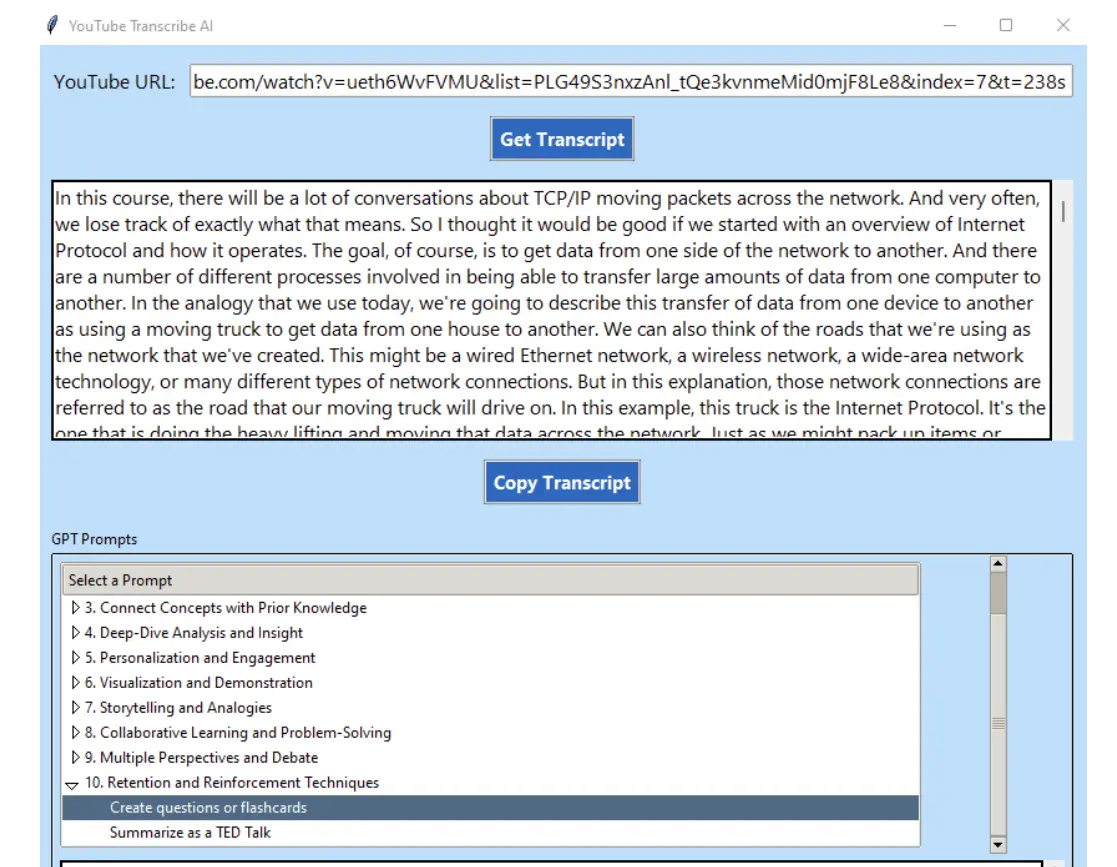
This one is an interesting project that allows you to focus on active learning. It is a user-friendly application that extracts transcripts from YouTube videos.
The Goal: Help students, content creators, and language learners actively engage with the video.
The Tech Stack: Python, youtube-transcript-api, and Tkinter.
Why You Should Build With It: This project fetches transcripts in over 20 languages and includes a built-in selection of GPT prompts. This allows pasting content into AI chat interfaces for studying purposes. It also offers a more user-friendly interface.
When working with the youtube-transcript-api library to extract data, watch out for changes to its static method call in recent versions. Make sure you check the updated documentation before writing your extraction function.
Repository: https://github.com/jdpooleparty/YouTube-Transcribe-AI
Project 2: The Consistent AI Memory Engine (claude-mem)
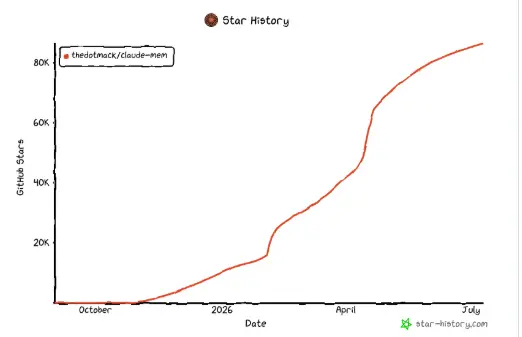
One of the trickiest challenges in AI development is giving your agent long-term memory. This project solves that problem by preserving context across sessions through automatic capture of tool usage observations.
The Goal: Ensure AI agents maintain continuity of project knowledge even after sessions end or following reconnection.
The Tech Stack: Node.js, SQLite 3, and Chroma.
Why You Should Build With It: It captures everything your agent does during sessions, compresses it using AI, and injects relevant context into future sessions. It uses a hybrid search architecture with a Chroma vector database. It works with various platforms, including Claude Code, OpenClaw, Codex, Gemini, Hermes, Copilot, and OpenCode.
Repository: https://github.com/thedotmack/claude-mem
Project 3: The Automated Content Pipeline (AI-Article-Summary)
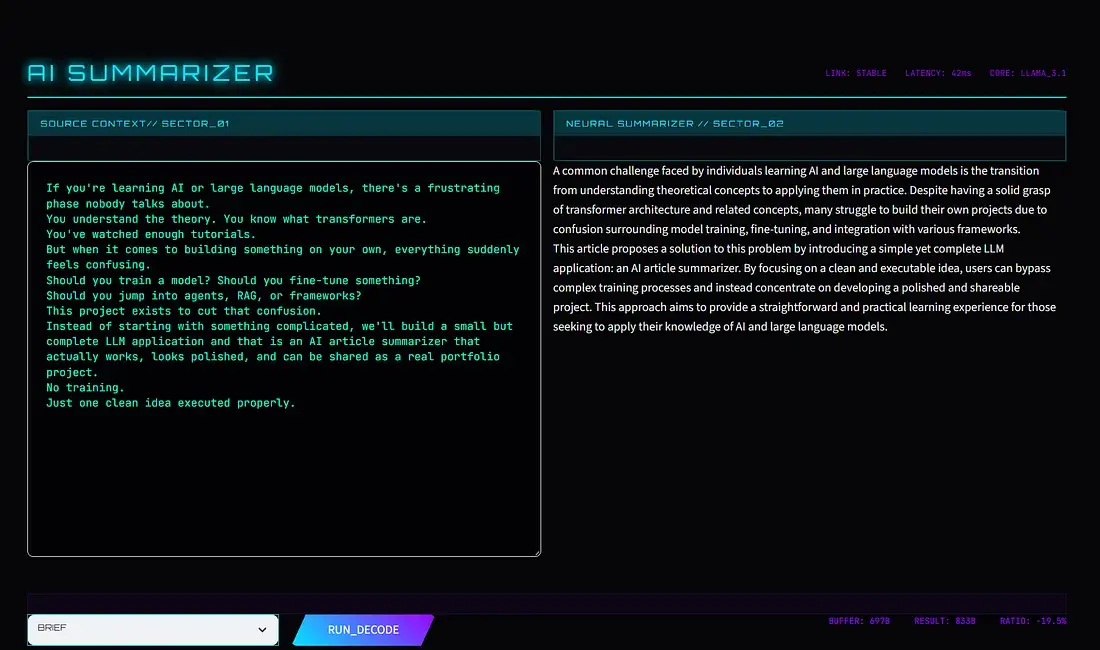
When you're studying subjects like AI, ML, and Data Science, you're required to read lots of research papers. Sometimes these research papers end up being complex and hard to understand. This repository tackles the challenge of text summarization.
The Goal: Turn your lengthy and complex articles into concise, easy-to-understand summaries without losing the main context.
The Tech Stack: Python and modern LLM APIs.
Why You Should Build With It: Summarization has always been the perfect entry point for context learning. Building a pipeline that handles content of varying lengths will help you understand concepts such as token limits and context windows.
Repository: https://github.com/ShreyasNaphad/AI-Article-Summary
Project 4: The Live GenAI Sports Tracker (GenAI Sports Tournament Discovery System)
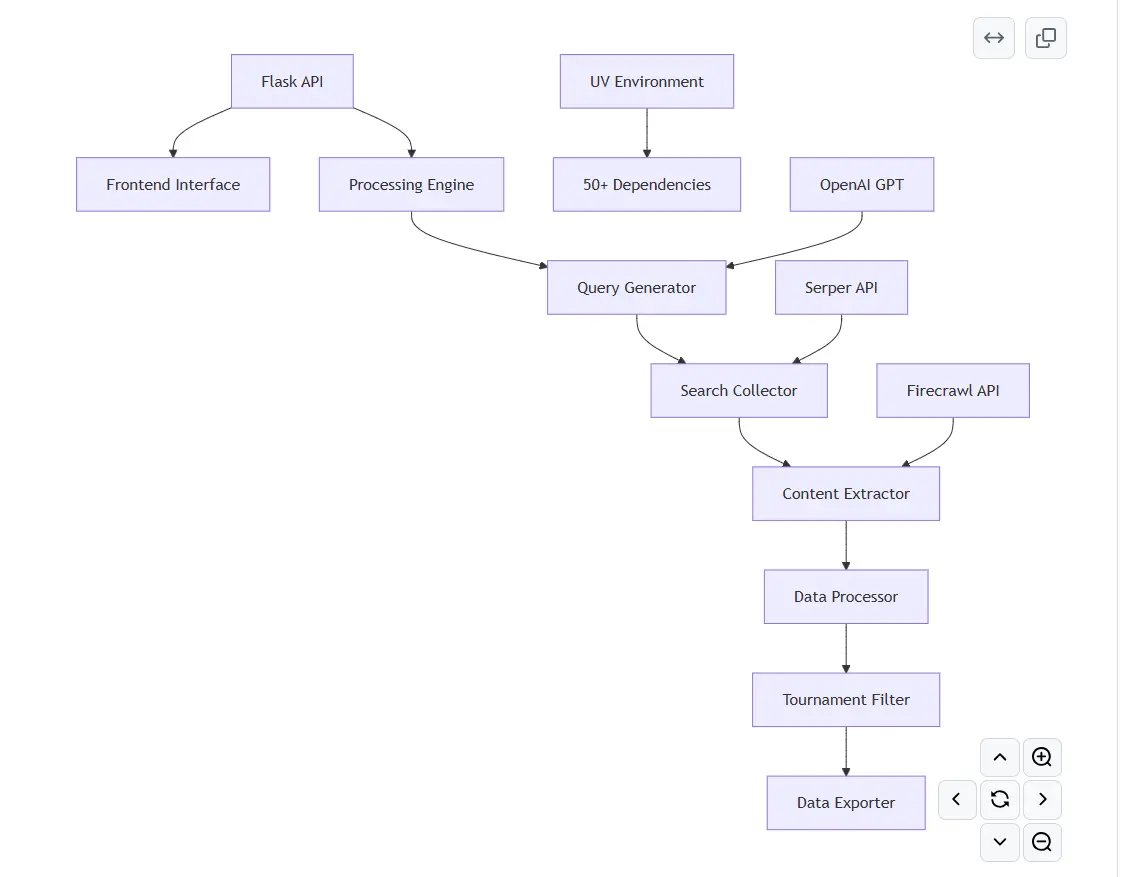
Sports analytics is a field that requires consistent ingestion of live data. This project is an intelligent tournament discovery platform that automatically finds, extracts, and organizes tournament information from across the web.
The Goal: Create an automated pipeline that runs from query generation to data export in a single workflow.
The Tech Stack: Python, Flask API, React, Serper, and FireCrawl. It is managed with the UV package manager.
Why You Should Build With It: It is designed for official governing bodies, including the ICC, FIFA, ITF, and BWF. It uses OpenAI GPT to generate smart search queries. The data processing step is highly robust. It deduplicates tournaments using intelligent matching, standardizes date formats, and applies confidence scoring.
Repository: https://github.com/Arjunheregeek/-GenAI-Sports-Tournament-Discovery-System
Project 5: The Autonomous Career Agent (JobFit-AI)
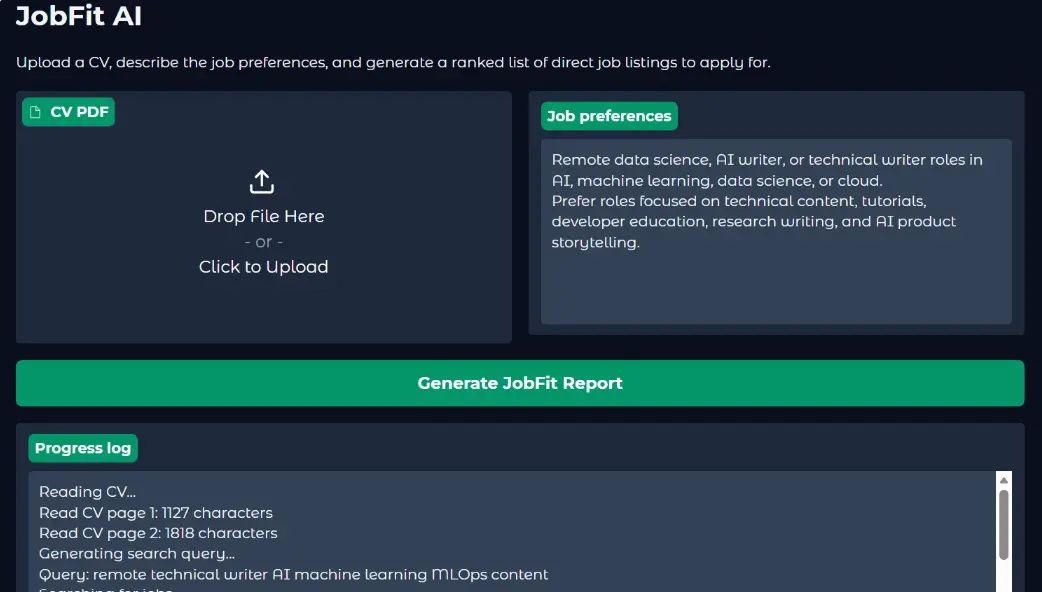
Job searching is a repetitive process of comparing resumes against hundreds of requirements. This project is a Gradio app that reads a candidate CV, searches the web, and produces a ranked Markdown job-fit report.
The Goal: Automate the job-hunting process by scraping selected job pages and generating clear, practical reports.
The Tech Stack: Python, Gradio, pypdf, OpenAI Agents SDK, and Olostep Search.
Why You Should Build With It: It runs a Kimi 2.6 agent through the OpenAI Agents SDK. The agent is given two specific tools to find job listings and read selected job pages. It is an amazing project to study because it solves a real personal problem and also combines document parsing, web search, AI reasoning, and report generation into a single pipeline.
Repository: https://github.com/kingabzpro/JobFit-AI
Conclusion
The key to excel in the field of AI is to get your hands dirty. The best way to learn concepts like prompt engineering, data retrieval, and agentic workflows is to actually start building something with it.
These five projects cover a range of concepts, from strict output formatting and sports data extraction to complex multi-agent web scraping.
Pick the one that excites you the most. Once you select your topic, open your code editor and start building. The developers who actually build real-world tools are the ones staying ahead in the competition.
Frequently Asked Questions
Do I need to pay for API access to build these projects?
Not necessary. While using powerful APIs like OpenAI usually costs a few cents per generation, you can build and test the core logic of these concepts using open-source models running locally on your machine.
Which programming language is best for these AI projects?
Python is the industry standard language for Generative AI work. This is because it has the best ecosystem of libraries for building data pipelines, agentic workflows, and web scraping tools.
How long does it take to build one of these projects?
If you are familiar with Python, you can clone one of these repositories and get it running locally in a few days. I suggest you modify it to fit your specific needs. To do this, it may take a week of dedicated coding.