

Every new AI tool feels like a small decision. You start using it, you learn its interface, and you’d like to use it a bit more. So you opt for a subscription!
One subscription for drafting. Another for research. A third for approvals. All of them working separately.
Each one looks cheap on its own. The trouble is the pile. Ten small bills you approved without a second thought add up to a line item nobody can explain.
| That's how a company ends up paying for 106 apps it barely remembers signing up for. |
|---|
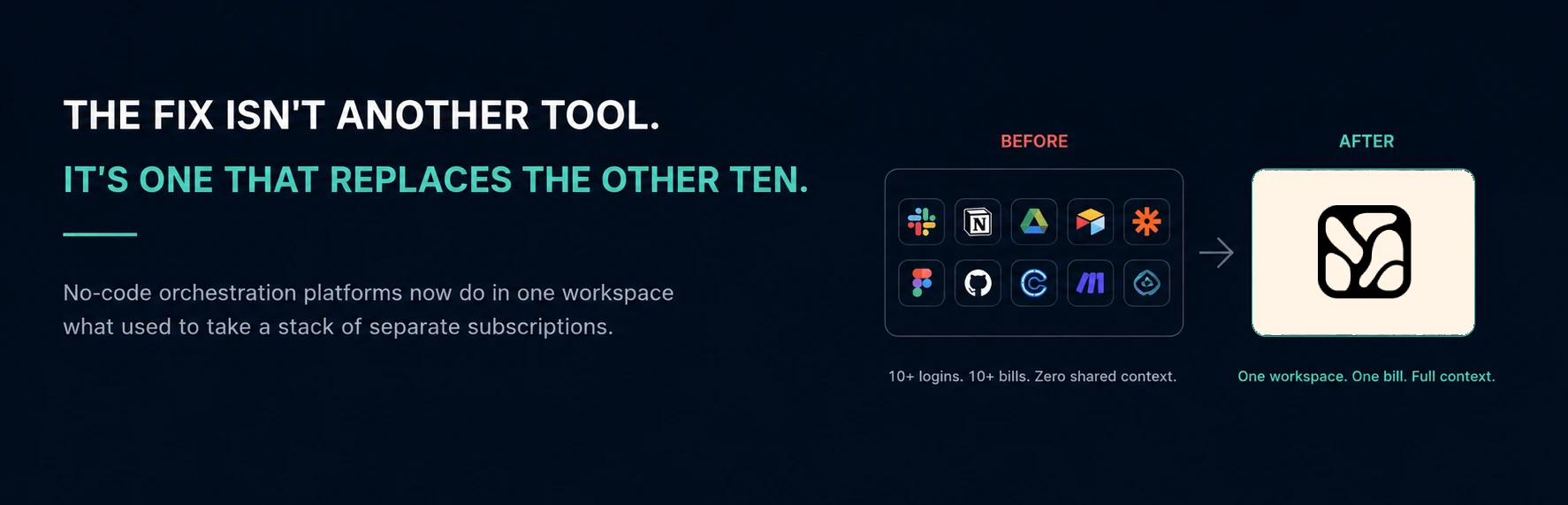
The fix isn't cutting tools one by one. It's replacing the pile with something built to run them together, an orchestration platform that gives every agent the same context instead of ten separate ones.
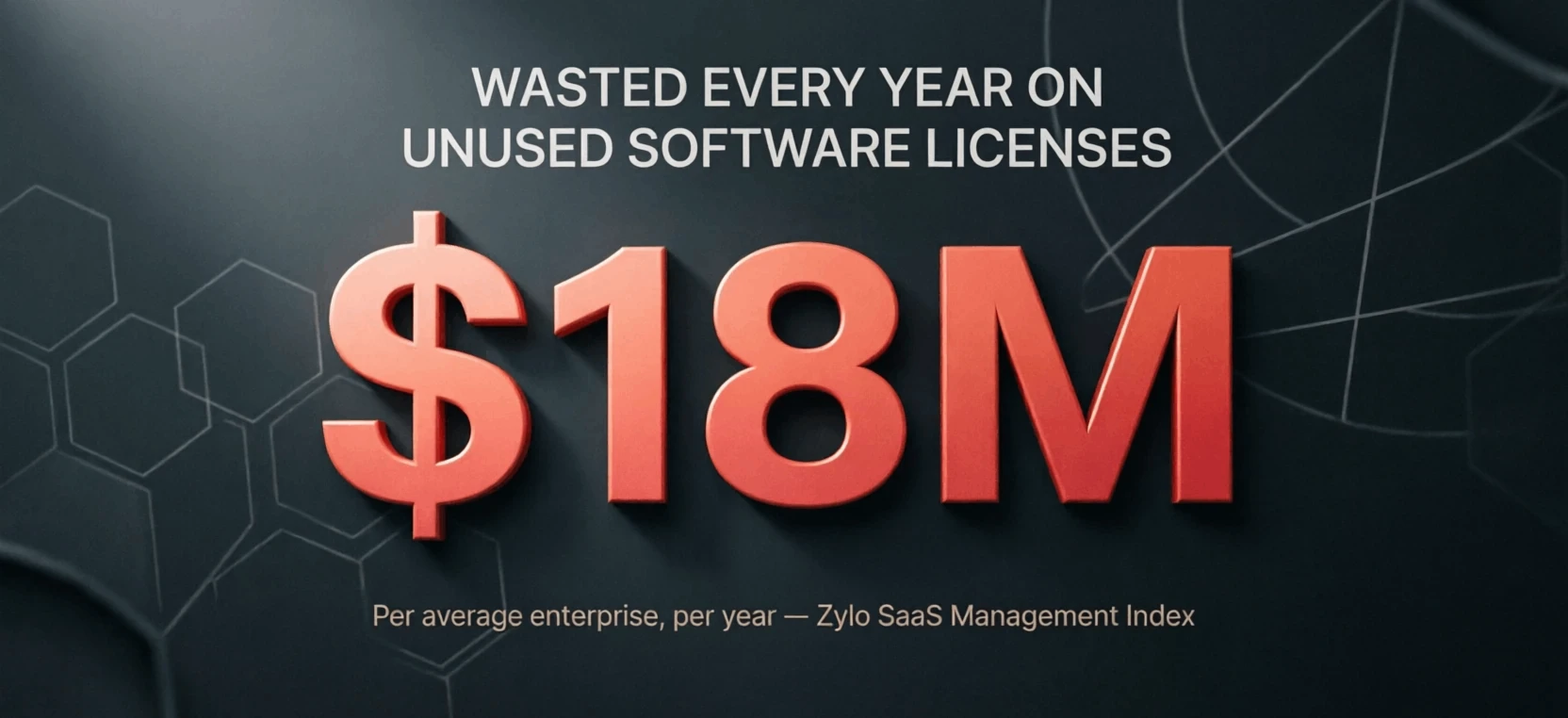
Source of Info: CFOdive
Where It Actually Bleeds
Not in the invoice you expect. In the stuff nobody tracks:
- Licenses nobody logs into anymore
- Hours lost jumping between tabs
- A renewal calendar that owns nobody
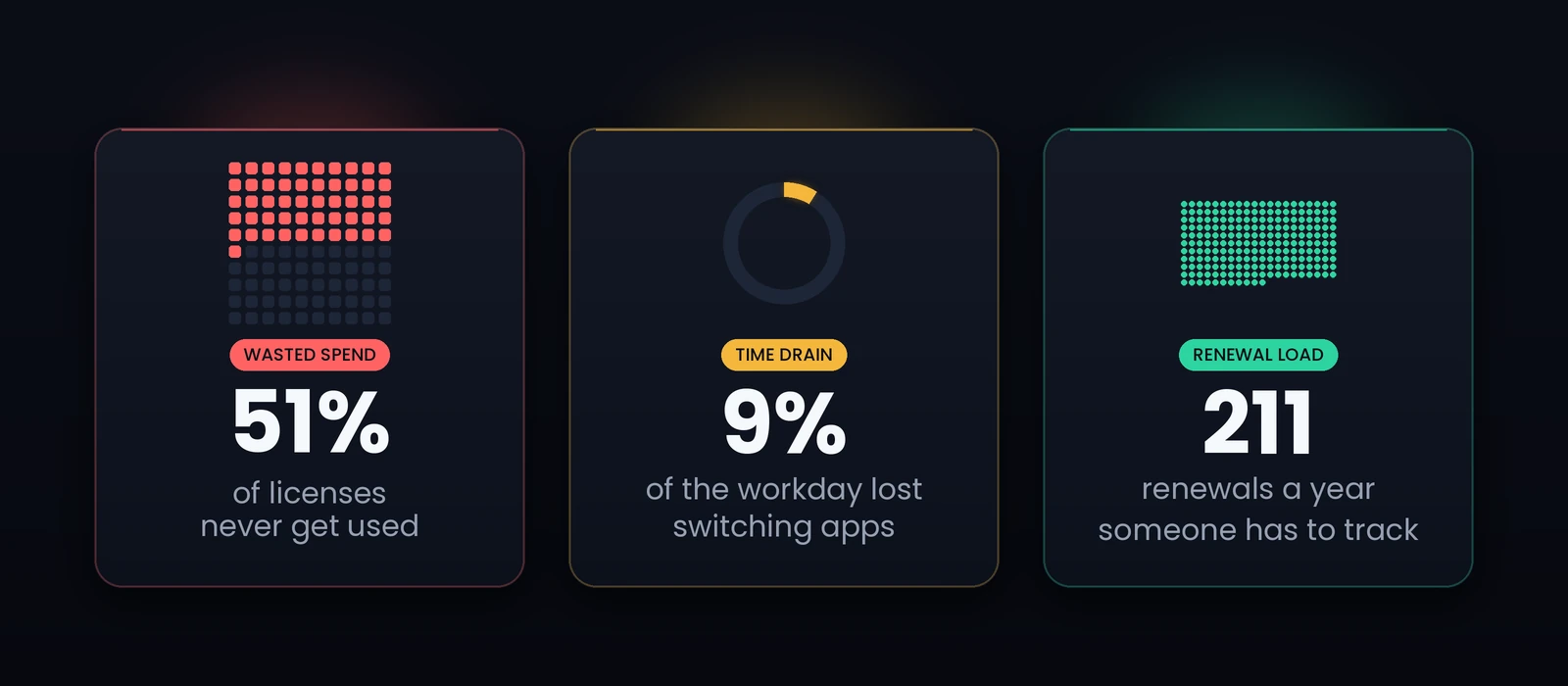
Source of Info: Zylo 2026 SaaS Management Index, Harvard Business Review
None of this shows up as one scary number. It hides in a dozen small ones. That is exactly why it survives budget review after budget review. You cannot cut what you cannot see.
Two Ways to Run This
Scattered subscriptions mean tangled handoffs. Every tool has its own login, its own context, its own blind spot.
Orchestration platforms replace that with one hub. Agents share context. IT sees everything in one place.
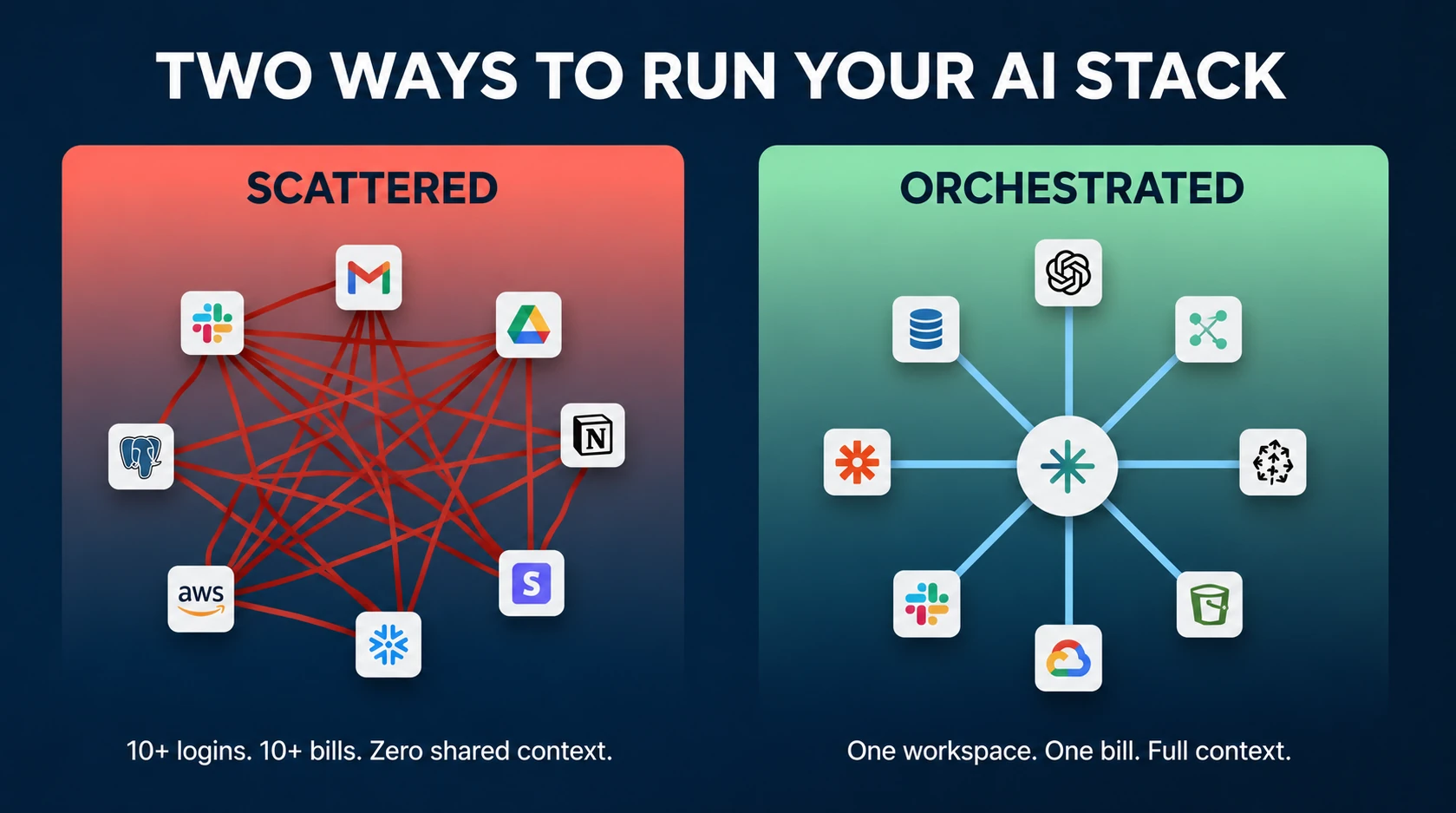
Shared context is the part that matters. When your research agent finds something, your writing agent already knows it. No copy paste. No re-explaining the same brief four times. The work moves through one place instead of bouncing between ten tabs that have never met each other.
One Task, Two Stacks
Picture a simple job. Draft a customer email, get it approved, send it. On a scattered stack, that is four tools and three handoffs. You draft in one app, paste into another for review, wait for a Slack ping, then jump to a fourth to send. Context resets at every step.
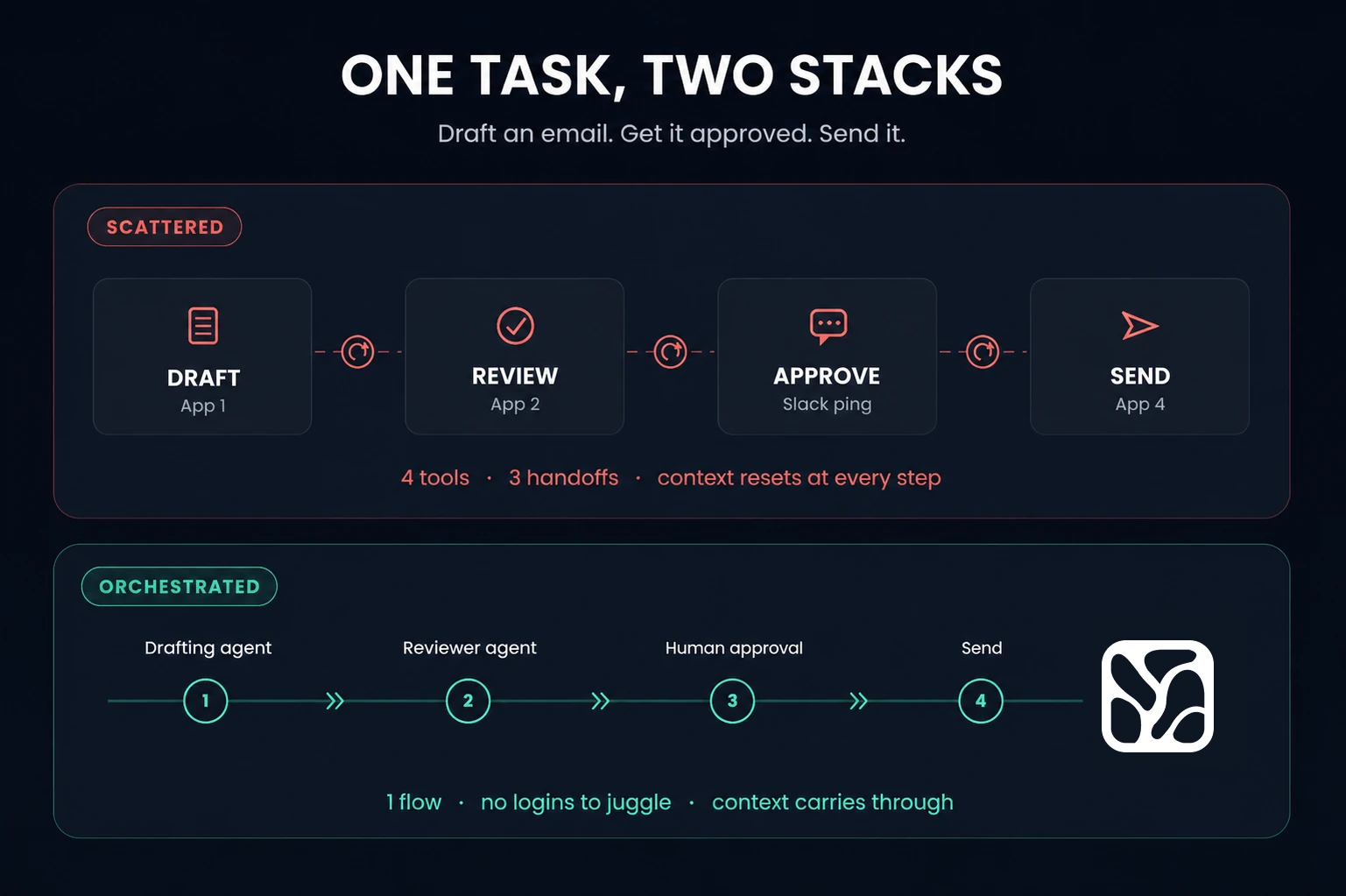
On an orchestrated stack, it is one flow. The drafting agent writes. The reviewer agent checks. The approval routes to a human. The send happens without you touching four logins. Same task, a fraction of the friction.
Who's Actually Building This
Orchestration used to mean custom code and a dedicated engineer. That's changed fast, the no-code side of this space filled up quick. A few names worth knowing:
- n8n: open-source, developer-friendly, a huge library of pre-built connectors
- Zapier: the OG automation platforms, now bolting AI agents onto existing workflows
- Microsoft Copilot Studio: enterprise-grade, deep Microsoft 365 integration
- Oasis: spin up coordinated agent teams from Claude, OpenAI, and other frameworks in minutes, with approvals and Slack handoff built in, not bolted on
Different teams, different priorities, but all of them are chasing the same idea: stop paying for ten disconnected tools when one workspace can run the whole show.
Five Places the Money Leaks
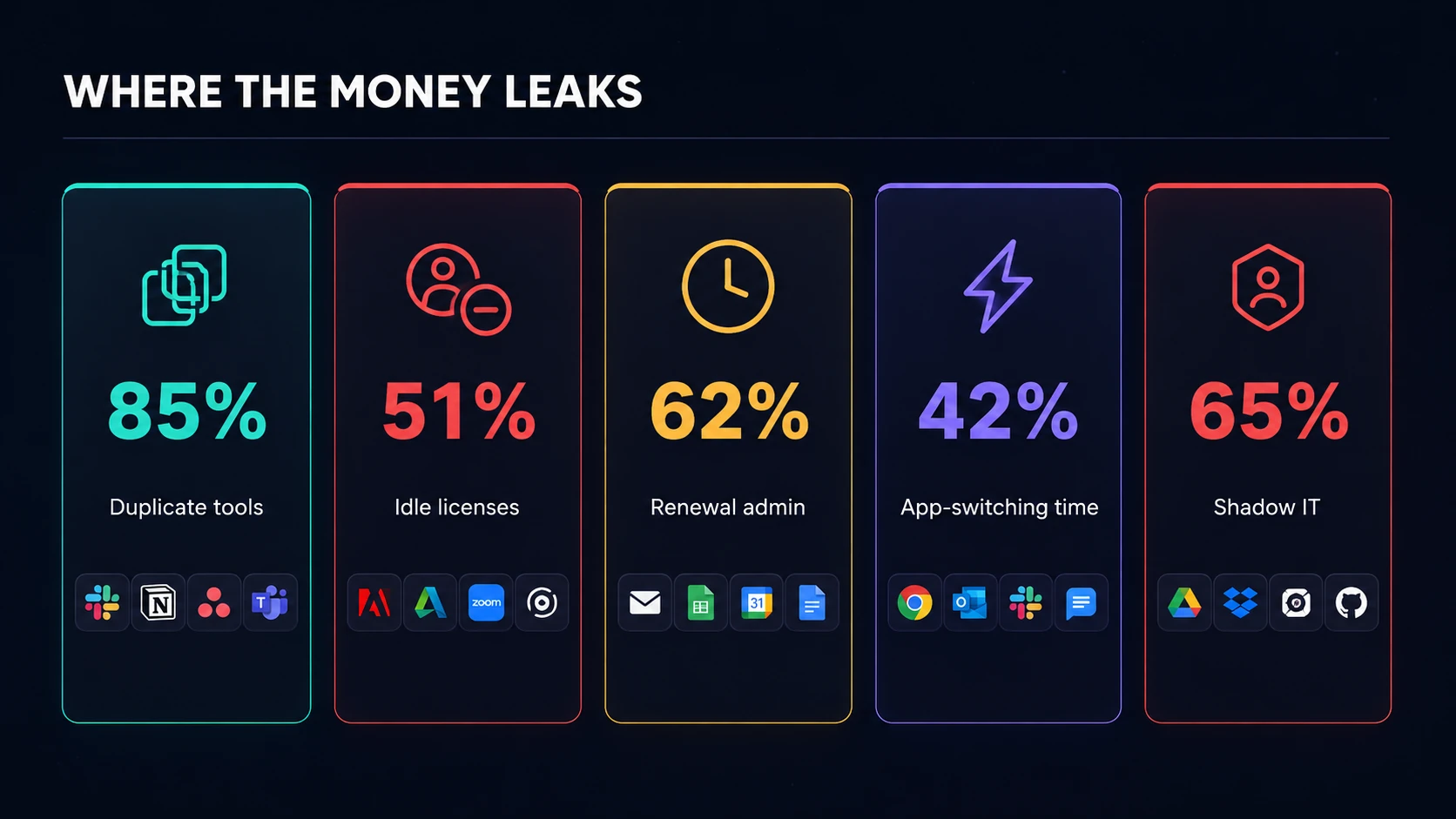
Duplicate tools and idle licenses are the two biggest culprits, by far.
The pattern is boring and consistent. Duplicate tools and idle licenses eat the biggest slice, and both are pure waste. You are paying twice for the same job, or paying for seats nobody has opened in months.
The smaller slices are sneakier. Context switching and overlapping features never land on an invoice. They show up as slow work and quiet frustration. Add them together and the leak is bigger than the duplicate tools everyone argues about.
Before You Consolidate
Here are a few things to consider before jumping the gun for an orchestration platform:
- Some specialized tools still do one job better than a generalist platform.
- Migration takes real time. Budget for it.
- Check integration depth first, lock-in is a real risk.
- If your stack is already lean, sprawl isn't your problem.
The honest test is simple. If you can name every tool your team pays for and say what each one does, you probably do not have a sprawl problem. If that list surprises you, you do.
The Bottom Line
Tool sprawl is not a spending problem you fix with one hard cut. It is a coordination problem. Ten disconnected apps will always cost more than the sum of their subscriptions, because the real bill is the time your team loses moving between them.
Orchestration attacks the coordination, not just the invoice. Count what you actually use. Weed out the dead licenses. Then ask whether one workspace can do the job of ten. For most growing teams, the answer is already yes.
Frequently Asked Questions
What is an AI orchestration platform?
A system that coordinates multiple AI models and agents so they share context and finish multi-step work together, instead of running as separate disconnected apps.
How much can consolidating actually save?
Varies by size, but companies that actively manage their stack typically cut spend by double digits within a year, mostly by killing unused licenses.
Are no-code platforms secure enough for business use?
Most include approvals, access controls, and audit trails by default. Scattered subscriptions with no shared governance are usually the bigger risk.
Orchestration vs. automation, what's the real difference?
Automation follows fixed rules. Orchestration coordinates AI agents that reason, hand off tasks, and adapt mid-workflow.