

The hardest part of customer research is often the follow-up. A participant says a feature is confusing, but a fixed survey moves on before you learn which step failed. AI agents can help conduct that conversation or find patterns in interviews you already have.
The useful comparison is where each tool fits. Listen Labs, Outset and Strella run interviews. Dovetail and Oasis work with existing evidence. This guide compares five options, their workflows and the checks to make before trusting the results.
TLDR: Choose Dovetail for ongoing analysis, Listen Labs for an integrated study, Outset for flexible interview formats, Strella for interviews plus a repository, or Oasis for focused interview synthesis.
1. Dovetail for ongoing customer evidence analysis
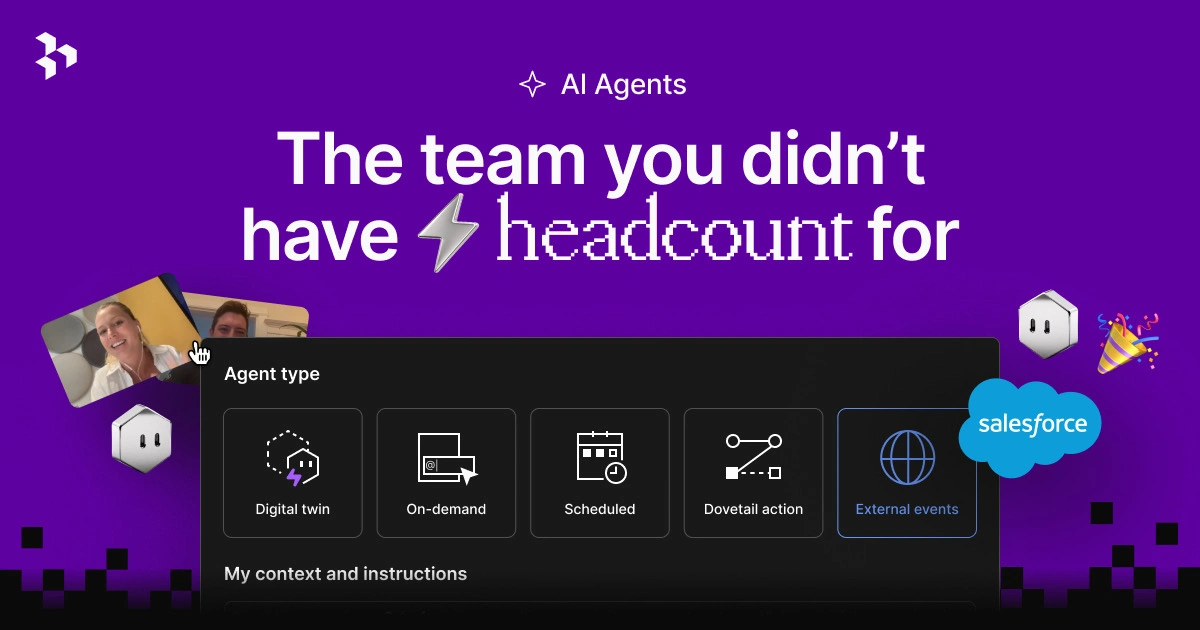
Best for: Teams with customer interviews and feedback already stored in Dovetail.
Dovetail’s agents analyze connected customer evidence and report what changes. You give an agent instructions, choose its data sources and decide whether it runs on a schedule, an event or a request. A useful research task is tracking recurring onboarding problems as new interviews arrive.
Outputs link back to the underlying conversations, and teammates can review them in Chat. Agents can also connect to workplace tools through MCP. Keep the scope narrow and review where findings will be delivered before enabling actions.
Try this: Dovetail AI Agents
2. Oasis Customer Interview Synthesizer for themes
Best for: Teams that have recorded customer interviews and need a focused synthesis teammate.
Customer Interview Synthesizer is a ready-made Oasis teammate for user research. It reads batches of recorded interviews and calls, groups recurring themes and reports how many participants raised each one. It also distinguishes points people volunteered from answers prompted by the interviewer.
Each theme includes two or three verbatim quotes. The teammate is designed to flag findings that contradict the team’s assumptions, which helps keep an inconvenient response from disappearing into a tidy summary. Check those quotes and counts against the original material before using the findings in a decision.
Try this: Oasis Customer Interview Synthesizer
3. Outset for flexible interview formats
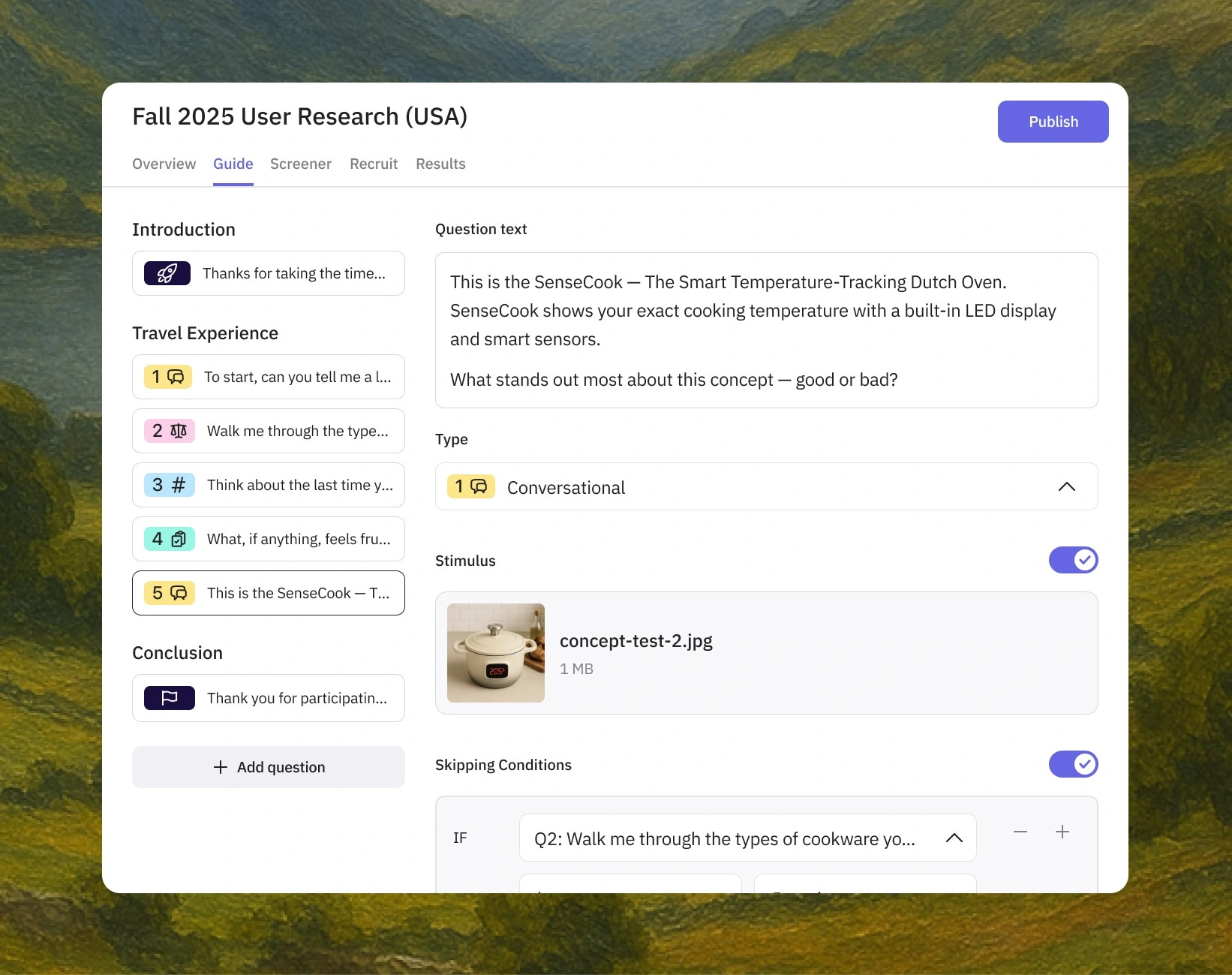
Best for: Research teams comparing concepts or experiences through text, voice and video interviews.
Outset combines recruitment, AI-moderated interviewing and synthesis. You can generate a guide from study goals, write it yourself or upload an existing one. The moderator follows the guide and probes participants’ responses rather than collecting answers to an unchanging form.
The platform supports interview playback, themes, highlight reels and reports. For a concept test, your team can move from an interview reaction to the moment that supports a finding. Keep contradictory answers in the analysis instead of selecting only clips that support the preferred design.
Try this: Outset
4. Strella for interviews and a shared repository
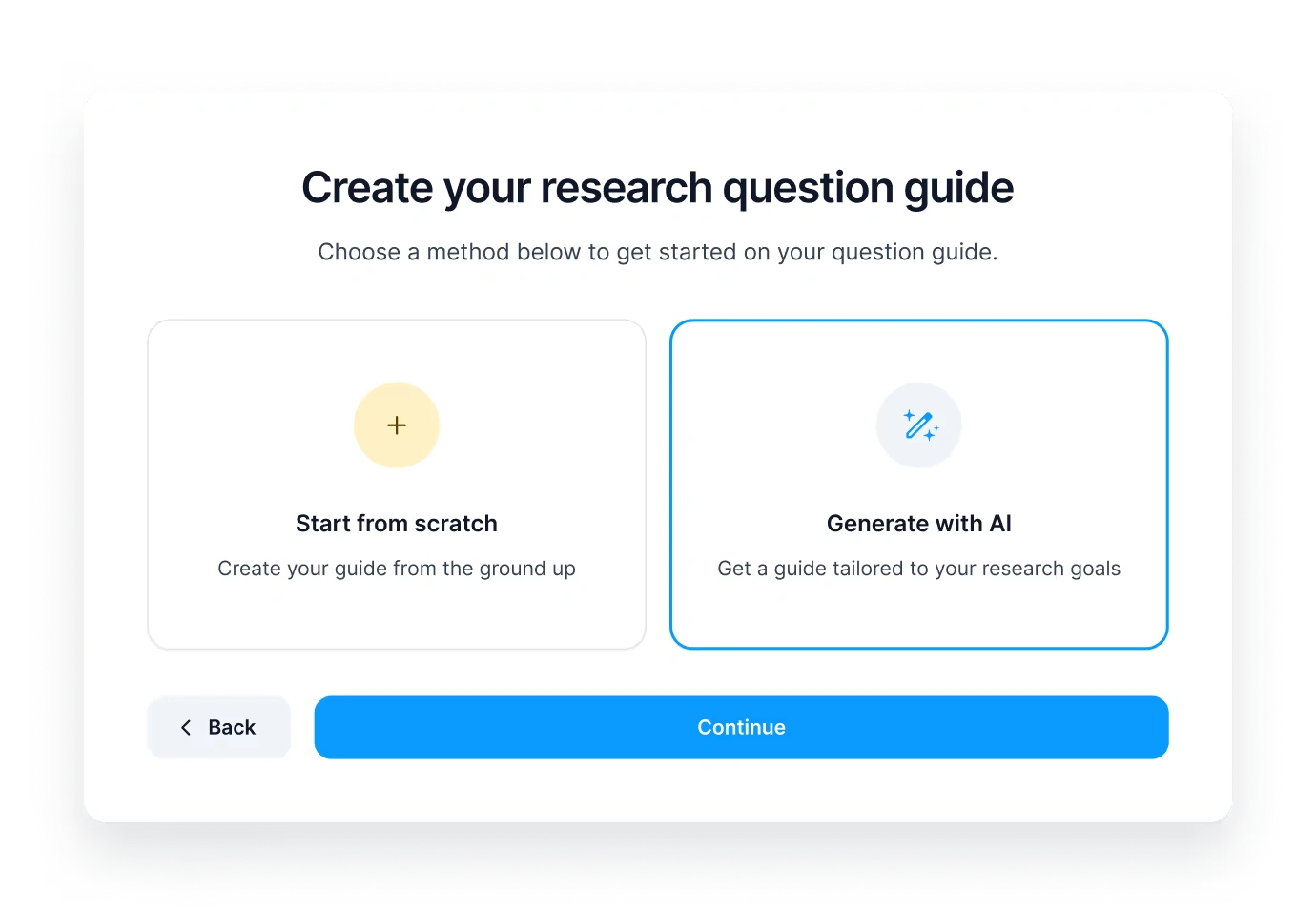
Best for: Teams that want AI-moderated studies alongside existing interview material.
Strella conducts interviews using your questions and adjusts its follow-ups as participants respond. It supports screen and video recording for research involving a prototype or live experience. The agentic work is the adaptive interview: it decides what to ask next within the study you approved.
The platform synthesizes interviews, creates highlight clips and lets teams query a research repository. You can also upload previously recorded interviews. That gives a product team a way to compare a new study with earlier evidence without treating every session as AI-moderated.
Try this: Strella
5. Listen Labs for research from brief to findings
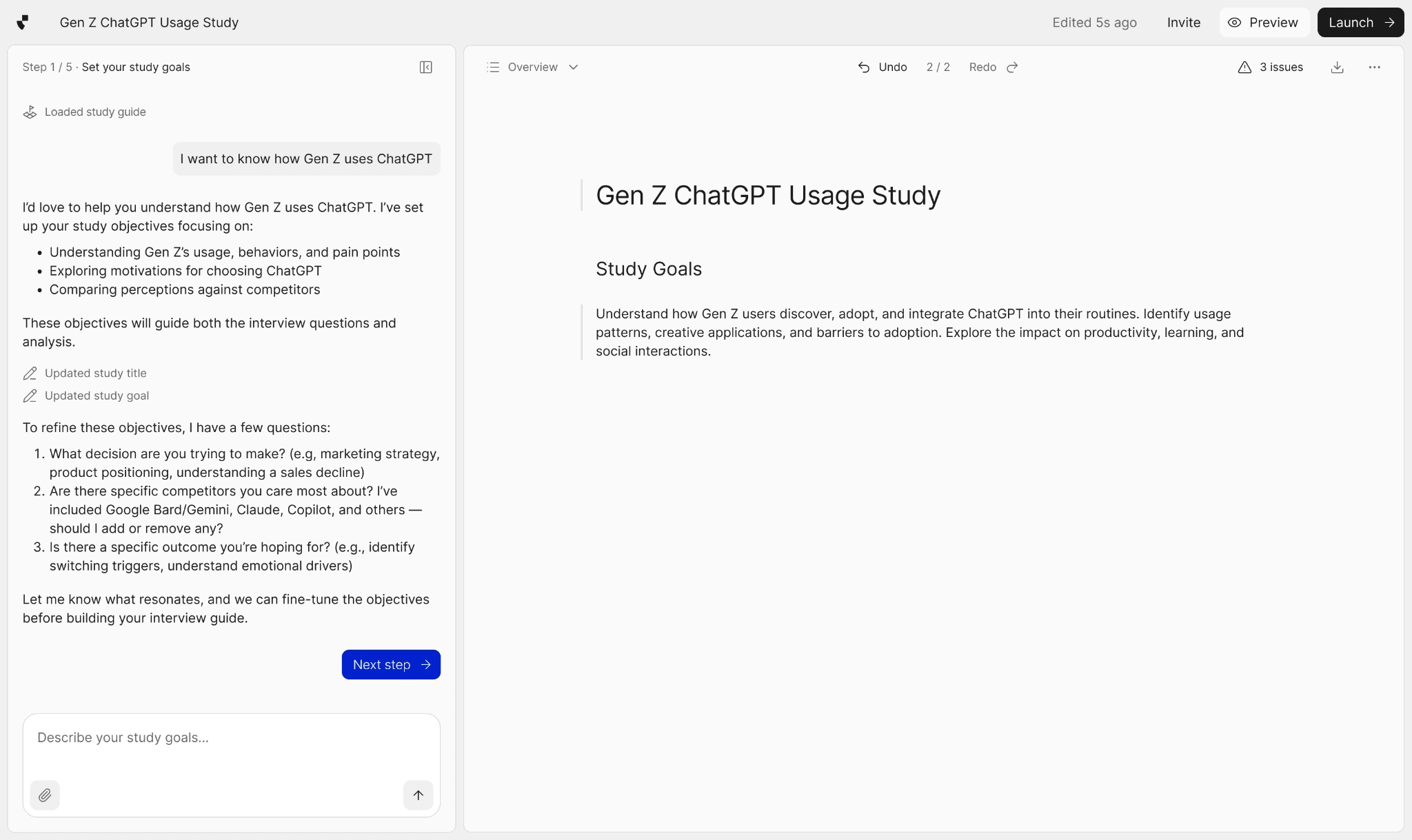
Best for: Teams that want study design, recruitment, interviewing and analysis in one workflow.
Listen Labs can draft objectives and questions from a research goal or use your own guide. Its moderator interviews participants and chooses follow-up questions based on what they say. This helps when you need to understand the reason behind an answer without manually conducting every session.
The official site offers demo and trial routes. Establish the complete study price, including recruitment and interview volume, before committing. Do not assume a trial includes every audience or deliverable. Listen Labs is now part of Salesforce, so confirm the contract arrangement that applies to your team.
Try this: Listen Labs
Choose around the evidence you need
Start with one decision, not a broad request to understand customers. Define who qualifies, what you need to learn and which answer could change your plan. If you need fresh interviews, compare the moderation tools. If the evidence already exists, start with a synthesis workflow.
Review consent, recording, retention and participant compensation before launching. Check complete interviews, including weak or contradictory ones, before sharing a polished report. An agent can process more conversations; it cannot make an unrepresentative sample representative.
Measure the time spent reviewing evidence and resolving bad responses, not just the number of interviews completed. The strongest choice is the workflow your team can inspect and repeat.
Frequently Asked Questions
Do all five agents interview real people?
No. Listen Labs, Outset and Strella run interviews. Dovetail and the Oasis teammate analyze existing evidence.
Can I use my own interview questions?
The three moderation platforms support researcher-defined guides. Preview the questions and follow-ups before launch.
Does AI synthesis remove research bias?
No. Recruitment, wording and interpretation can still bias the findings. Check the original answers and conflicting evidence.
What should I compare in a quote?
Check recruitment, usage, formats, integrations, exports, support and data-retention terms.