

n8n gives technical teams a rare mix: visual workflows, code, self-hosting, AI nodes, and execution-based billing. The catch is that not every team wants to run infrastructure or force agentic work into a fixed node graph.
In this guide, we compare eight n8n alternatives for automation, hosted workflows, code-first orchestration, AI apps, and agent-led work.
Quick answer: Windmill and Pipedream suit developers. Dify fits AI apps and RAG. Make and Zapier remove server work. Gumloop is AI-native. Oasis fits workflows where people and agents share the work.
1. Buzz: Best for Open-Source Agent Collaboration
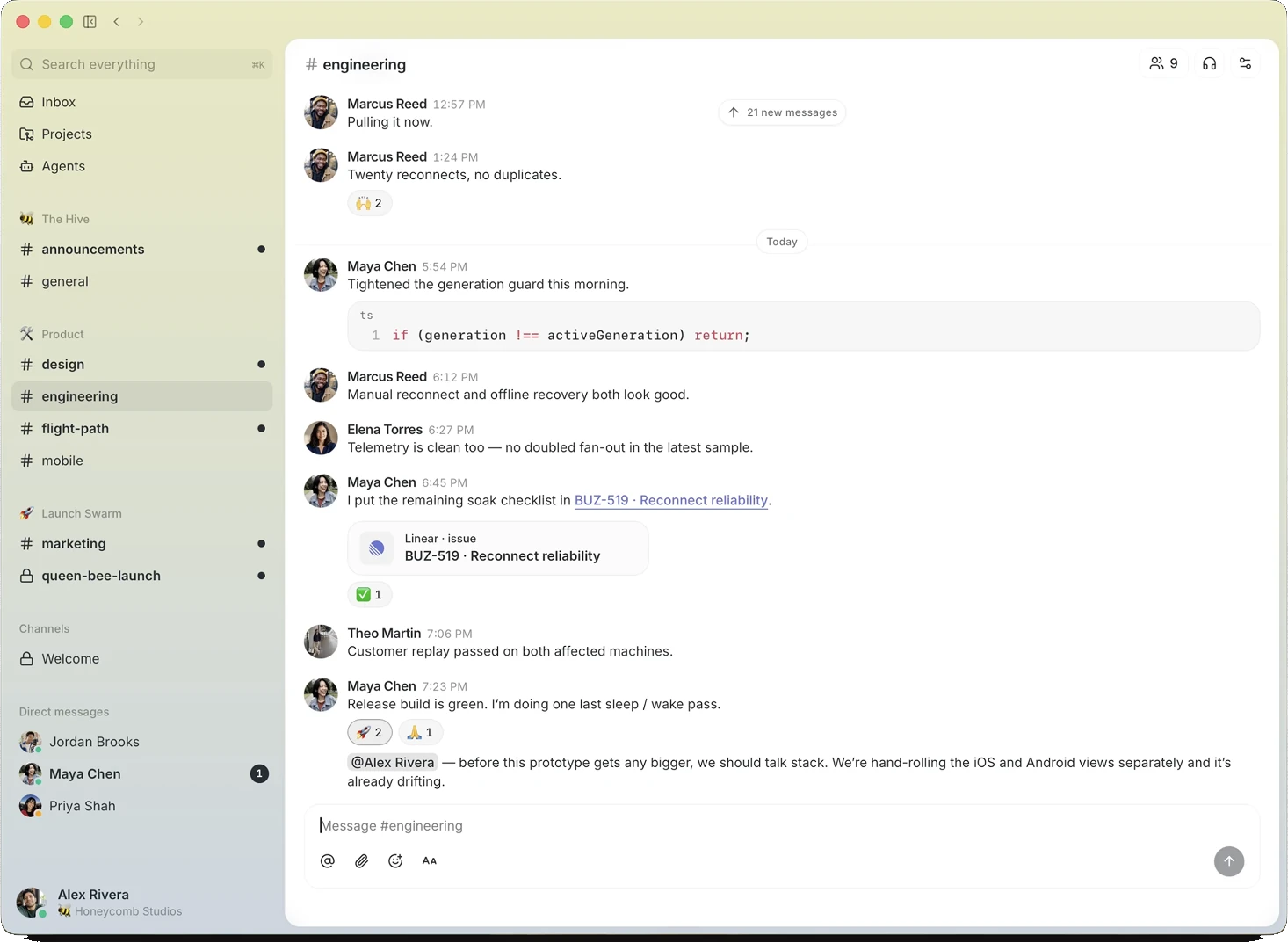
Buzz brings chat, coding agents, Git, and YAML workflows into one open-source workspace. Built by Block, it supports Claude Code, Codex, and goose, with hosted and self-hosted options. It suits teams automating engineering work, with hands-on agent configuration and workflows defined in YAML.
Best for: Developer teams that want coding agents, shared conversations, and automation in a self-hostable workspace.
| Pros | Cons |
|---|---|
| • Open source with self-hosting support • Chat, agents, and Git in one workspace | • Requires technical setup and maintenance • Git forge and workflow approval gates remain unfinished |
2. Windmill: Best for Developers
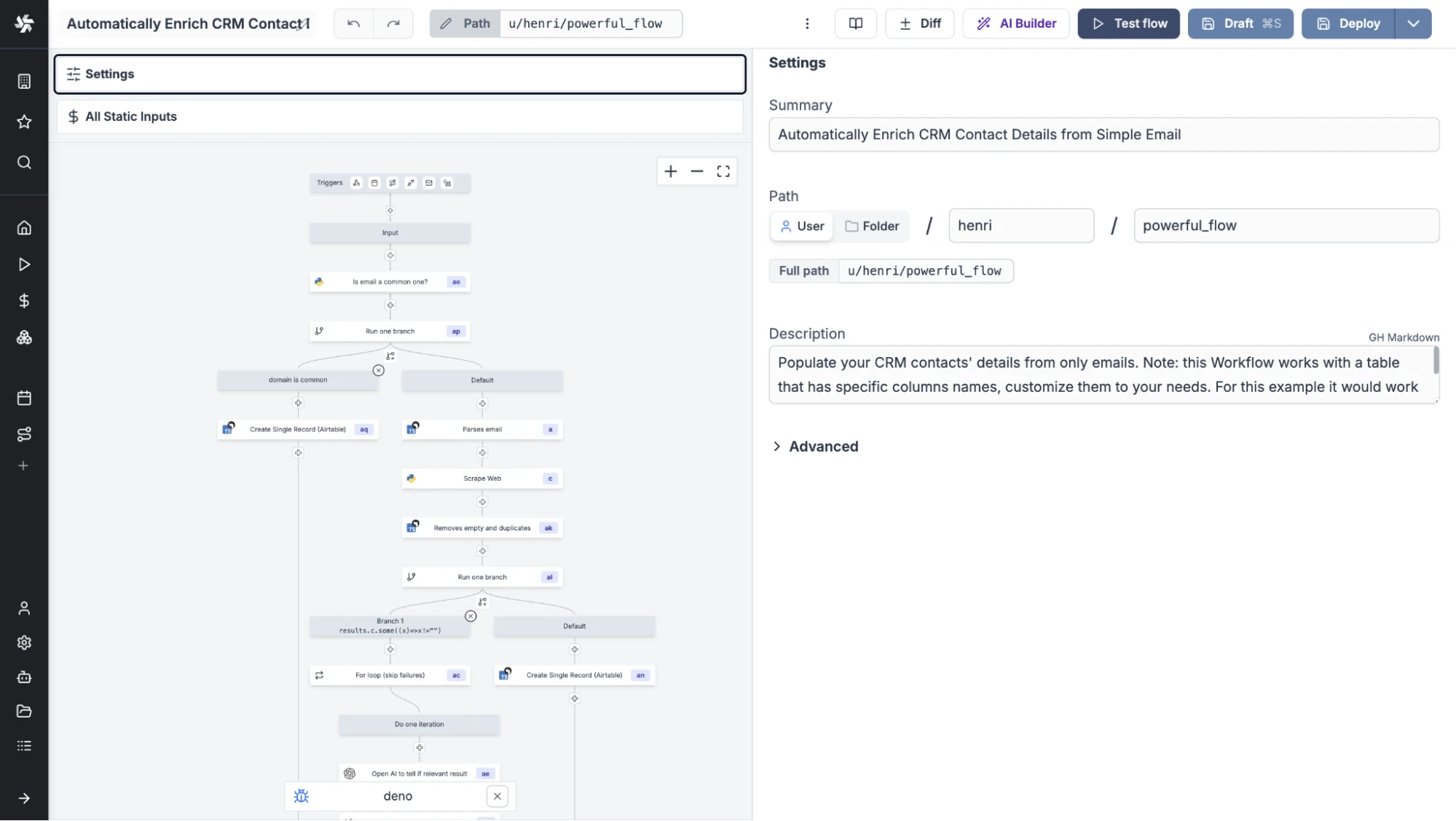
Windmill treats code as a first-class workflow step. Flows can combine Python, TypeScript, Go, Bash, SQL, approvals, branches, triggers, and AI agents. That makes it a better fit when the important logic already belongs in code.
Best for: Engineering teams automating internal systems, data jobs, APIs, and AI tasks.
| Pros | Cons |
|---|---|
| • Real code inside workflows • Strong self-hosting story | • Steeper start for non-developers • Smaller plug-and-play app ecosystem |
3. Oasis: Best for Human + Agent Workflows
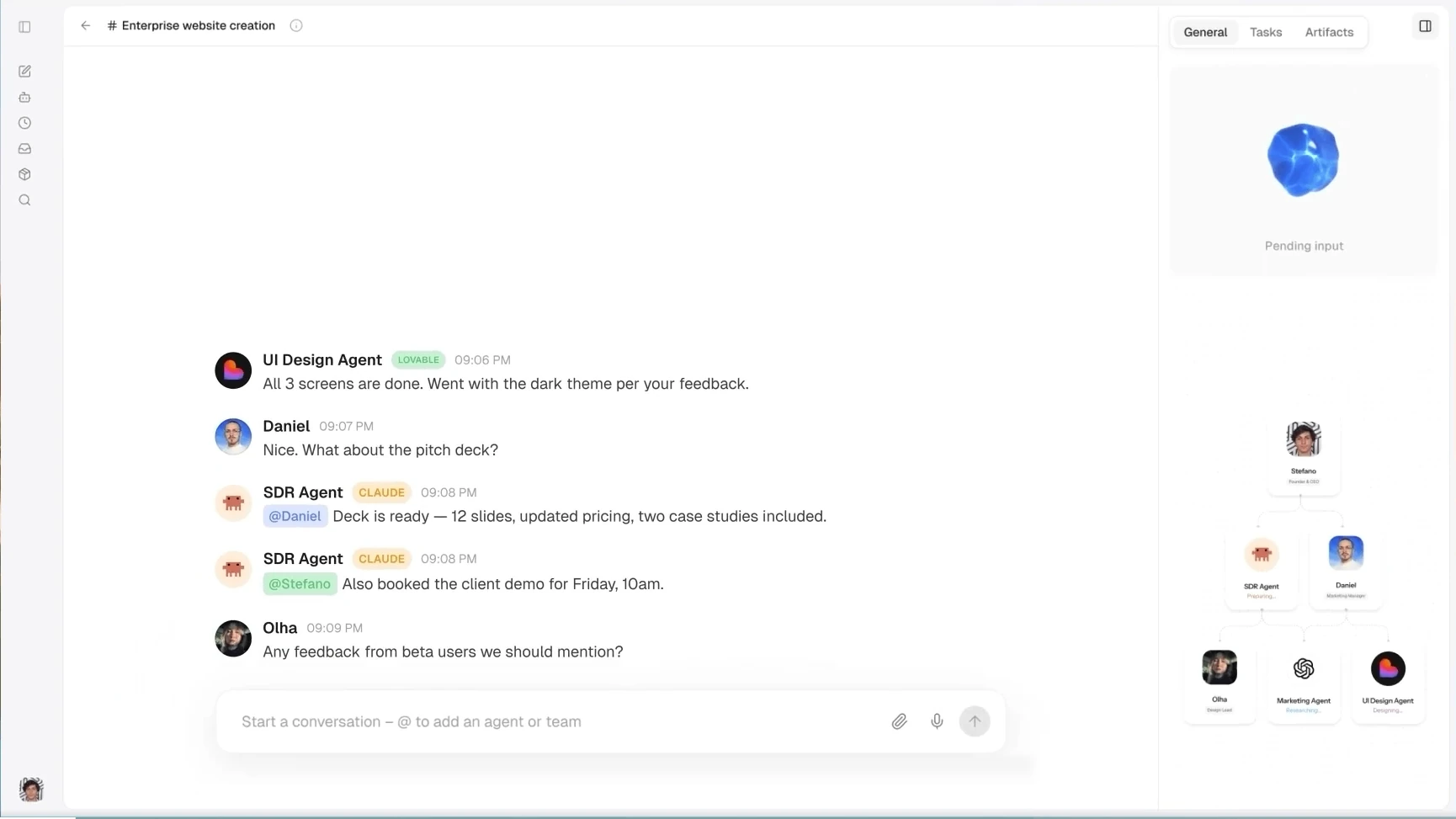
Most n8n alternatives keep the workflow canvas and change the details. Oasis changes the unit of work. People and agents share rooms, context, files, tasks, and artifacts; agents can hand work off or ask a person for approval. Scheduled rooms handle repeatable background work.
Best for: Teams where research, content, support, or operations need agent autonomy plus human judgment.
| Pros | Cons |
|---|---|
| • People and agents share context • Good fit for multi-agent handoffs | • Not a node-for-node n8n replacement • Requires an agent-first workflow model |
4. Dify: Best for AI Apps and RAG
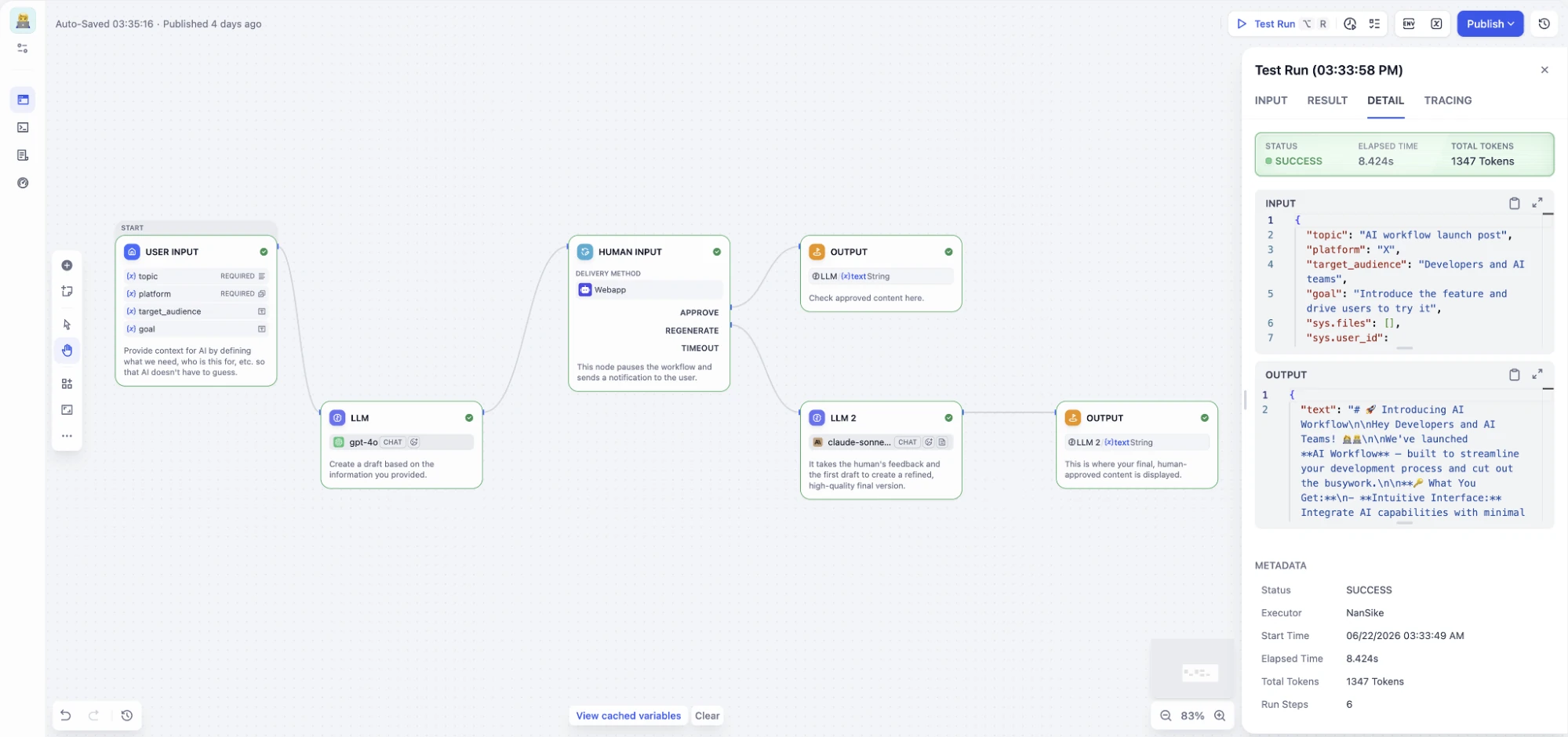
Dify is built around AI applications rather than generic app-to-app automation. Its canvas combines model calls, retrieval, tools, code, branching, triggers, MCP, and human review. It is especially useful when the workflow itself becomes an assistant, agent, or API.
Best for: RAG systems, knowledge assistants, document pipelines, and production AI workflows.
| Pros | Cons |
|---|---|
| • Strong RAG and model tooling • Human review and MCP support | • Less suited to generic SaaS automation • Model usage adds separate cost |
5. Make: Best Hosted Visual Alternative
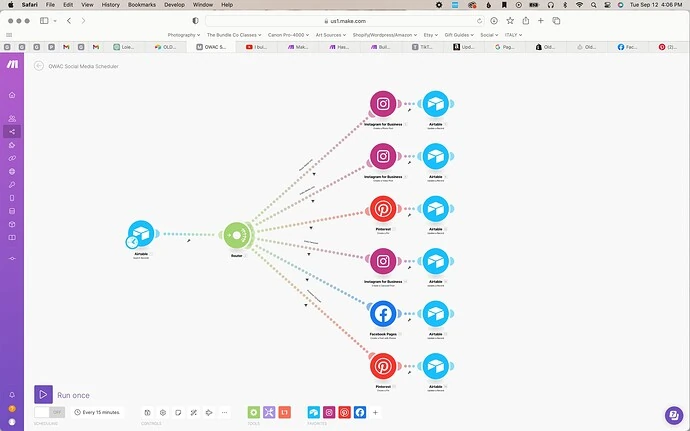
Make keeps the visual canvas but removes the server work. Scenarios show app modules and data paths clearly, which makes complex automation easier to inspect than a long linear list of steps. It is a strong middle ground between n8n flexibility and Zapier simplicity.
Best for: Business teams that want a capable visual builder without managing infrastructure.
| Pros | Cons |
|---|---|
| • Polished visual canvas • Large integration catalogue | • Cloud only • Usage credits can climb on busy scenarios |
6. Zapier: Best for App Coverage and Fast Setup
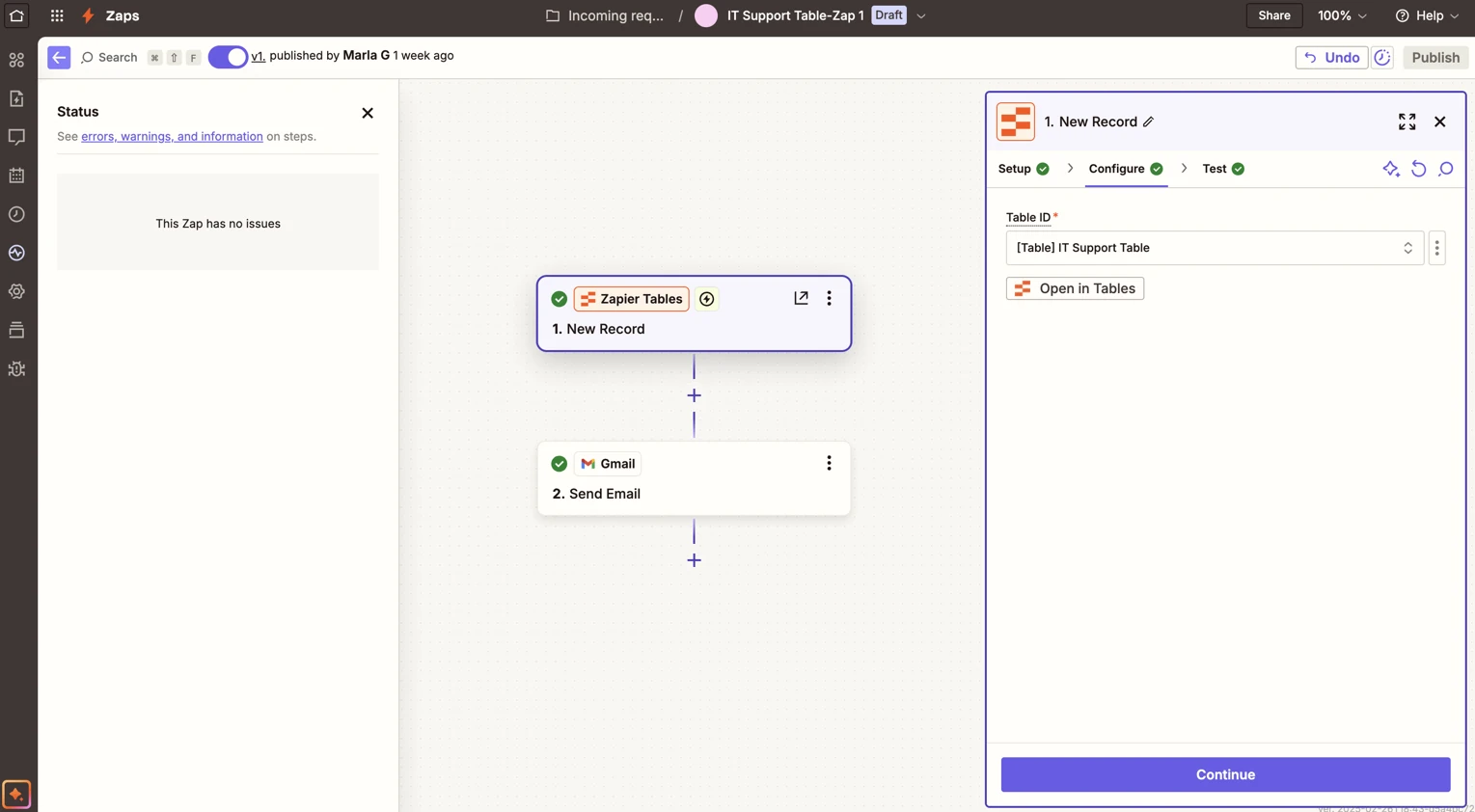
Zapier wins on convenience. Its workflow editor is easy to learn, the app catalogue is huge, and most common SaaS automations can be built quickly. The trade-off is task-based billing and less infrastructure control than n8n.
Best for: Non-technical teams that value speed and broad app coverage over self-hosting.
| Pros | Cons |
|---|---|
| • Fast setup • Very broad integration coverage | • Task-based billing gets expensive at volume • No self-hosting |
7. Gumloop: Best AI-Native No-Code Alternative
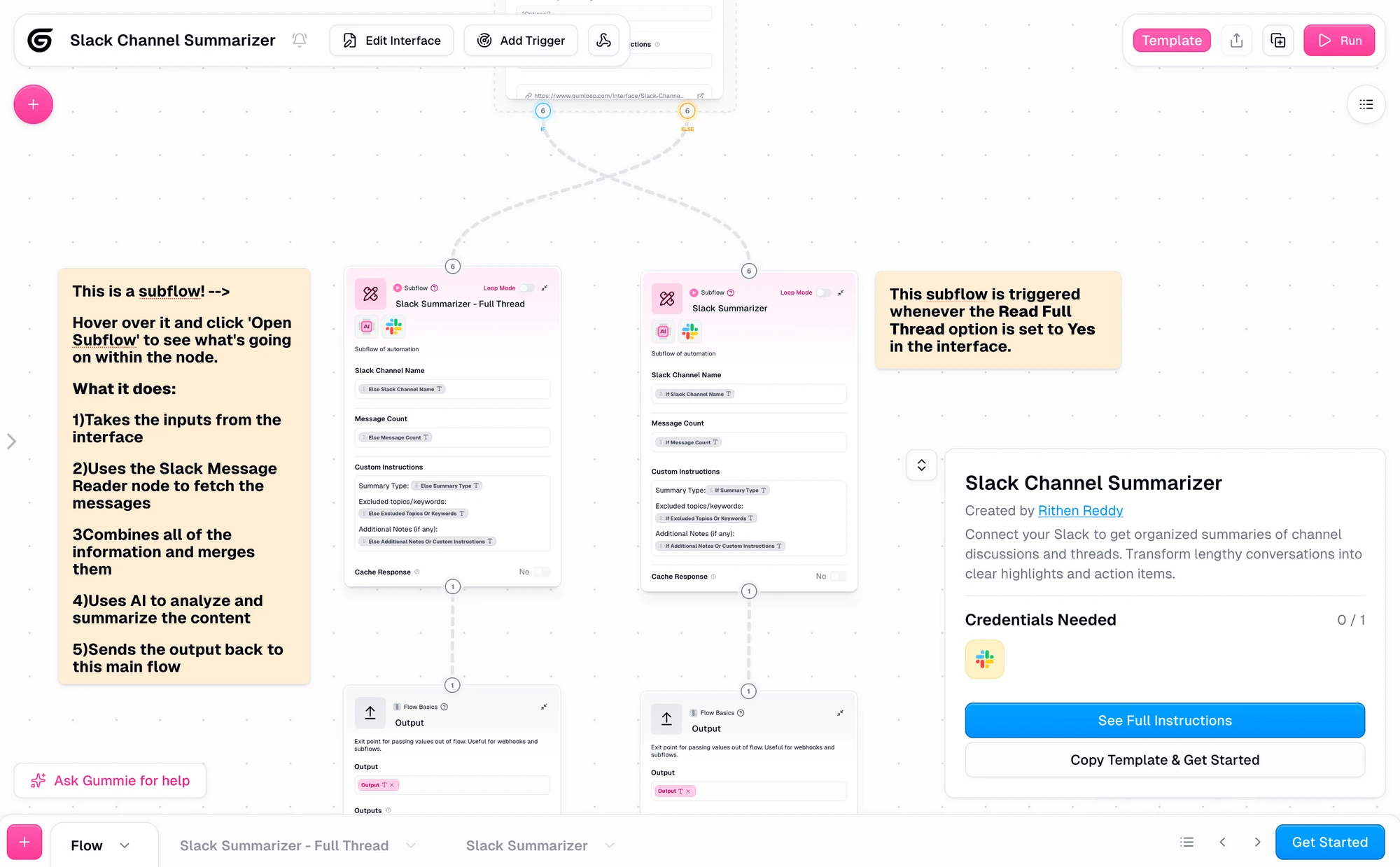
Gumloop sits between workflow automation and serverless development. You can mix prebuilt actions with Node.js, Python, Go, or Bash while Pipedream handles triggers, authentication, and execution. It is particularly good for API-heavy workflows.
Best for: Developers who want code-level control without operating a workflow server.
| Pros | Cons |
|---|---|
| • Strong API and code support • Good for custom integrations | • More technical than Make or Zapier • No conventional self-hosted edition |
8. Pipedream: Best for APIs and Hosted Code
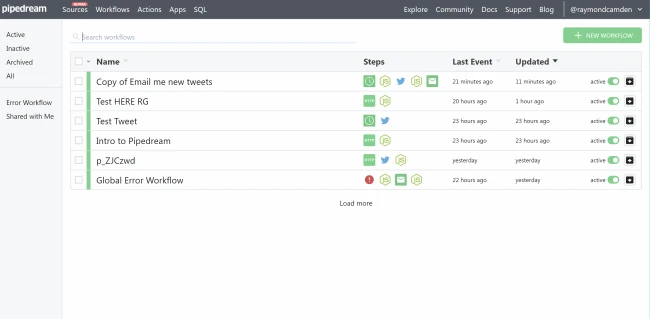
Pipedream puts AI reasoning near the center of the workflow. Its canvas is geared toward research, enrichment, document processing, content, and other jobs where models do more than classify a field or write one line of text.
Best for: Operations and growth teams automating AI-heavy business processes.
| Pros | Cons |
|---|---|
| • AI-native visual builder • Strong research and enrichment workflows | • Cloud-first • AI-heavy usage needs cost monitoring |
Frequently Asked Questions
What is the closest alternative to n8n?
Activepieces. It keeps the visual workflow model and supports cloud and self-hosted deployment.
What is the best n8n alternative for developers?
Windmill for code-first orchestration; Pipedream when APIs and hosted code matter more than self-hosting.
What is the best n8n alternative for AI agents?
Oasis for collaborative agent work, Dify for AI apps and RAG, and Gumloop for AI-heavy business automation.
Can I self-host an n8n alternative?
Yes. Activepieces, Windmill, and Dify provide self-hosted options.