
Does paying more for GPT-6.2 Astra actually get you better results, or can Gemini 4 Neon deliver the same performance for less? We put both models through four identical challenges covering Python debugging, rollout planning, circuit reasoning, and web development. Surprisingly, both handled the core requirements without a failure.
TLDR: Both passed all four tests. Astra offered more accurate results, while Neon did at lower API rates.
What are you paying for?
We used Gemini 4 Neon in Gemini and GPT-6.2 Astra in ChatGPT Work. Both were set to High. Those matching labels describe each application's setting, and do not establish equal reasoning budgets or equal compute.
| Detail | Gemini 4 Neon | GPT-6.2 Astra |
|---|---|---|
| API model ID | gemini-4-neon | gpt-6.2-astra |
| Published context limit | 1,048,576 tokens, unified input and output | 1,050,000 tokens, with up to 922,000 input tokens |
| Standard API input, per million tokens | $3 | $8 for short-context requests |
| Standard API output, per million tokens | $15 | $40 for short-context requests |
| Setting used here | High | High |
Astra's Standard rates increase for the entire request above 272,000 input tokens. Input rates double and output rates become 1.5 times the short-context rate. That distinction matters if your comparison involves a large document pack.
These are API prices, separate from the subscriptions used to access the apps. We did not measure billed tokens, elapsed response time, or cost per completed task. A lower token rate is a useful starting fact, but the eventual bill also depends on how many tokens and attempts your workflow consumes.
How we ran the comparison
We tested both models using identical prompts in fresh chats, with one follow-up for the rollout task. We independently checked their code, calculations, instructions and generated websites to compare accuracy and performance across four practical tasks.
Test 1: Repair an inventory batch without partial updates
An inventory function can look correct while leaving its inputs damaged after a failed batch. This task added replay handling, exact integer validation, and a rule that rejected a temporary negative count even when a later event would fix it.
Prompt
Repair this inventory batch function. Return only a Python code block containing the corrected function, with no imports or explanation.

def apply_delivery_batch(on_hand, applied, events):
    for event_id, sku, delta in events:
        if event_id in applied:
            continue

        on_hand[sku] = on_hand.get(sku, 0) + delta

        if on_hand[sku] < 0:
            raise ValueError("negative stock")

        applied[event_id] = (sku, delta)

    return on_hand, applied

on\_hand maps SKUs to nonnegative integer counts. applied maps previously accepted event IDs to (sku, delta) pairs. Each item in events is an (event\_id, sku, delta) tuple, processed in input order. IDs and SKUs are nonempty strings. Reject a delta unless its type is exactly int and it is nonzero. For an existing event ID, an identical (sku, delta) is a harmless replay and an altered payload is an error. Both rules apply to IDs encountered earlier in the current batch. New SKUs start at zero. Reject the batch if any applied event would take a count below zero, even if a later event would repair it. Raise ValueError for any of these errors. On success return (new\_on\_hand, new\_applied) as two new dictionaries, even for an empty batch. Never mutate either input dictionary, including when a later event fails.
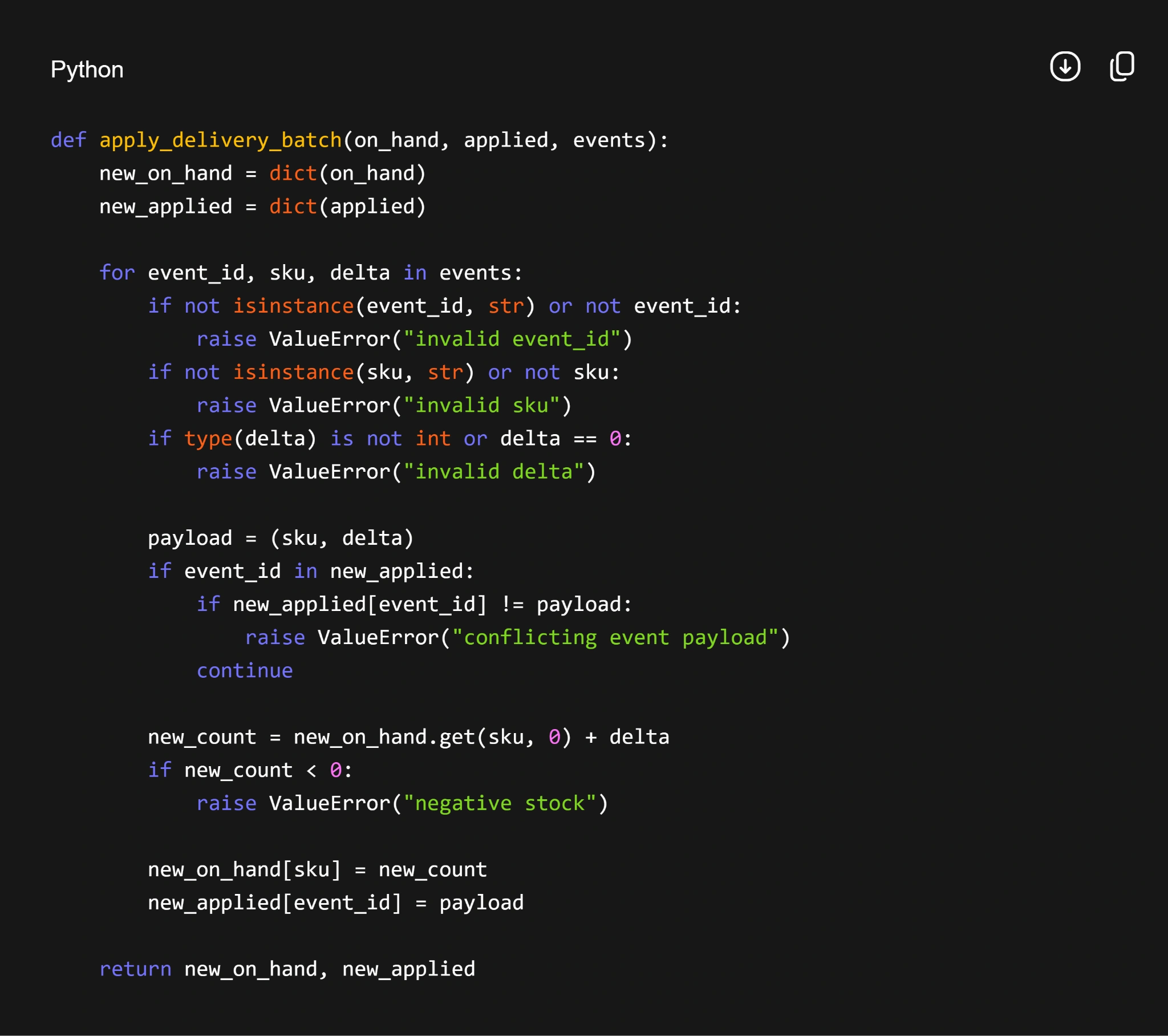
Gemini 4 Neon output
GPT-6.2 Astra output
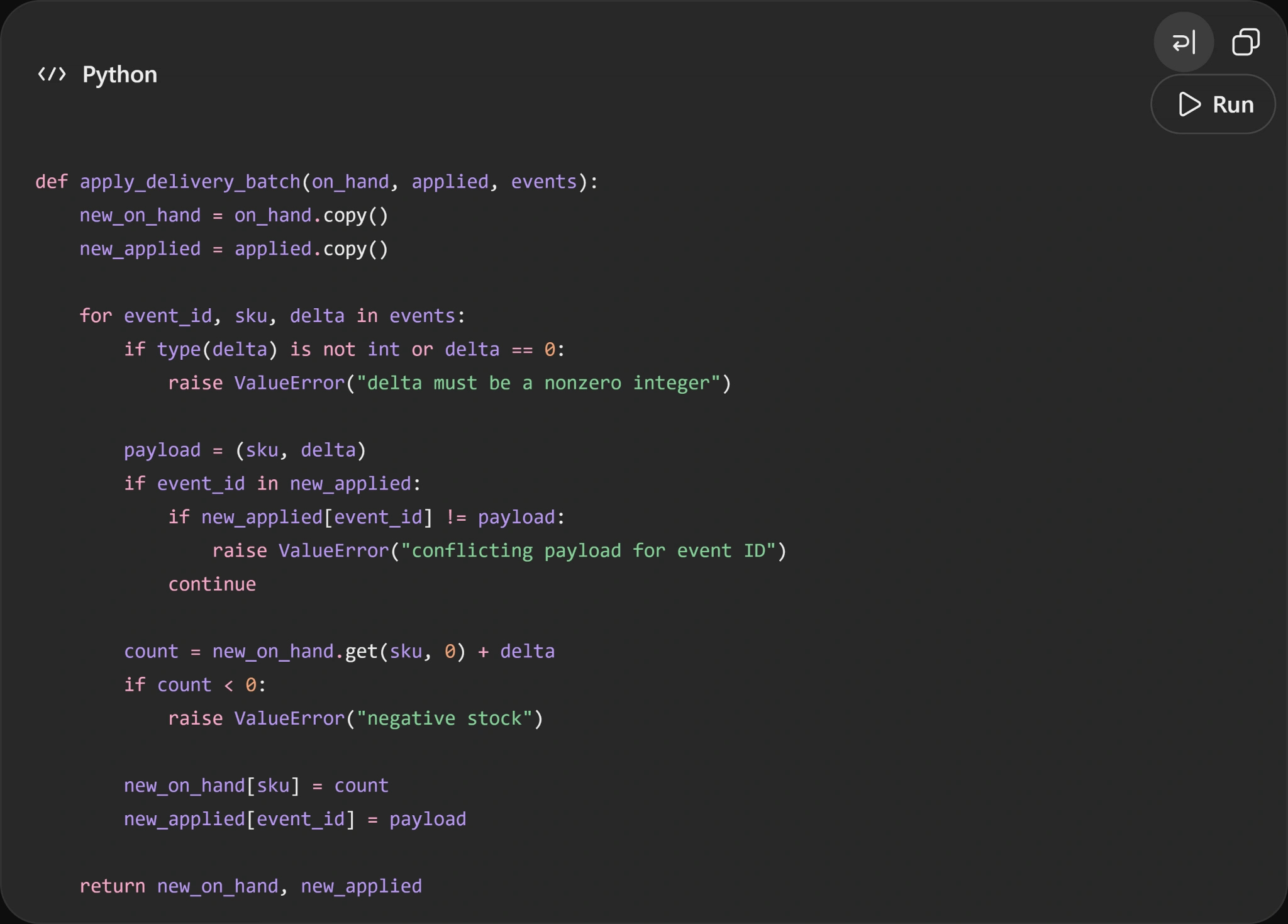
Both functions copied the dictionaries before processing events and returned those copies. A failure partway through therefore left the original stock and event history untouched. Both also checked the copied event history, which made replay protection work for IDs introduced earlier in the same batch.
The small detail worth checking was validation order. Python considers 2 == 2.0 true, and booleans also behave like integers in many checks. Both models used type(delta) is int and validated the delta before comparing a replay's payload. A float replay could not slip through just because its value matched an earlier integer.
Neon additionally validated nonempty string IDs and SKUs. The prompt already guaranteed those input shapes, so that extra code did not improve its result on the specified contract. Astra's implementation stayed closer to the guaranteed inputs.
Result: Both passed all 12 checks, including empty-batch copies, within-batch conflicts, invalid delta types, and immutability after failure. This is a tie on the tested behavior.
Test 2: Revise a rollout without losing the gates
Next came a different job. A sender migration had to stay within six checklist rows while preserving owners, cohorts, rollback conditions, and a customer-delivery gate. Then Security and Finance changed the plan.
Prompt
Write the rollout checklist for this fictional sender migration. We are moving weekly report emails from the old sender to the new sender at 09:00 local time tomorrow. There are two cohorts: 200 internal accounts and 2,000 customer accounts. The old sender stays on until the matching cohort is switched. The new sender can dry-run without delivering and can deliver to internal accounts at 08:30, but must not deliver to customers before 09:00. Pause expansion if more than 1% bounce in any live cohort and restore the old sender for the affected cohort. Security sign-off is required before any customer delivery. Product owns scheduling, on-call owns switching and rollback, Security owns sign-off. Return a checklist with at most six rows in time order, each showing time, owner, action and check. Use only the details here.
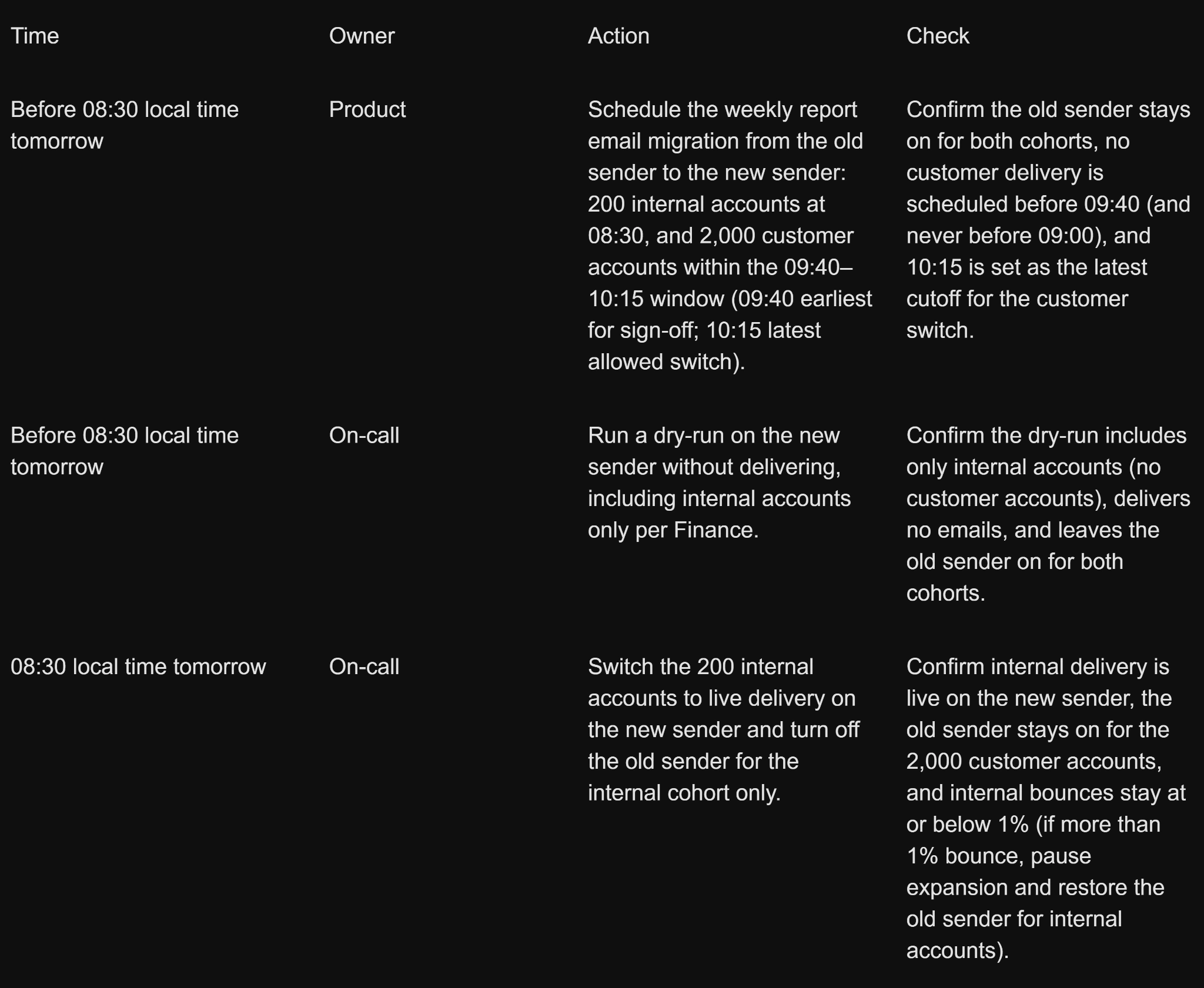
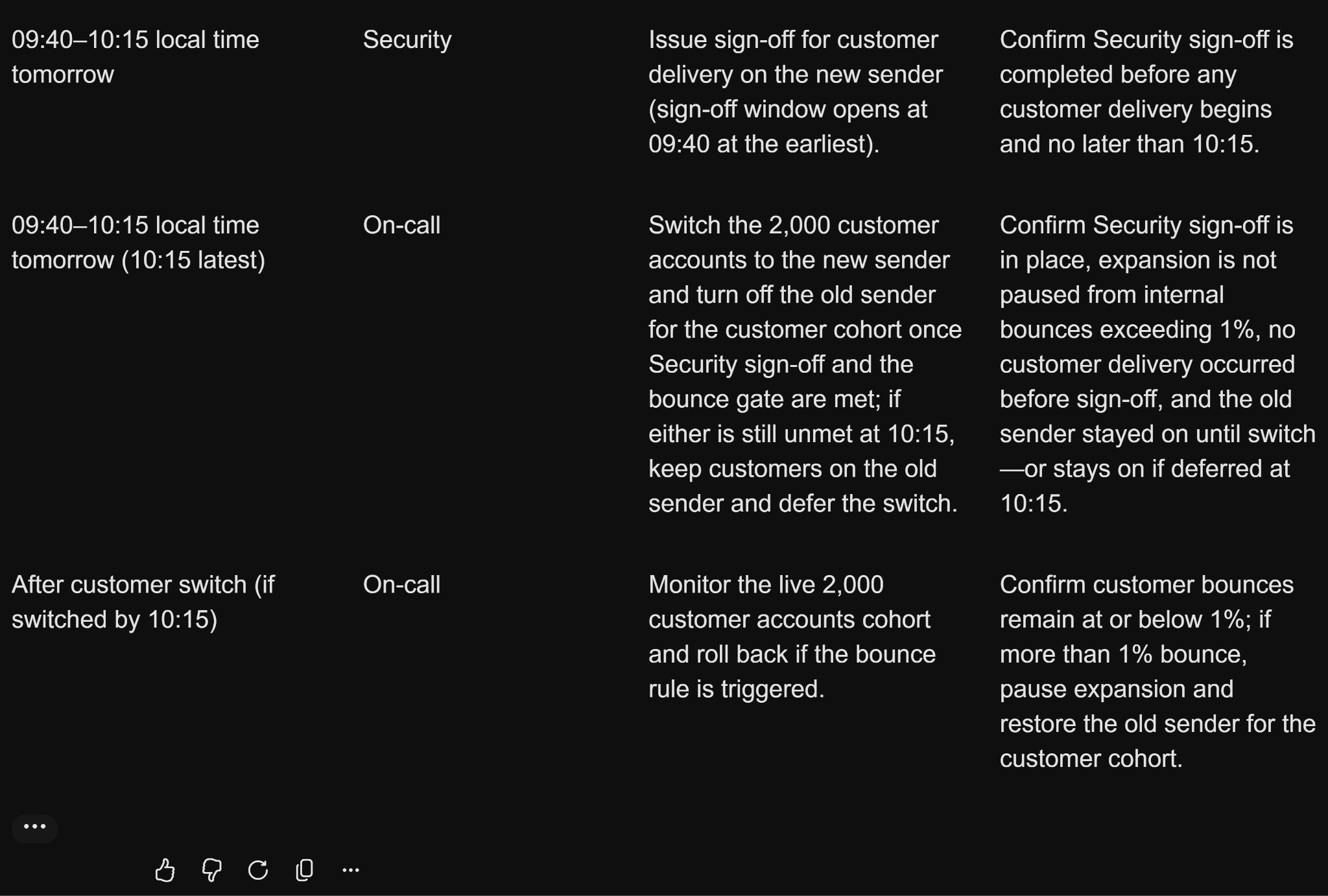
Gemini 4 Neon revised checklist
GPT-6.2 Astra revised checklist
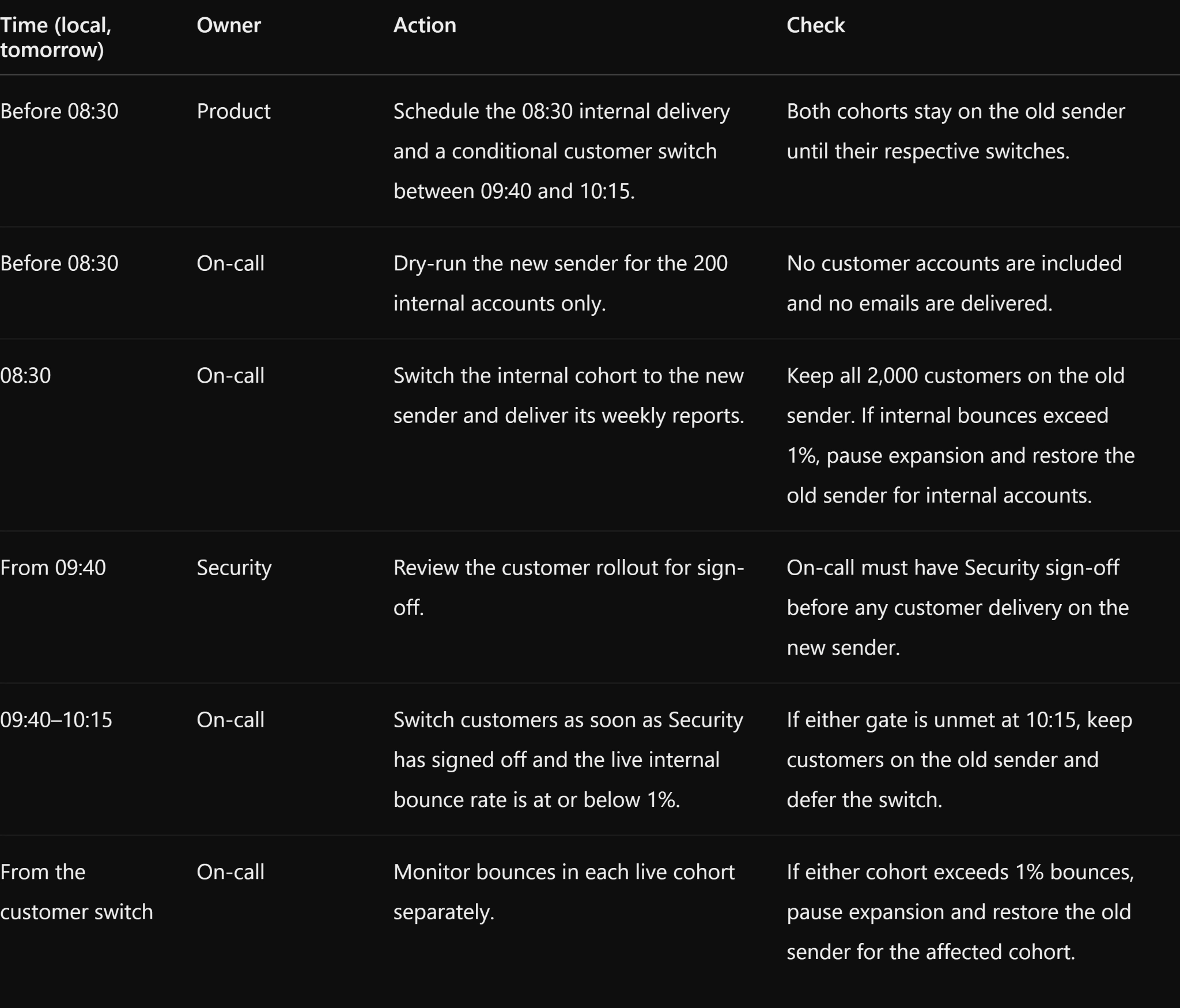
Both initial answers used six rows and respected the original timing and ownership. More importantly, both revised answers retained live internal delivery at 08:30 while narrowing the dry-run to internal accounts only. Neither treated the delayed customer rollout as a reason to postpone the internal cohort.
Both moved the customer switch into the 09:40–10:15 window, conditional on Security sign-off and the internal bounce gate. Both explicitly kept customers on the old sender and deferred the switch if either condition remained unmet at 10:15. The deadline stayed a cutoff, rather than becoming permission to skip a gate.
Astra had the cleaner final monitoring instruction. It said to monitor both live cohorts separately after the customer switch. Neon put the internal rollback rule in its 08:30 row and customer monitoring in its final row. Neon's rule remained present, but Astra made the continuing responsibility easier to scan in one place.
Result: Both preserved the operational requirements. We prefer Astra's final monitoring row for clarity, without treating that editorial advantage as a correctness win.
Test 3: Read the circuit before doing the arithmetic
The third test used the same circuit image for both models. The node positions matter here. Reading the diagram as a familiar bridge while swapping B and C would produce a plausible-looking answer with the wrong voltage sign.
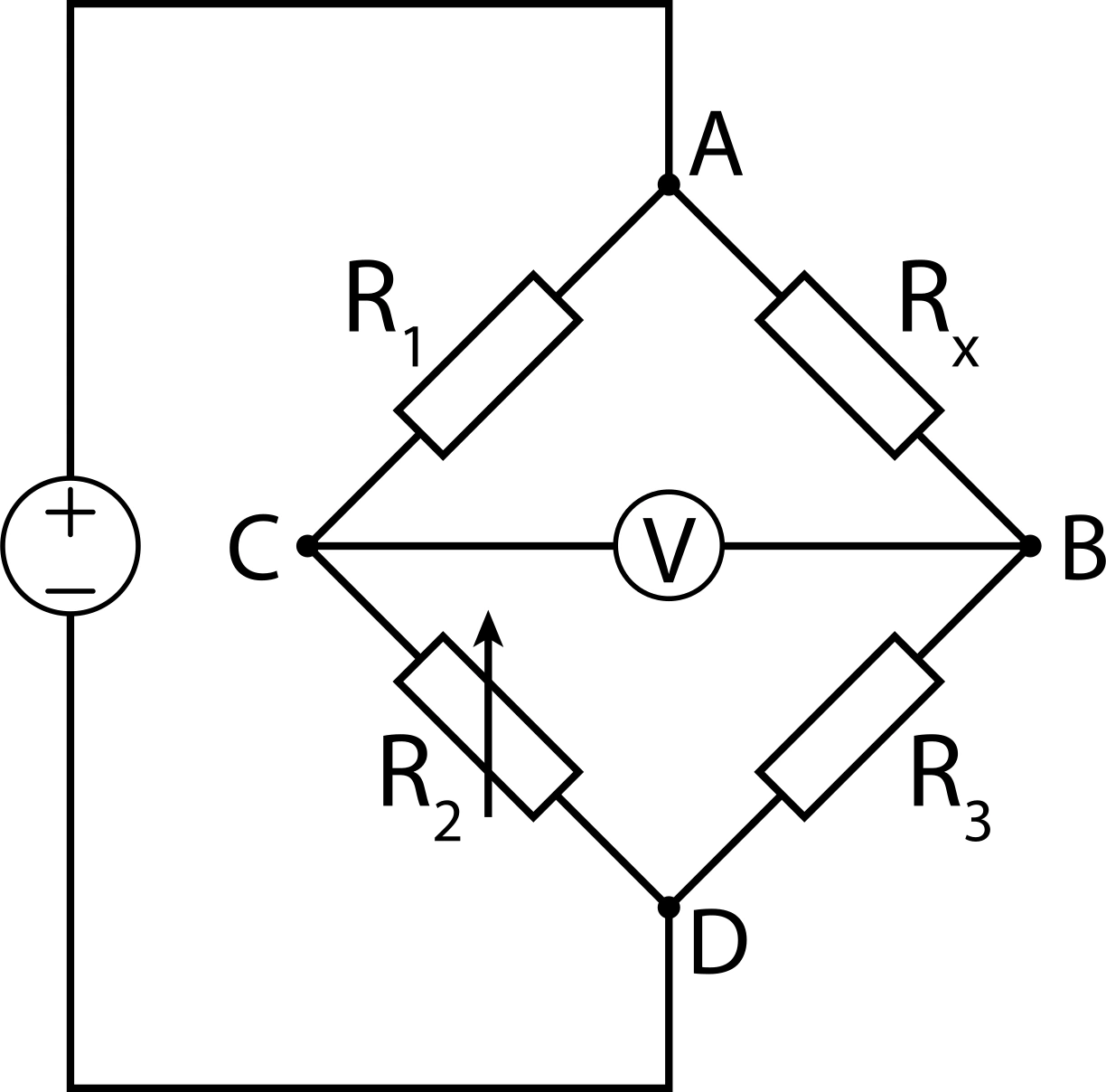
Prompt with the image attached
Use only the attached circuit diagram and basic circuit laws. The ideal source makes node A positive 12 V relative to node D at 0 V. Treat V as an ideal voltmeter. Initially R1=100 ohms, R2=200 ohms, R3=150 ohms and Rx=300 ohms. Identify the two resistor paths from A to D. Give a compact table of the potentials at B and C,
V_CminusV_B, and total source current for (1) the initial circuit and (2) after adjusting only R2 to balance the bridge. State the balanced R2 value and the current through the voltmeter in both cases. Show enough arithmetic to verify the answer. Keep the response under 160 words. Do not use tools, browsing, account context, prior chats or personal details.
Gemini 4 Neon output
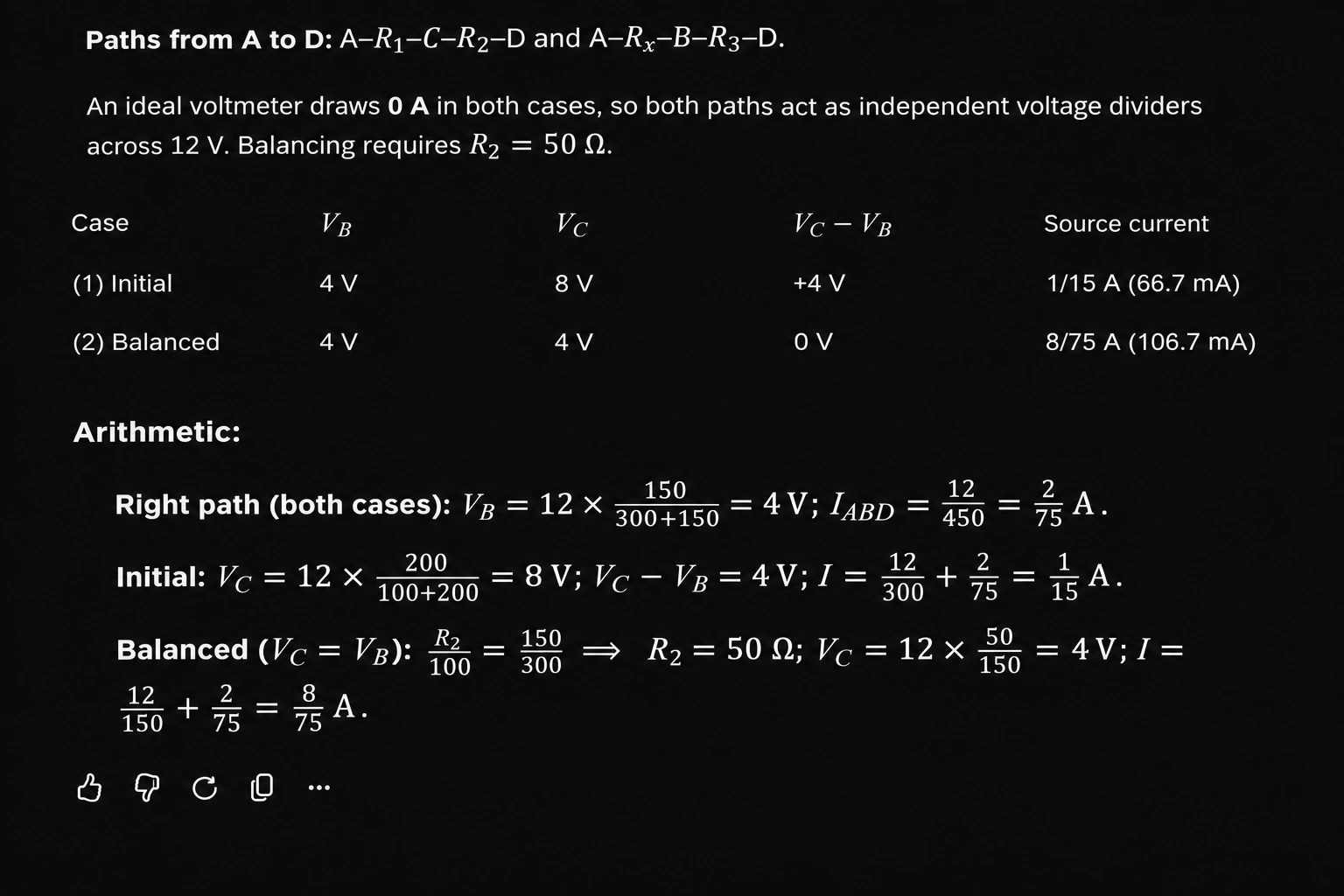
GPT-6.2 Astra output
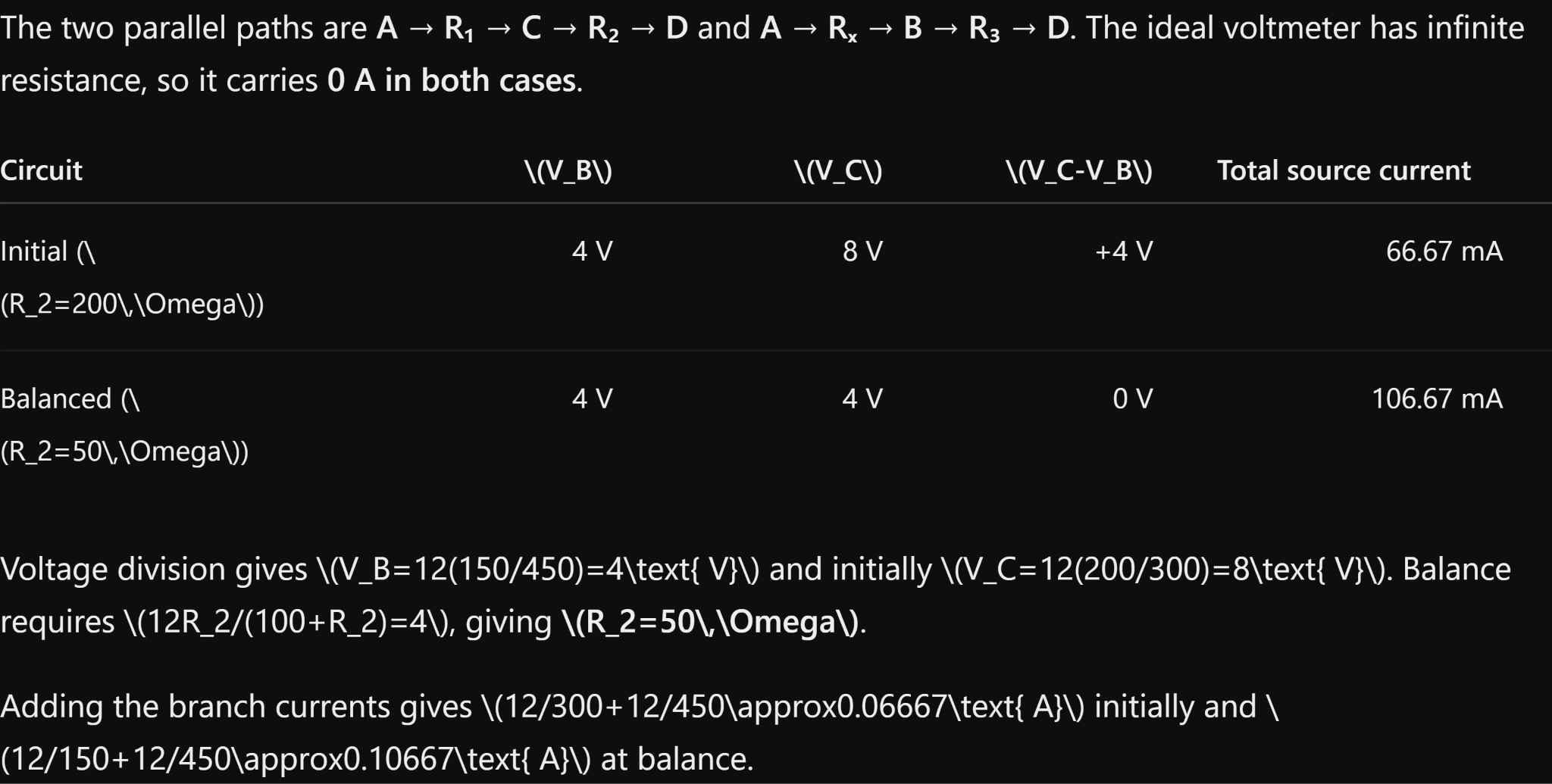
Both correctly identified the paths as A–R1–C–R2–D and A–Rx–B–R3–D. Because the voltmeter is ideal, it carries zero current, allowing the two branches to be treated as separate voltage dividers.
| Checked quantity | Initial circuit | After balancing |
|---|---|---|
| R2 | 200 Ω | 50 Ω |
| B potential | 4 V | 4 V |
| C potential | 8 V | 4 V |
| C minus B | +4 V | 0 V |
| Total source current | 66.67 mA | 106.67 mA |
| Voltmeter current | 0 A | 0 A |
The increase in source current after balancing is useful evidence that the models followed the changed circuit. Lowering R2 from 200 Ω to 50 Ω reduces the left branch's resistance, so balancing the bridge does not preserve its original current draw.
Neon included exact current fractions, while Astra used rounded decimal values. Both matched the independent calculation. A 4 V meter reading in the initial circuit also did not tempt either model into inventing current through an ideal voltmeter.
Result: Neon wins, because of the presentation as Astra gave a poorly formatted response.
Test 4: Build a release queue that survives a retry
A working interface has to hold together after a user changes something. We asked for a small standalone page with keyboard filters, an announced result count, and a retry action that could remove its own card from the current view.
Prompt
Return one complete standalone HTML file in one code block, with no external dependencies. Build a responsive internal page called Release Queue. On a warm off-white canvas use a dark navy header, compact cards, and visible focus outlines. Show these four seeded items, in order: 09:01 Bundle assets, succeeded; 09:04 Sync translations, failed; 09:07 Run smoke checks, running; 09:11 Publish changelog, queued. Each item must visibly show its time, title and status in text. Provide keyboard-operable buttons All, In progress and Failed. All shows all four. In progress shows Running and Queued. Failed shows only Failed. The selected state must be exposed to assistive technology. A visible status line with
aria-live="polite"updates toShowing X of 4 releases. Provide a Retry button on the failed item only. Retry changes that item to Queued, refreshes the filter and count, and focuses the active filter button if the card disappears. When a filter is empty, showNo releases match this filterin the results. At narrow widths the page must fit a 360px viewport without horizontal overflow. Do not use external assets, libraries, or persistent storage.
Gemini 4 Neon before and after Retry
Before Retry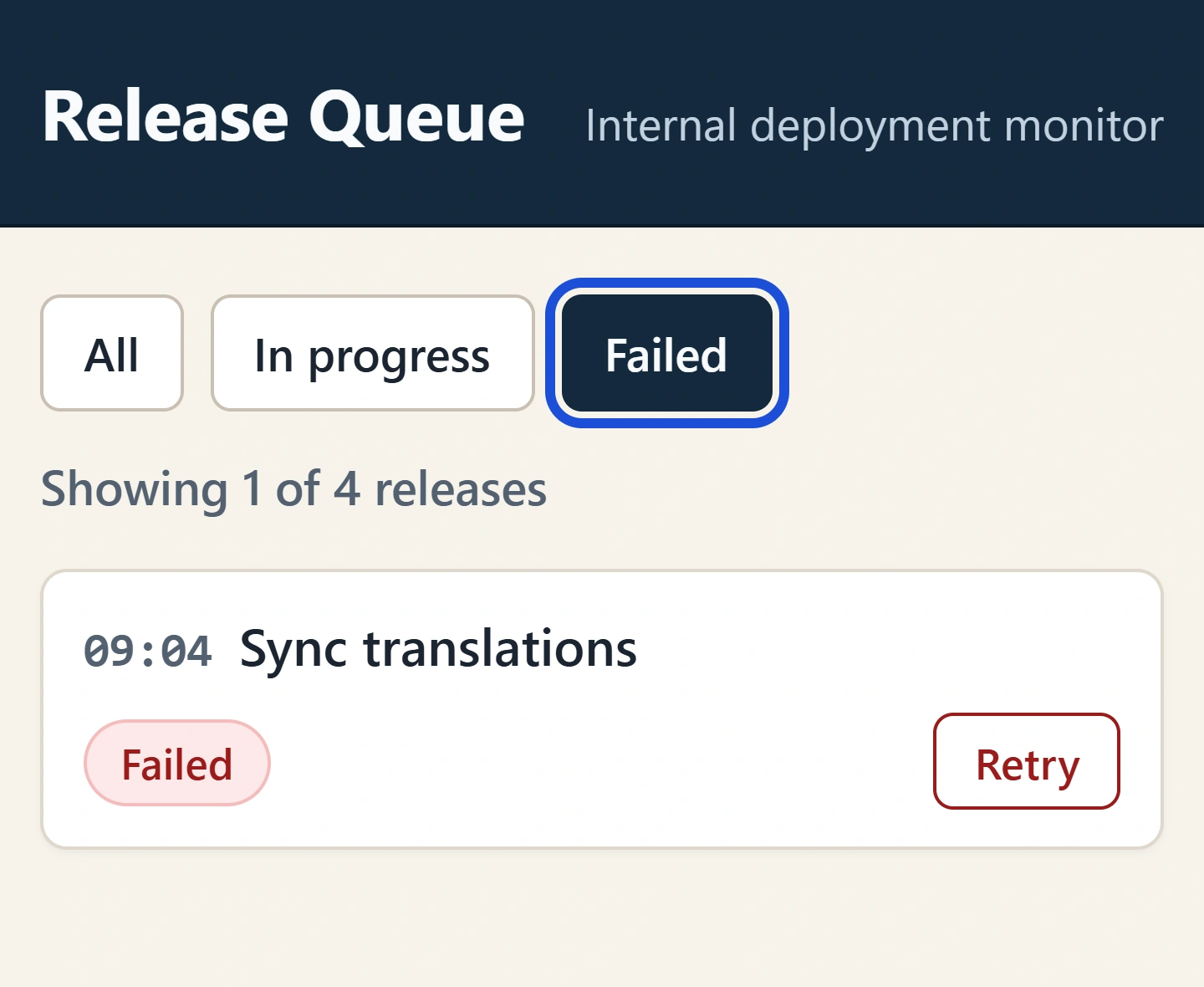 | After Retry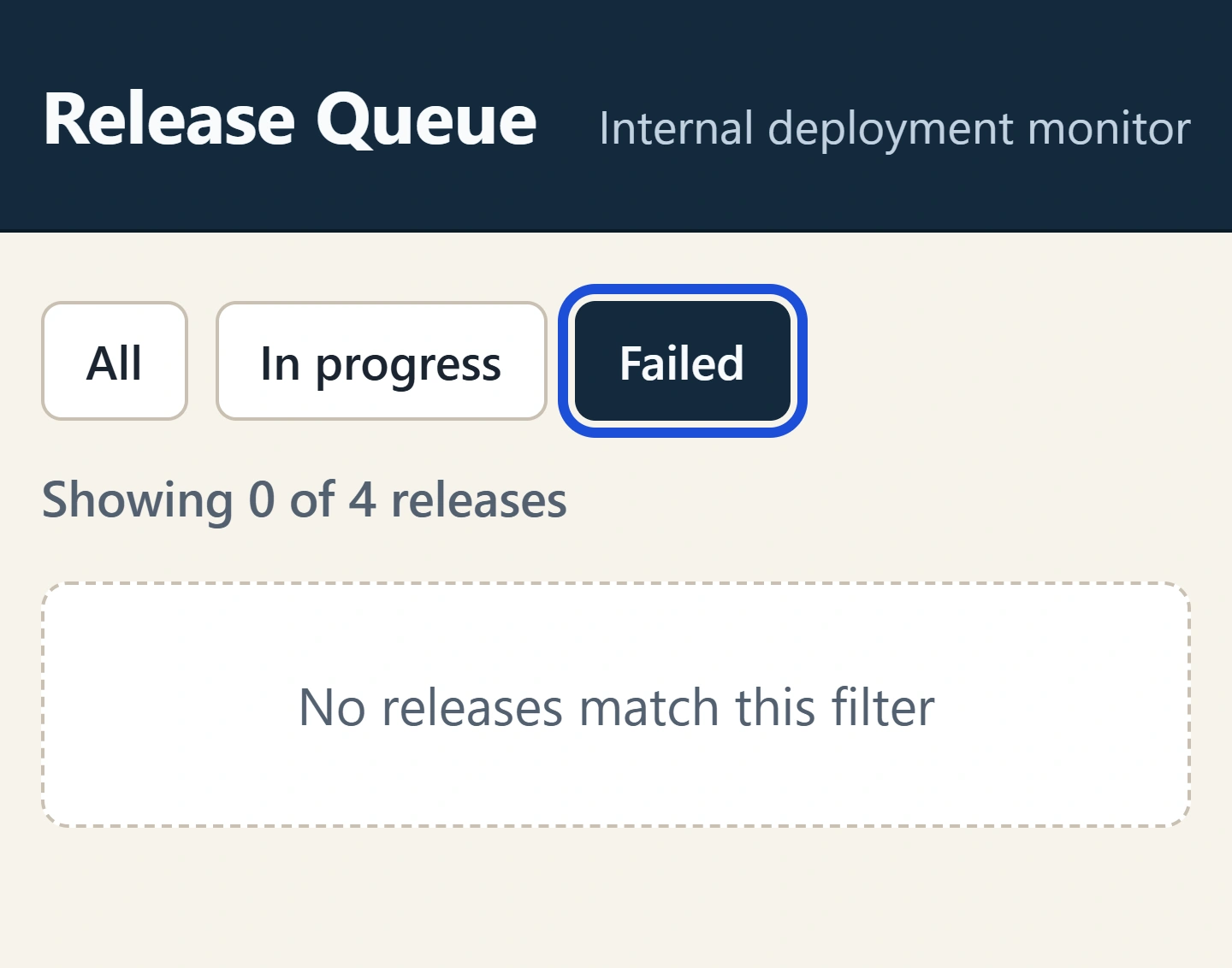 |
|---|
GPT-6.2 Astra before and after Retry
Before Retry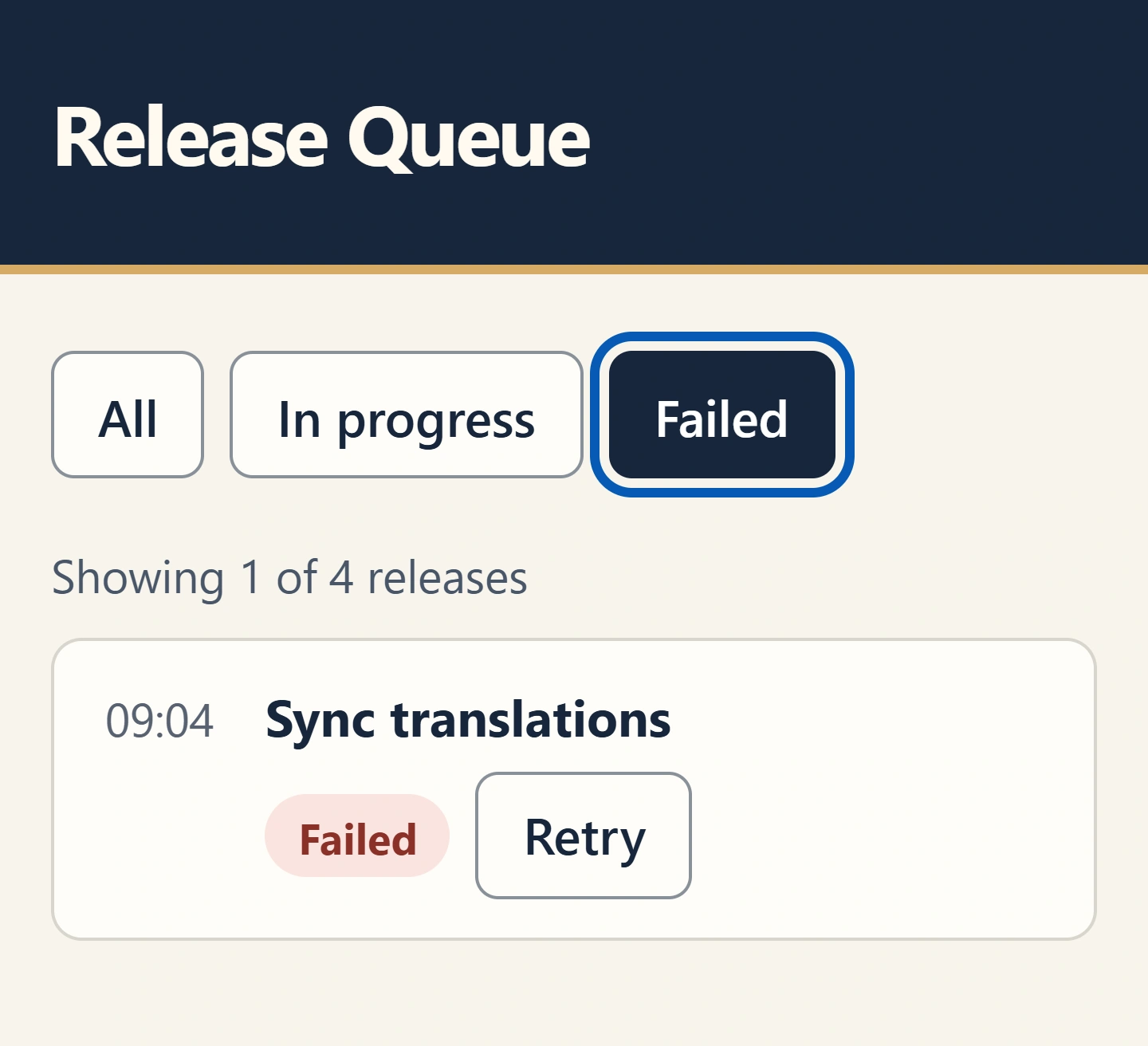 | After Retry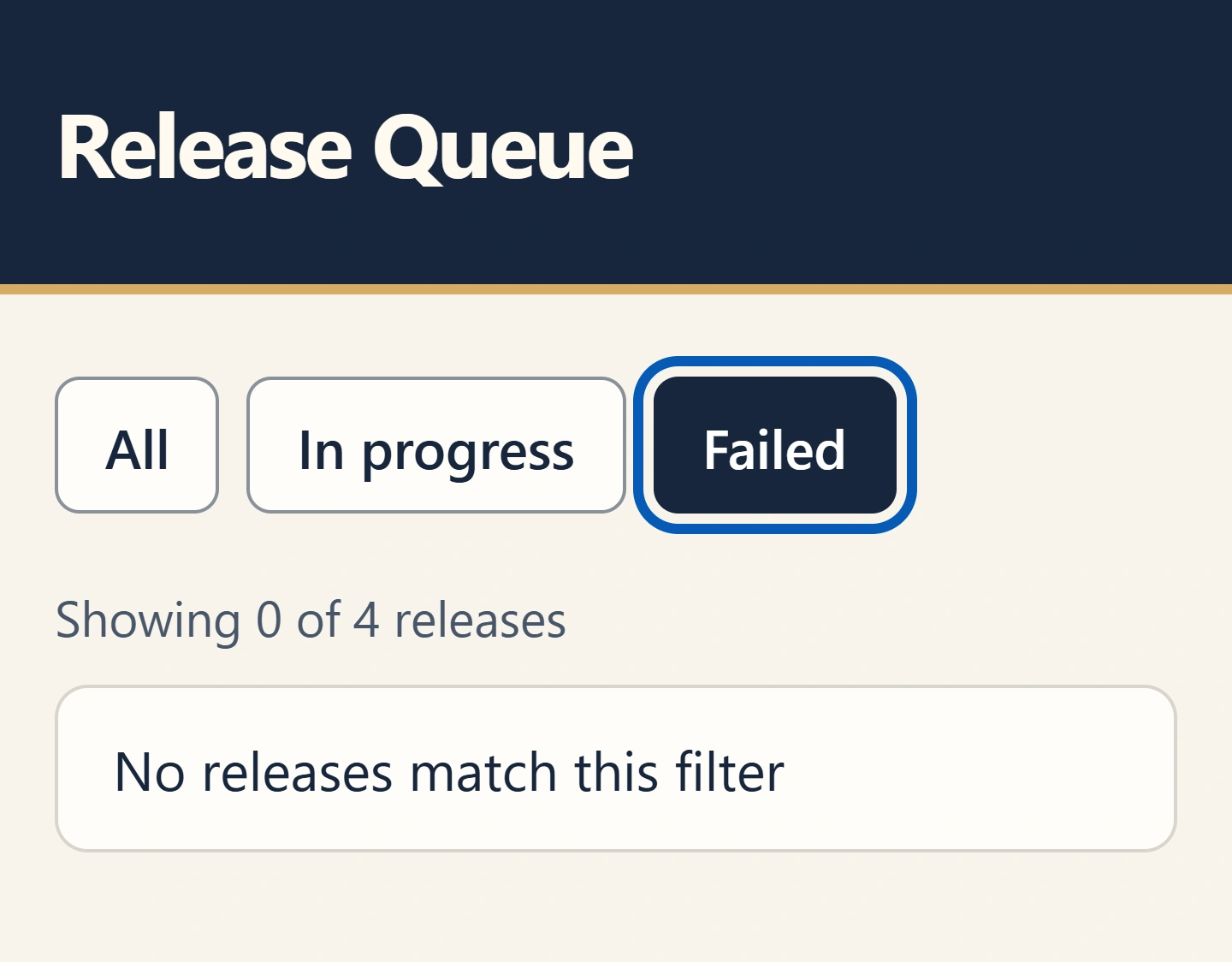 |
|---|
Both pages passed all eight browser check groups. The filters exposed their selected state, worked from the keyboard, and produced the correct subsets. Retry changed Sync translations to Queued, removed it from Failed, updated the count, displayed the exact empty message, and returned focus to the Failed button.
Switching back to In progress then showed three releases, including the retried item. All showed four, with no remaining Retry button. Neither page overflowed horizontally at 360 pixels or produced JavaScript errors or network requests during the checked sequence.
Their visual choices differed. Neon used a compact header with an explanatory subtitle and placed the red outlined Retry control at the card's right edge. Astra used a larger title, a gold divider, and grouped Retry beside the status. Both followed the requested off-white and navy palette.
Underneath, Neon rendered its cards from an array, while Astra kept four static cards and toggled their visibility. Either approach was sufficient here. The observable interaction mattered more than which implementation looked more elaborate.
Result: A functional tie. Astra's larger controls and Neon's compact layout give you different starting points for a design edit, rather than a reason to discard either page.
Which model should you choose?
| Work in this comparison | Observed result | Useful distinction |
|---|---|---|
| Inventory repair | Both passed 12 checks | Both handled validation order and atomic updates |
| Revised rollout | Both retained the constraints | Astra made ongoing cohort monitoring clearer |
| Circuit image | Both matched the reference | Exact fractions and rounded decimals were equally correct |
| Release Queue | Both passed eight browser groups | Different layouts, equivalent checked behavior |
For work resembling these tasks, we would start with Neon and keep the checks attached. Its lower published API rates come with no verified functionality loss in this set. That is a bounded purchasing argument, especially when the output can be executed or checked against explicit rules.
Astra's best distinction here was editorial. Its rollout monitoring row reduced the effort needed to understand who keeps watching which cohort after the switch. If your workflow repeatedly depends on compact operating instructions, test that advantage on your own documents and reviewers.
The deciding evidence should come from a workload that separates them. A larger repository change, a messy source pack, or a multi-step agent run may do that. These four tasks did not justify a universal winner. They did show that Neon deserves a serious trial before you assume the higher-priced model is necessary.
Frequently Asked Questions
Is Gemini 4 Neon cheaper than GPT-6.2 Astra?
Yes, at published Standard API token rates. Actual task cost also depends on token usage and retries.
Which model won the hands-on tests?
Both met the checked requirements across four tasks. Astra's rollout monitoring instruction was clearer.
Did both models use High effort?
Yes, in their respective apps. Matching labels do not establish equal compute budgets.
Were the generated interfaces actually tested?
Yes. Both passed keyboard, filtering, retry, focus, live-count, and 360-pixel layout checks.