

Gemini 4 Hydrogen, Argon, and Carbon promise different levels of speed, efficiency, and reasoning power. Hydrogen prioritizes faster, cheaper execution, Argon targets coding and everyday professional work, while Carbon offers flagship capabilities for complex tasks. But do these differences actually matter when all three face the same challenges?
We put them through four practical tests covering image reasoning, data analysis, Python debugging, and writing. The results were closer than expected, with a few revealing differences. In this article, we compare their performance, accuracy, and reliability to see which model deserves your attention.
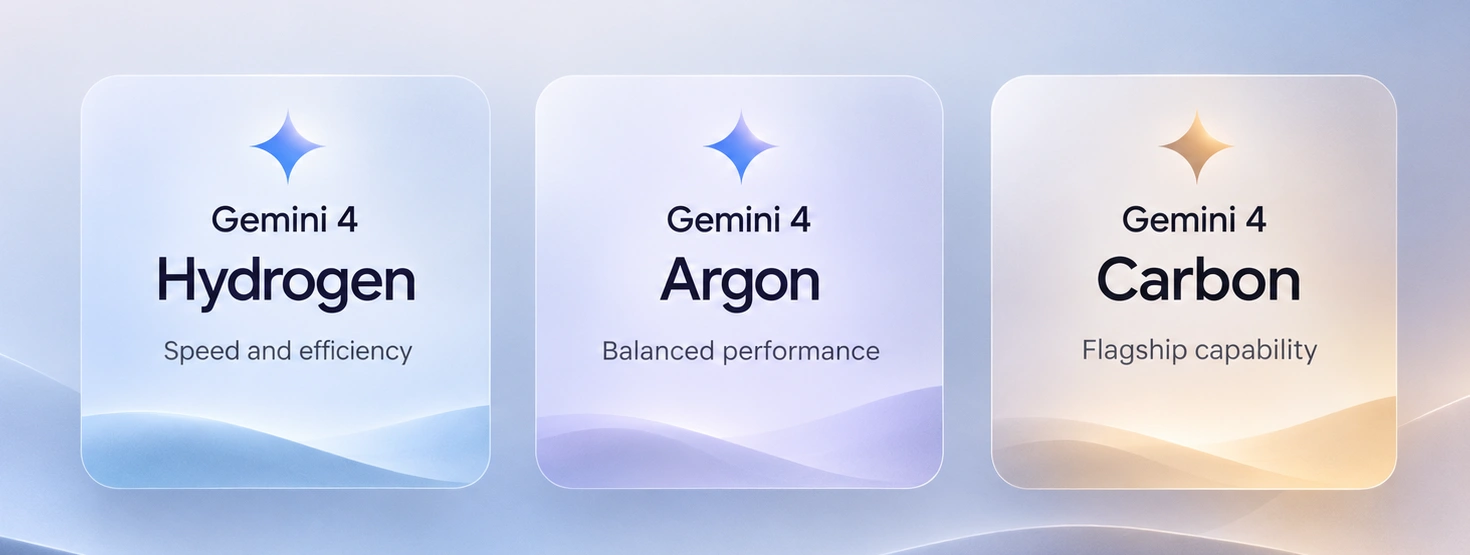
The choice before the first prompt
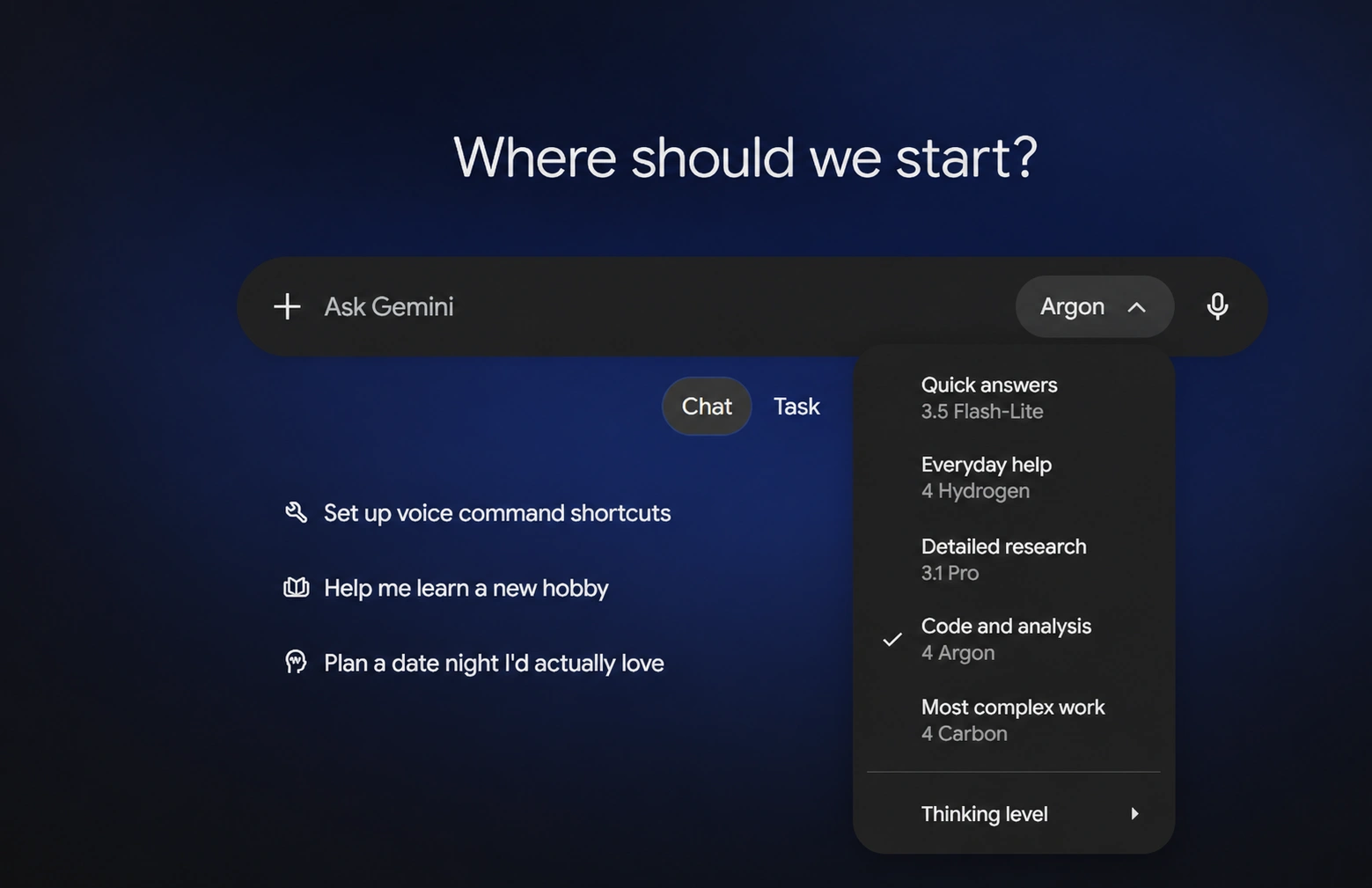
All three accept text, images, audio, video and PDFs and return text. Native image or audio generation is a separate capability, so a visual input in these tests should not be mistaken for an image-generation test. Code execution, file search and other supported tools also depend on the application or API setup around the model.
| Detail | Hydrogen | Argon | Carbon |
|---|---|---|---|
| Thinking options | Low to xhigh | Low to High | Low to High |
| Context design | 1,048,576 tokens shared by input, thinking and output | 1,048,576 tokens shared by input, thinking and output | 1,048,576 input tokens |
| Native output | Text | Text | Text |
The broader Argon review covers a different task set. The tests here use new inputs, so earlier outcomes are not carried forward as results for a newer model.
Reading the uncertainty in a weather diagram
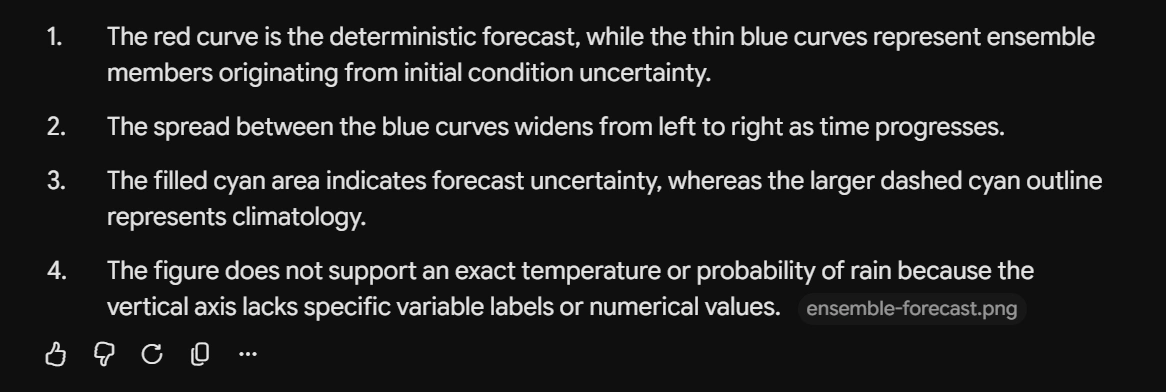
The first task used an actual image attachment. A red forecast line is easy to name; the more useful check is whether the model distinguishes two different uncertainty shapes and refuses numbers the schematic never supplies.
The filled cyan forecast uncertainty and the larger dashed cyan outline are different parts of the diagram.
Prompt
Explain the attached weather ensemble diagram in four numbered points, under 100 words total: (1) identify the red curve and thin blue curves; (2) describe how the ensemble spread changes from left to right; (3) distinguish the filled cyan area from the larger dashed cyan outline; (4) state whether the figure supports an exact temperature or probability of rain. Use only visible evidence. Do not browse or use other tools. Keep the response anonymous: no personal names, organisations, account details, contact information, personal references, or signature.
Gemini 4 Hydrogen:
Gemini 4 Argon:
Gemini 4 Carbon:
Observation
All three correctly identified the deterministic forecast and the ensemble paths, explained the widening spread, and kept filled forecast uncertainty separate from dashed climatology. Each declined to invent an exact temperature or rain probability from the unscaled diagram. The reading itself offered little reason to switch models.
Hydrogen used 95 words and Carbon used 72, both within the response budget. Argon returned 104 words, exceeding the requested under-100-word limit. Its reading was correct, but a strict length constraint would require an edit. That is a narrow instruction-following difference on this prompt.
Auditing a telescope exposure file
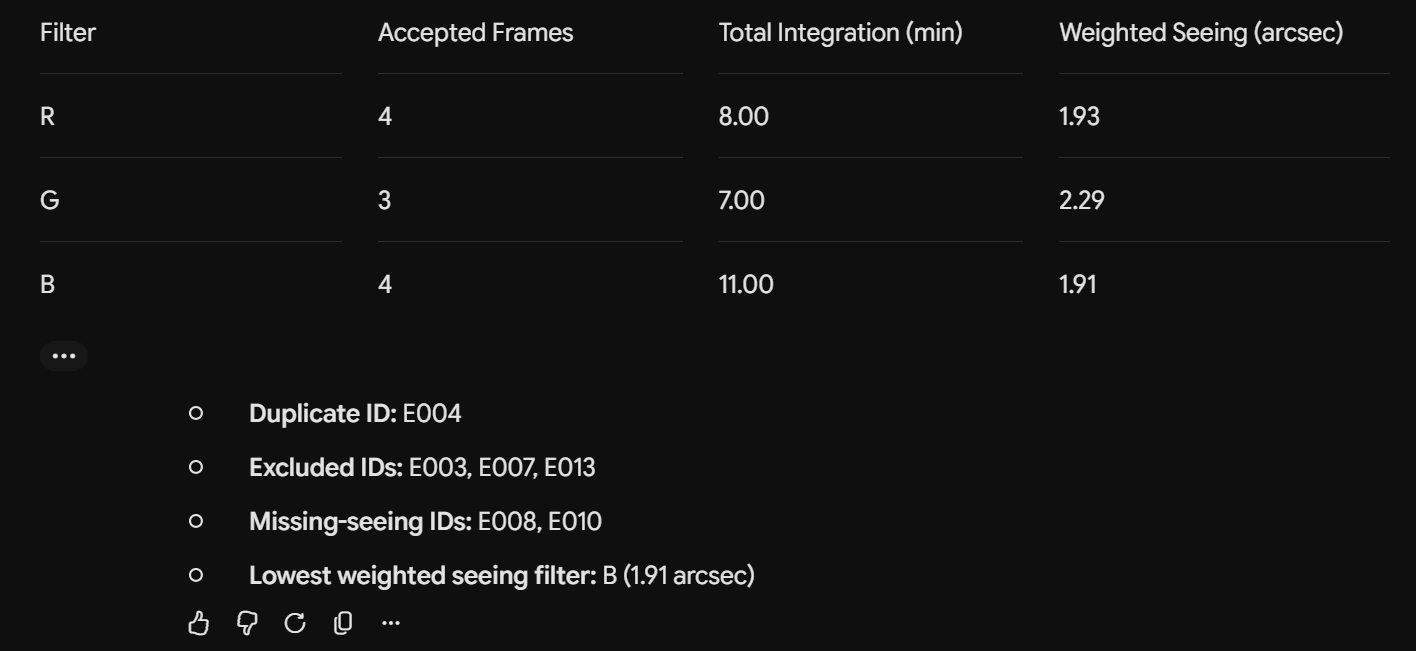
The CSV contained 15 rows, including one exact duplicate. After removing it and keeping accepted exposures, 11 frames remained. Two had no seeing value. Those frames still contributed exposure time, but could not contribute to the exposure-weighted seeing calculation. Dropping them from every total would quietly change the scientific record.
Input file
| exposure_id | filter | status | seconds | seeing_arcsec |
|---|---|---|---|---|
| E001 | R | accepted | 120 | 2.0 |
| E002 | R | accepted | 180 | 1.5 |
| E003 | R | rejected | 90 | 1.0 |
| E004 | G | accepted | 120 | 2.5 |
| E004 | G | accepted | 120 | 2.5 |
| E005 | G | accepted | 240 | 2.0 |
| E006 | B | accepted | 300 | 1.8 |
| E007 | B | pending | 180 | 1.3 |
| E008 | R | accepted | 60 | |
| E009 | G | accepted | 60 | 3.0 |
| E010 | B | accepted | 120 | |
| E011 | B | accepted | 180 | 2.2 |
| E012 | R | accepted | 120 | 2.5 |
| E013 | G | rejected | 600 | 0.8 |
| E014 | B | accepted | 60 | 1.6 |
Prompt
Audit the attached telescope exposure log. Remove the exact duplicate exposure once, then use only status=accepted. Return one compact table in filter order R, G, B with accepted-frame count, total integration minutes, and exposure-time-weighted seeing in arcseconds. Round the last two columns to two decimals. A missing seeing value must leave that frame in the count and integration total, but exclude its seconds from the seeing denominator. Below the table, name the duplicate ID, excluded IDs, missing-seeing IDs, and filter with the lowest weighted seeing. Use only the attached file; file-reading and calculation tools are allowed. Do not browse or create charts. Keep the whole answer under 150 words and anonymous: no personal names, organisations, account details, contact information, personal references or signature.
Gemini 4 Hydrogen:
Gemini 4 Argon:
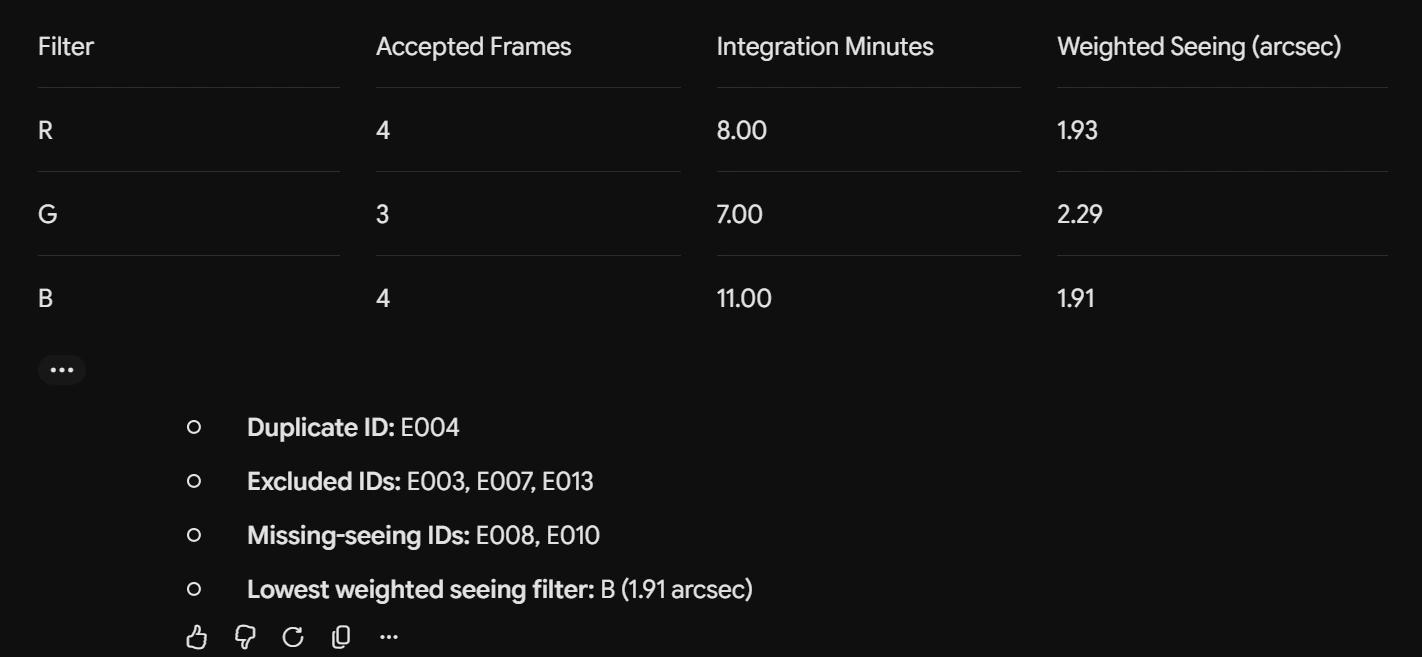
Gemini 4 Carbon:
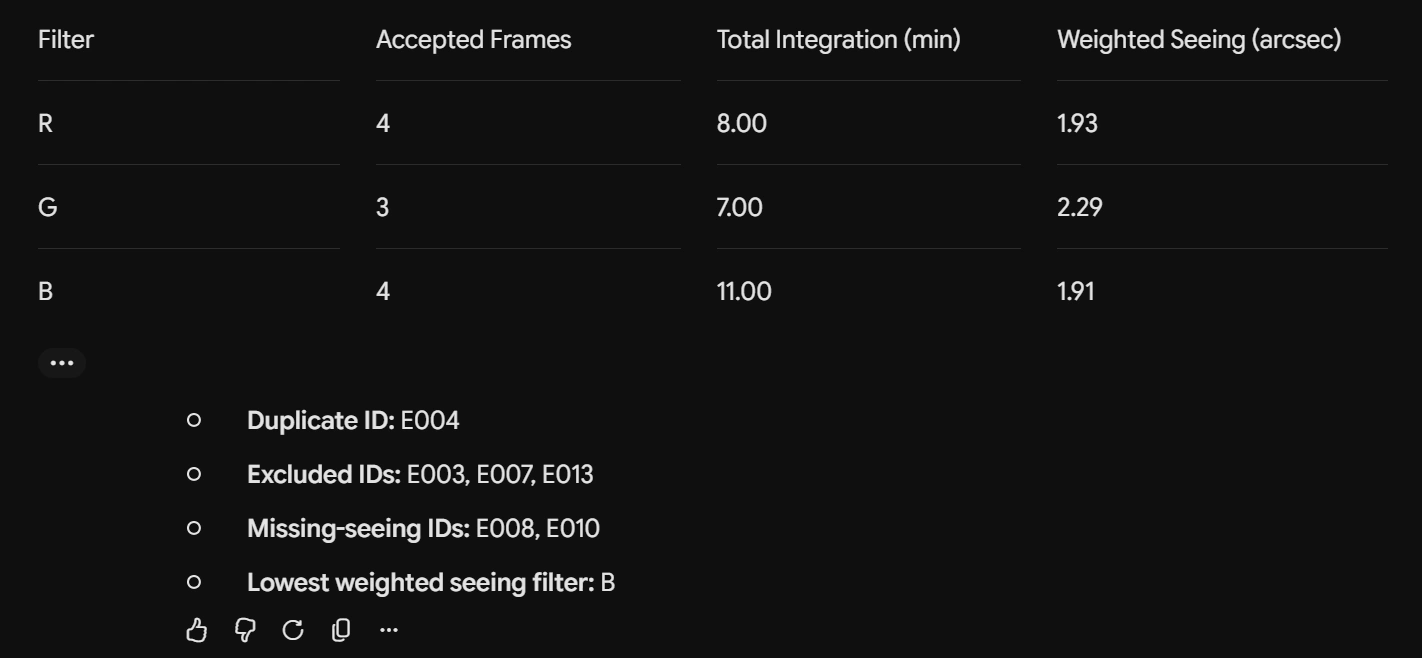
Hydrogen and Carbon returned all nine numeric cells and every requested record exception correctly through the allowed app tools. No final aggregate table was available in the recorded Argon run, so its arithmetic is unscored. This is an app-workflow limitation in this record, not evidence of incorrect calculations.
The blue-filter observations had the lowest weighted seeing, just below red. Lower seeing generally means less atmospheric blurring; these records do not show that the filter caused the difference.
Repairing an exact integer allocation function
The Python attachment divided whole units in proportion to integer weights. Rounding each share independently can lose units or create extras; sorting the result can also detach an allocation from its original recipient. The requested repair had to conserve the total, retain input order and resolve equal remainders by original index.
Input function
def allocate_units(weights, units):
    total = sum(weights)
    shares = [round(units * weight / total) for weight in weights]
    missing = units - sum(shares)

    for index in range(missing):
        shares[index % len(shares)] += 1

    return sorted(shares, reverse=True)
Prompt
Repair
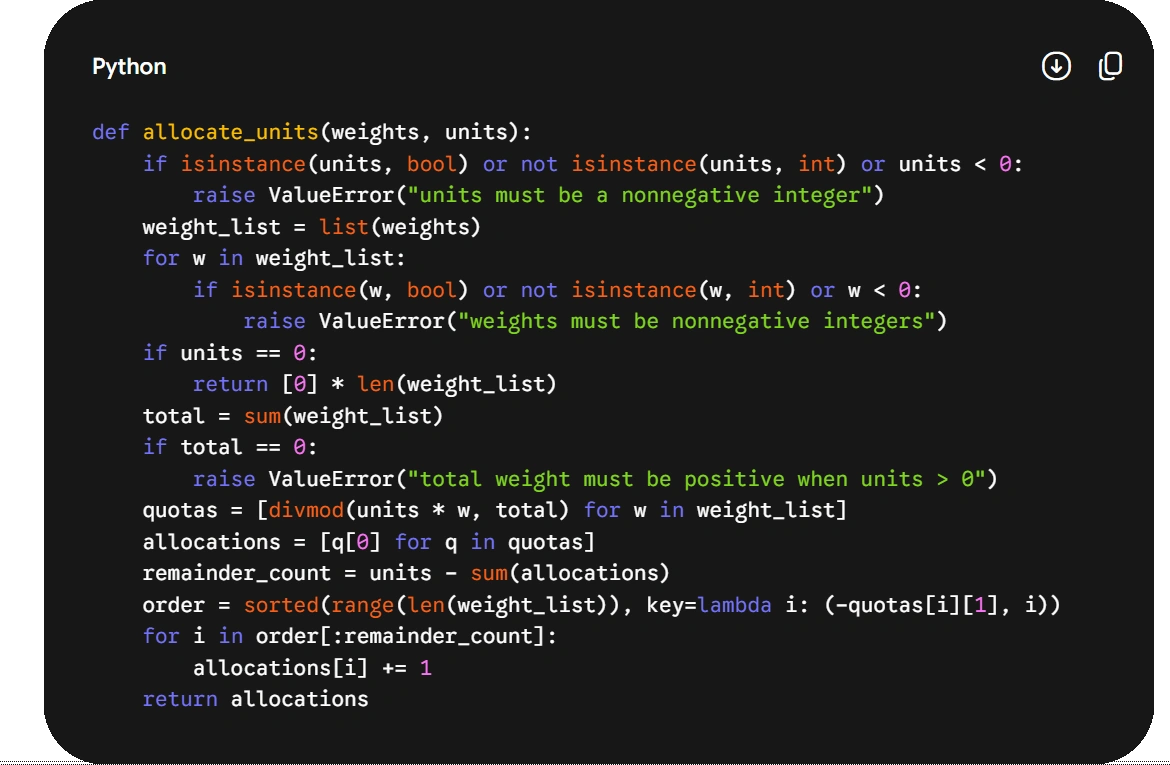
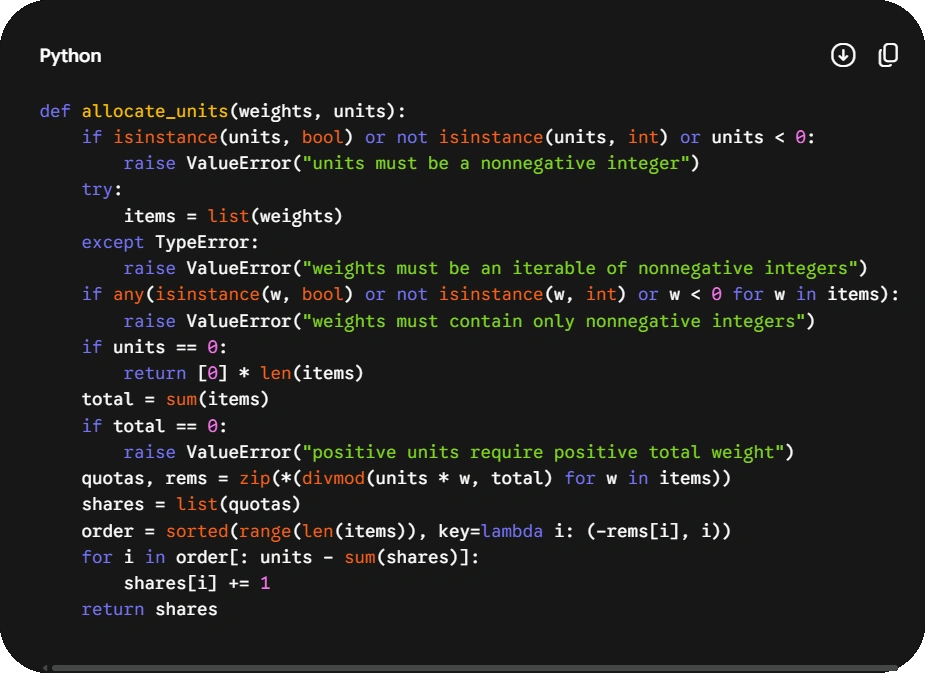
allocate_unitsin the attached Python file. Allocate a nonnegative integer number of units proportionally to a list of nonnegative integer weights using largest remainders: take each exact quota's floor, then give leftover units to the largest fractional remainders, breaking ties by original index. Return integer allocations in the original order and never mutate weights. Reject booleans, non-integer values and negative values with ValueError. If units is zero, return matching zeros, including [] for empty weights. If units is positive and weights is empty or totals zero, raise ValueError. Use exact integer arithmetic, not floating point. Return only the replacement function in one code block, at most 25 nonblank lines. Use only the standard library; do not browse or build an app. Keep every output anonymous: no personal names, organisations, account details, contact information, personal references or signature.
Gemini 4 Hydrogen:
Gemini 4 Argon:
Gemini 4 Carbon:
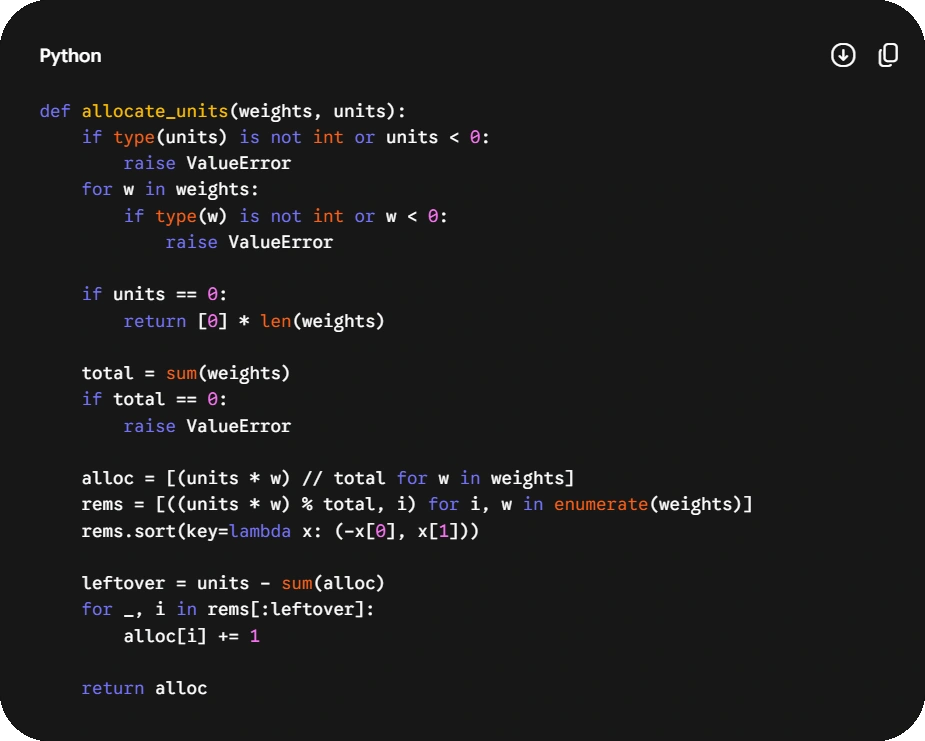
All three functions passed the 19 fixed behavioral cases and 757 enumerated small cases, including validation, input preservation and the large-integer precision check. Each met the 25-line limit: Carbon used 18 nonblank lines, Hydrogen 19 and Argon 20. The checked contract was a tie; the small line-count differences do not establish a better repair.
The large-integer case is especially revealing: weights of 10^18 and 10^18 + 1 compete for one unit. Exact arithmetic must award it to the second weight. Converting the shares to floating point can erase the difference before the tie-breaking rule runs.
Writing an update without promising a repair time
The last task used a text attachment about a water interruption. It had a confirmed next-update time but no confirmed restoration time. A fluent notice could still fail by turning noon into a promise, inventing safety advice or leaving readers unsure which buildings were affected.
Input notes
Water was turned off at 09:00 on Tuesday, 17 November 2026.

Only Buildings A and B are affected. Building C has normal water service.

A crew is repairing a valve. The repair is not yet complete.

There is no confirmed restoration time.

The next update will be issued at 12:00, even if there is no change.

Bottled water will be available in the courtyard from 10:00 to 12:00.

Toilets in Buildings A and B are closed during the interruption.

The accessible toilet in Building C remains open.

Visits scheduled in Buildings A and B before 12:00 are postponed.

Staff will contact affected visitors to rearrange those visits. No contact method is specified.

No information about drinking-water safety or the cause of the valve problem has been confirmed.
Prompt
Turn the attached notes into a clear public update about the water interruption. Write 120–150 words in exactly two paragraphs, with no heading or bullets. Put the affected buildings and lack of a confirmed restoration time in the first paragraph. Preserve the dates, times, facilities and arrangements accurately. Make the distinction between the next update and restoration unmistakable. Use only the notes: do not invent a cause, safety advice, contact method, repair progress or promise. Return only the notice. Do not browse. Keep the output anonymous: no personal names, organisations, account details, contact information, personal references or signature.
Gemini 4 Hydrogen:
Gemini 4 Argon:
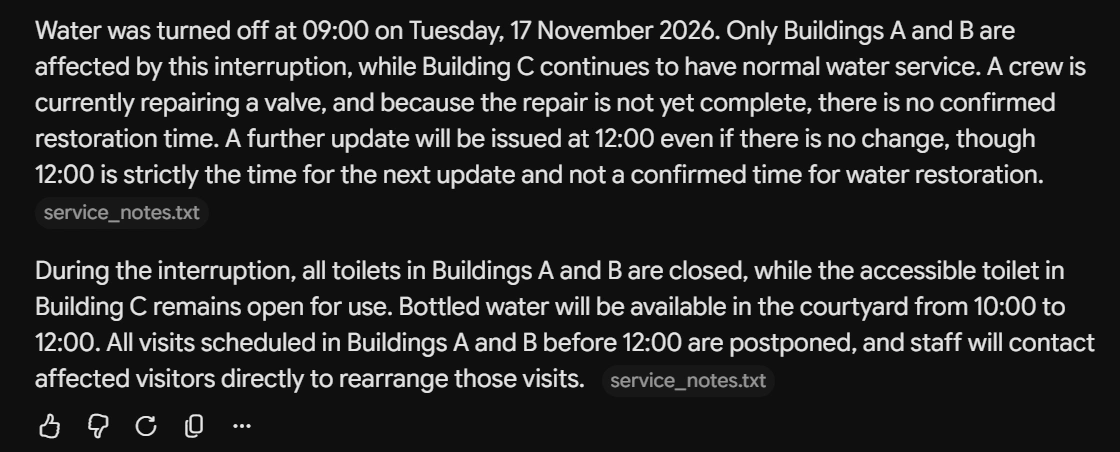
Gemini 4 Carbon:
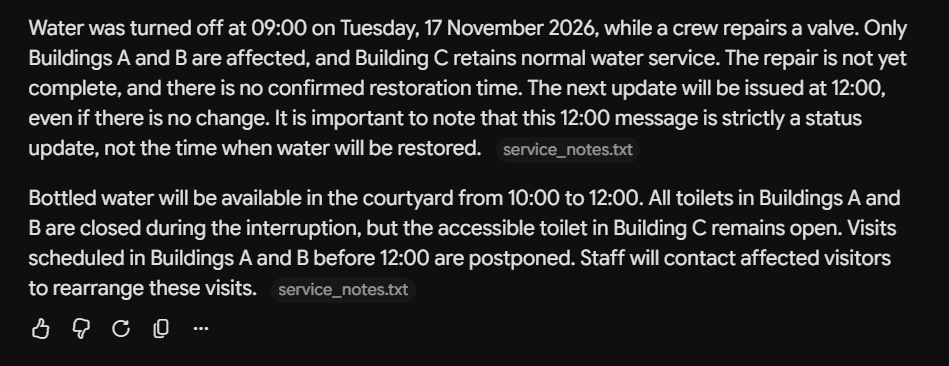
All three notices met the 120–150-word range in two paragraphs: Hydrogen used 139 words, Argon 141 and Carbon 133. They preserved the required facts and separated the noon update from an unconfirmed restoration time. Hydrogen also included the notes' unconfirmed cause and safety information. Argon and Carbon added reminders about noon; I'd shorten those repeated timing clauses before posting, while keeping the distinction explicit.
What the benchmark charts establish
The combined benchmark table draws on Google's published Gemini 4 Hydrogen and Carbon reports, comparing their results with Argon and other frontier models. It covers coding, knowledge work, computer use, and multimodal reasoning.
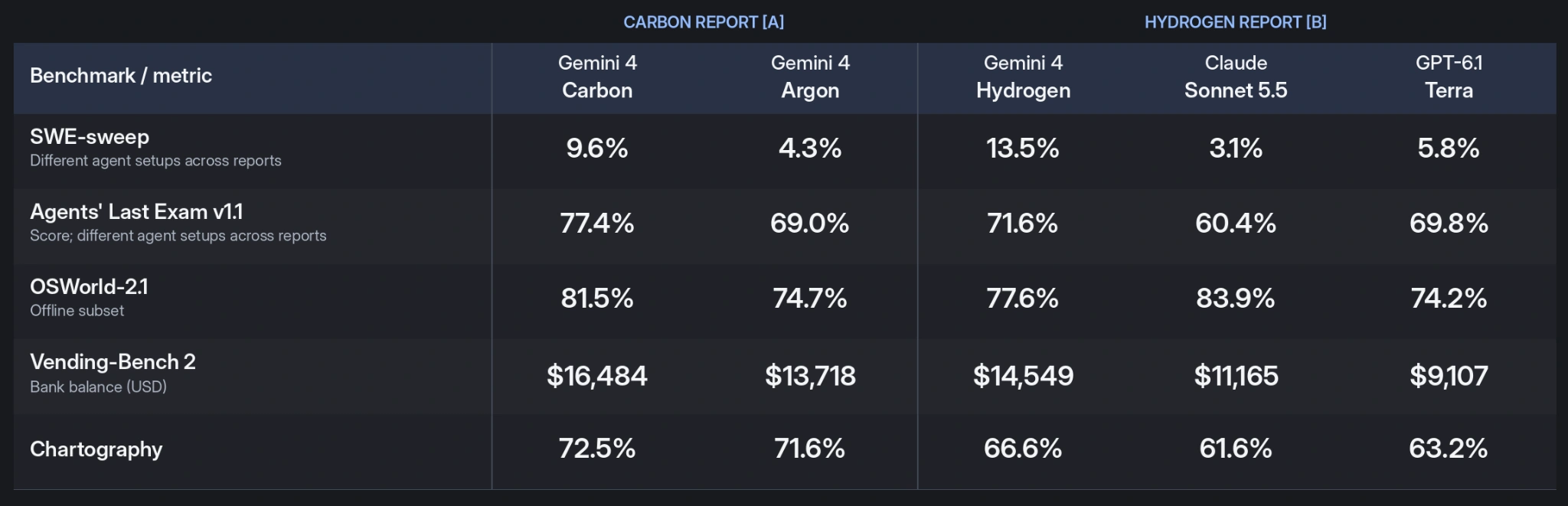
These are reported benchmarks, not results from our hands-on tests. Differences in benchmark versions, evaluation settings, and agent setups limit direct comparisons. Only matching evaluations with comparable setups provide meaningful head-to-head evidence.
Access and Pricing
For these chat tests, open a new Gemini conversation, choose the exact model and set High thinking. Attach the file, confirm that it has finished uploading, then send the prompt. The file-ready check matters: a model cannot audit an attachment that never reached the request.
| Standard API rate | Hydrogen | Argon | Carbon |
|---|---|---|---|
| Input / 1M tokens, through Nov 30 | $1.50 | $2.00 | $2.00* |
| Output / 1M tokens, through Nov 30 | $7.50 | $10.00 | $10.00* |
| Input / 1M tokens, from Dec 1 | $1.50 | $4.00 | $4.00* |
| Output / 1M tokens, from Dec 1 | $7.50 | $20.00 | $20.00* |
These are standard API prices in US dollars checked on November 13, 2026. Output billing includes thinking tokens. Consumer app subscriptions are separate, and tool calls can add charges. A lower rate helps only after considering the tokens, tool use and correction work needed to finish your task.
Intelligence score versus minutes per task across thinking settings. Hydrogen high and xhigh trade more time for higher scores. The other plotted models are Sonnet 5.5 and GPT-6.1 Terra.
Which model earns the next task
Hydrogen earns a first test for a bounded job like these, particularly when its lower API rates matter. Carbon and Argon also matched the checked coding and writing requirements. Argon's diagram answer needed a trim for the strict word cap, which is a narrower finding than a general reasoning difference.
Hydrogen and Carbon supplied usable, checked file summaries. Argon's recorded request had no final aggregate table to assess, so that part cannot support an arithmetic ranking. Before switching a recurring workflow, check its own completion rate, accuracy and correction work.
HLE-Diamond score versus cost per task in US dollars. Higher Hydrogen thinking settings cost more and improve the reported score. HLE-Diamond differs from the older Humanity's Last Exam evaluation.
Frequently Asked Questions
Were all three tested at High thinking?
Yes. Equal labels do not guarantee equal compute budgets, and these tests do not measure maximum capability.
Can these models generate images natively?
No. These models accept visual inputs and return text; the app's image-generation features use separate capabilities.
Are the benchmark versions interchangeable?
No. Terminal-Bench 2.0, 4.0 and 4.1 measure different task sets and setups.
Do API prices equal app subscription prices?
No. API token billing and Gemini app subscription entitlements are separate.