

GPT Image 2.5 and Nano Banana 2.1 promise impressive image generation and editing capabilities, but how do they compare in practice? From realistic sports photography and bilingual posters to educational diagrams and fantasy illustrations, both models have plenty to offer.
We tested both models across five identical prompts in ChatGPT Image 2.5 and Nano Banana 2.1, evaluating visual quality, instruction following, text accuracy, and editing consistency. While both delivered impressive results, some differences stood out, particularly in structured diagrams. In this blog we compare their outputs, explore their strengths and limitations, and help you decide which model better suits your creative workflow.
TLDR: Both GPT Image 2.5 and Nano Banana 2.1 performed well across five hands-on tests, producing convincing photographs, posters, illustrations, and image edits. GPT Image 2.5 showed an edge in following precise diagram instructions, while other differences largely came down to visual details and presentation. Neither emerged as a clear overall winner.
What the model names mean
GPT Image 2.5 has two API variants. Flare targets fast everyday image generation, while Sunburst targets demanding quality and precise editing. That distinction matters if you are building a workflow: a result attributed only to “GPT Image 2.5” does not tell you which API variant or quality setting was used.
Nano Banana 2.1 is Google’s update with the API identifier gemini-nano-banana-2.1. Google lists it as generally available from 6 October 2026 and describes improvements to realism, text, infographic layout, and consistency across edits. Those are vendor claims; the images below show what happened in our own app exercises.
| Documented API feature | GPT Image 2.5 | Nano Banana 2.1 |
|---|---|---|
| Model choice | Sunburst or Flare | gemini-nano-banana-2.1 |
| Output dimensions | Custom dimensions; edges up to 3,840 px; 8,294,400 total-pixel cap; above 2,560 × 1,440 experimental | 1K default; 2K and 4K options |
| Aspect ratios | 1:3 through 3:1 | 14 options, including 1:8 and 8:1 |
| Reference workflow | Image inputs and instructed edits | Up to 14 references; search grounding supported |
These are API capabilities, not settings we selected in the browser tests.
Comparing Nano Banana 2.1 vs GPT Image 2.5 across 5 tests
Test 1: Sports photography with a believable human body
A sports photograph tests something a static object cannot: a human body caught in a specific action. The brief combines a full figure, a forward lead leg, a bent trailing leg, readable hands, and sharp subject detail against a softer background.
Prompt
Create a square photorealistic sports editorial photograph of one adult woman hurdler at the instant she clears a red and white hurdle on an outdoor running track. Full body visible, side view, moving from left to right. Her lead leg extends forward over the hurdle and her trailing leg is bent to the side in a plausible hurdle technique. She wears a plain cobalt blue racing kit and white running shoes. Show both hands with natural fingers. Freeze her face and body sharply while the distant stadium seats are softly blurred. Late afternoon sunlight comes from the upper left, with a believable shadow on the track. Exactly one athlete and one hurdle in the entire frame, no spectators, no logos, no text, no watermark.
| GPT Image 2.5 | Nano Banana 2.1 |
|---|---|
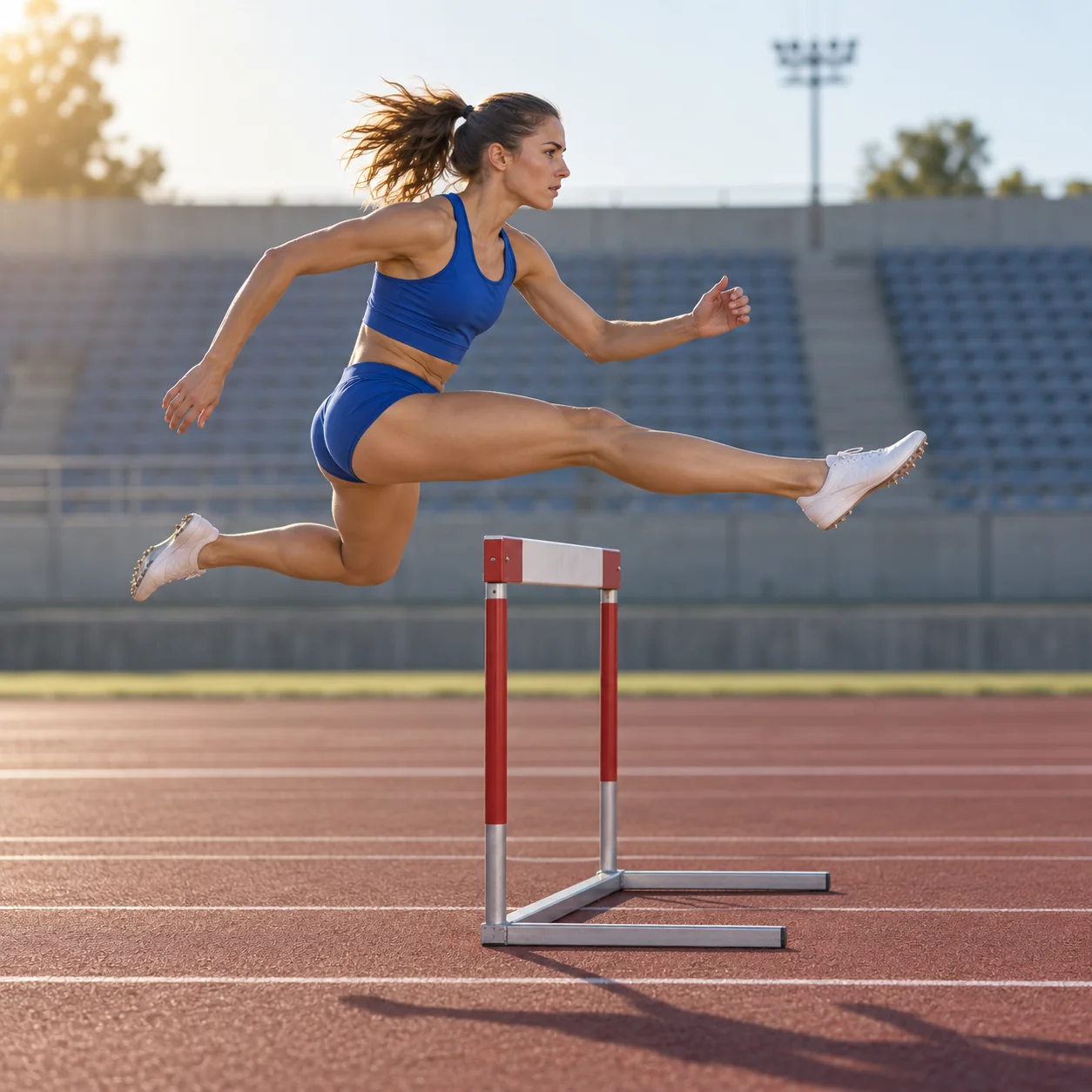 | 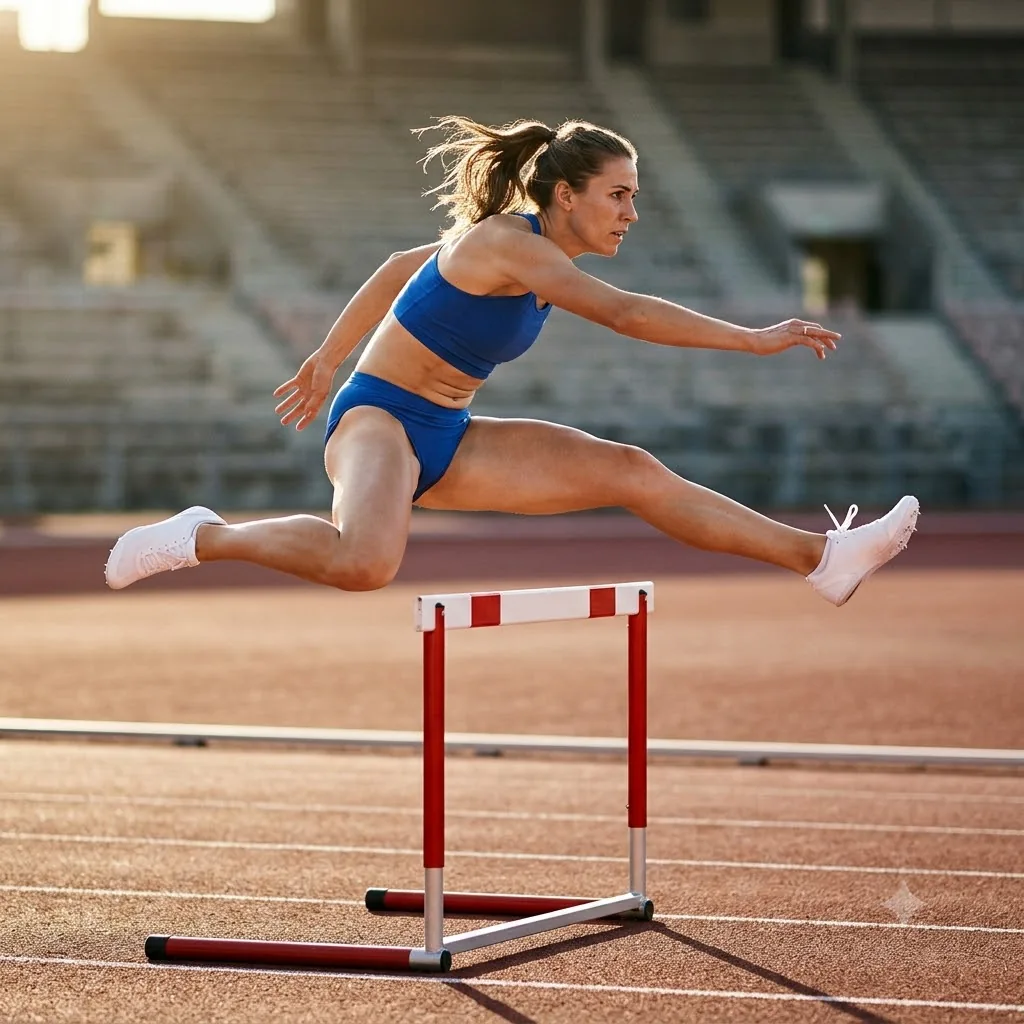 |
Observation. Both images show one woman clearing one red and white hurdle toward the right, with the full body in frame, blue kit, and white shoes. The lead leg extends forward and the trailing leg bends behind; neither has an obvious extra limb. Both keep the athlete sharp and soften the empty stadium seats. ChatGPT gives her a more upright torso and compact arm motion. Gemini leans her farther forward with an outstretched arm, making the pose feel more dynamic. Its forward-hand fingers are small and foreshortened, so they deserve a close look rather than an automatic anatomy pass.
Verdict. Tie on checked composition, counts, and broad pose. Both give a plausible hurdling scene. That supports a first-draft judgment, not a claim of perfect anatomy or expert-verified technique. Choose the pose that suits your editorial treatment, then inspect hands and equipment before delivery.
Test 2: A concert poster with exact English and Hindi copy
Here the job is graphic design: six exact strings across two scripts, a clear hierarchy, and a particular print treatment. The Hindi line is supplied verbatim, so this checks rendering and placement rather than translation.
Prompt
Create a square contemporary indie music concert poster with an expressive screen printed look, electric violet and warm orange on off white paper. Use one large abstract sound wave illustration as the main graphic, no instruments or photographs. Include these six strings exactly, with no extra words: "NIGHT SIGNAL"; "LIVE IN DELHI"; "संगीत की रात"; "SATURDAY 24 OCTOBER"; "DOORS 7 PM"; "STUDIO 9, HAUZ KHAS". NIGHT SIGNAL must be the largest headline across the top. LIVE IN DELHI and संगीत की रात sit immediately below it. Put the date, doors time, and venue in three clearly separated lines along the bottom. Make every line readable and keep all lettering within the frame. No drinks, no food, no watermark.
| GPT Image 2.5 | Nano Banana 2.1 |
|---|---|
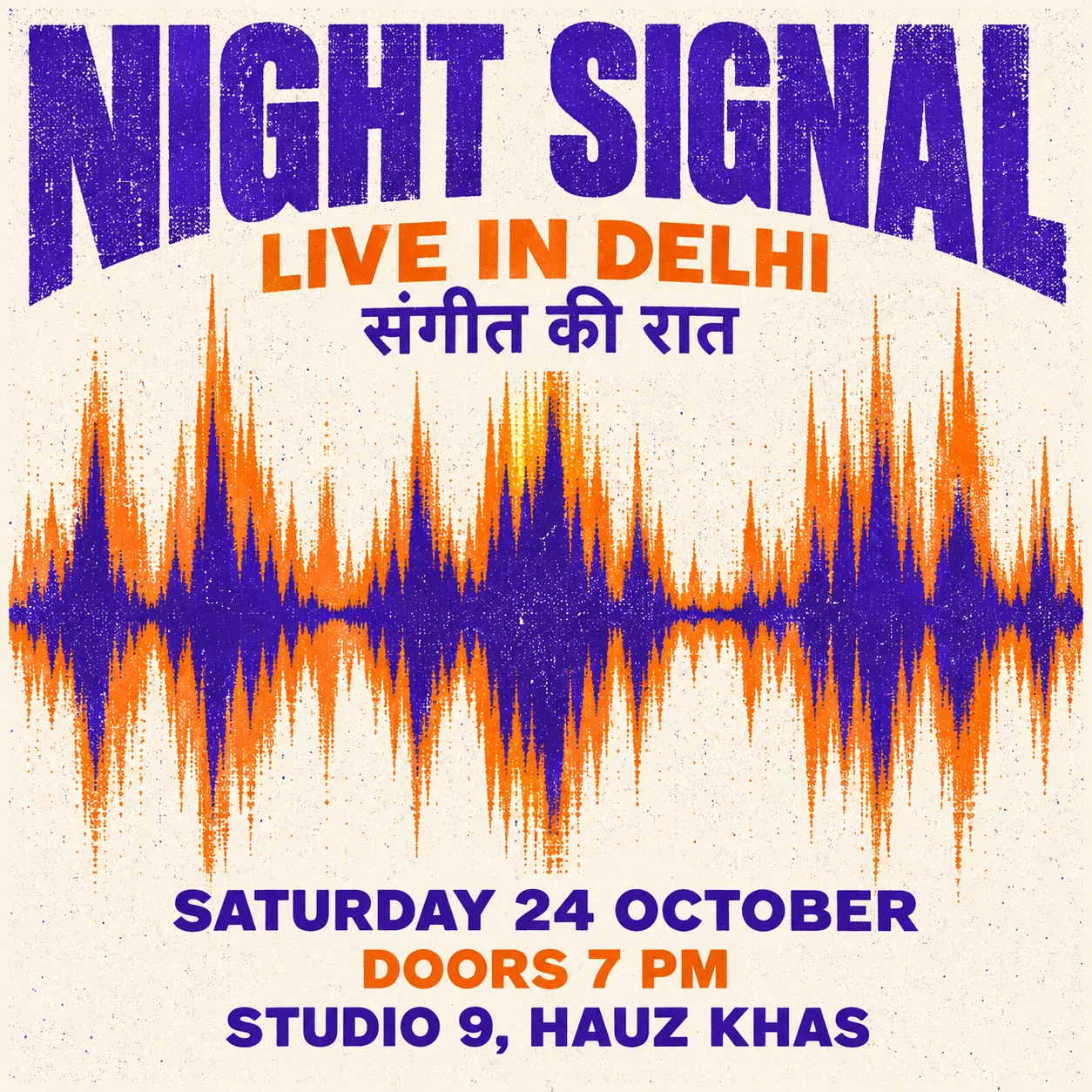 | 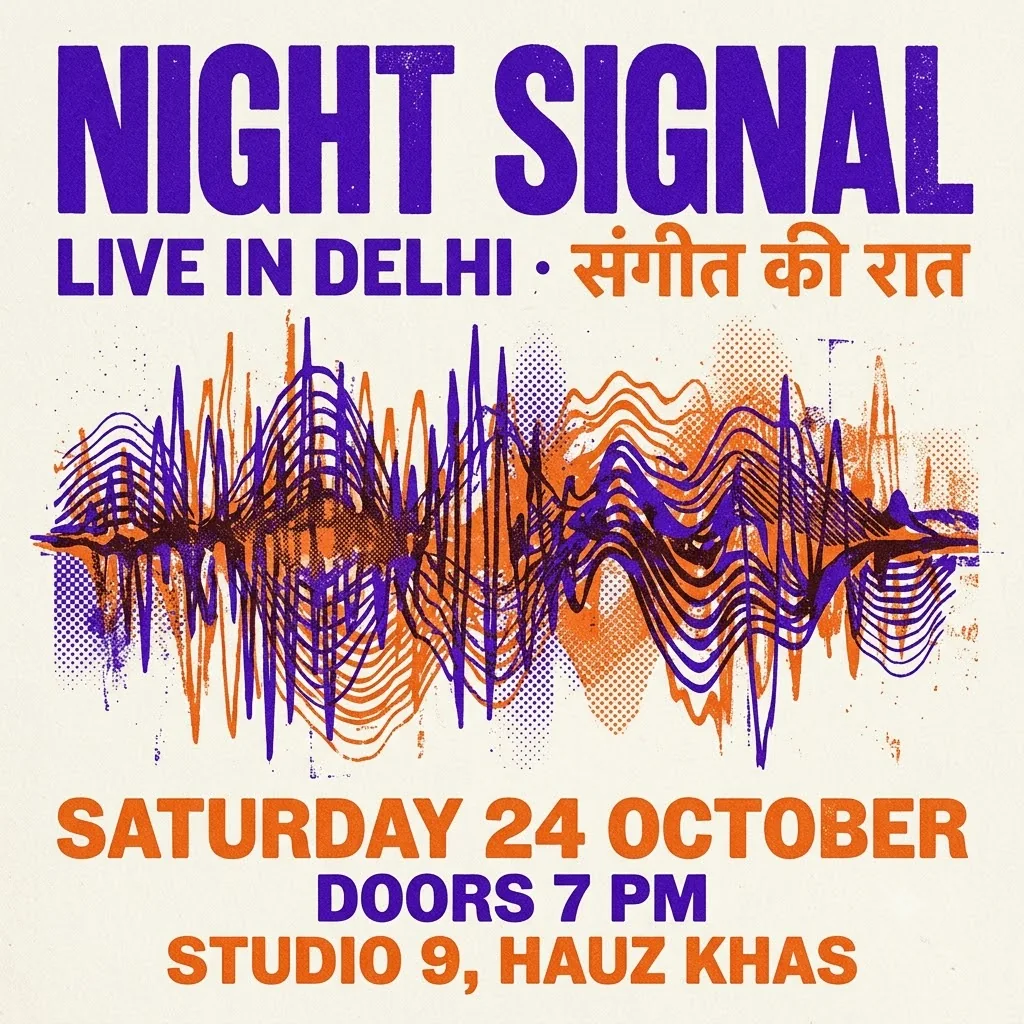 |
Observation. Both render all six strings correctly, including संगीत की रात and the comma in STUDIO 9, HAUZ KHAS. NIGHT SIGNAL is largest at the top, the subtitles sit directly below, and the date, time, and venue occupy three separate bottom lines. ChatGPT stacks the English and Hindi subtitles above a rough, mirrored waveform. Gemini places the subtitles side by side with a decorative separator dot and builds a denser graphic from layered curves and halftone patches. Both keep the lettering readable and within the frame; no additional words appear.
Verdict. Tie on copy and placement. These are two valid design interpretations of the same brief. ChatGPT's vertically stacked subtitles and Gemini's compact subtitle row change the rhythm of the poster, but neither arrangement breaks the instruction.
Test 3: A water cycle diagram whose arrows teach the right thing
A classroom diagram needs relationships as well as readable words. This test checks whether the labels describe the correct pictured processes and whether the runoff arrow actually follows the river back toward the ocean.
Prompt
Create a square educational diagram titled "THE WATER CYCLE" for a school science lesson. Use a clean flat vector illustration style with clear labels, blue water, green land, a mountain on the right, an ocean on the left, and clouds above. Show exactly four process labels, each once: "Evaporation", "Condensation", "Precipitation", and "Runoff". Show Evaporation with an arrow rising from the ocean to the sky. Show Condensation in the clouds with tiny water droplets forming there. Show Precipitation as rain falling from a cloud onto the mountain. Show Runoff with an arrow following a river downhill from the mountain back to the ocean. Place each label beside its matching process, use large readable lettering, and keep the whole cycle inside the frame. No extra process labels, no extra statistics, no watermark.
| GPT Image 2.5 | Nano Banana 2.1 |
|---|---|
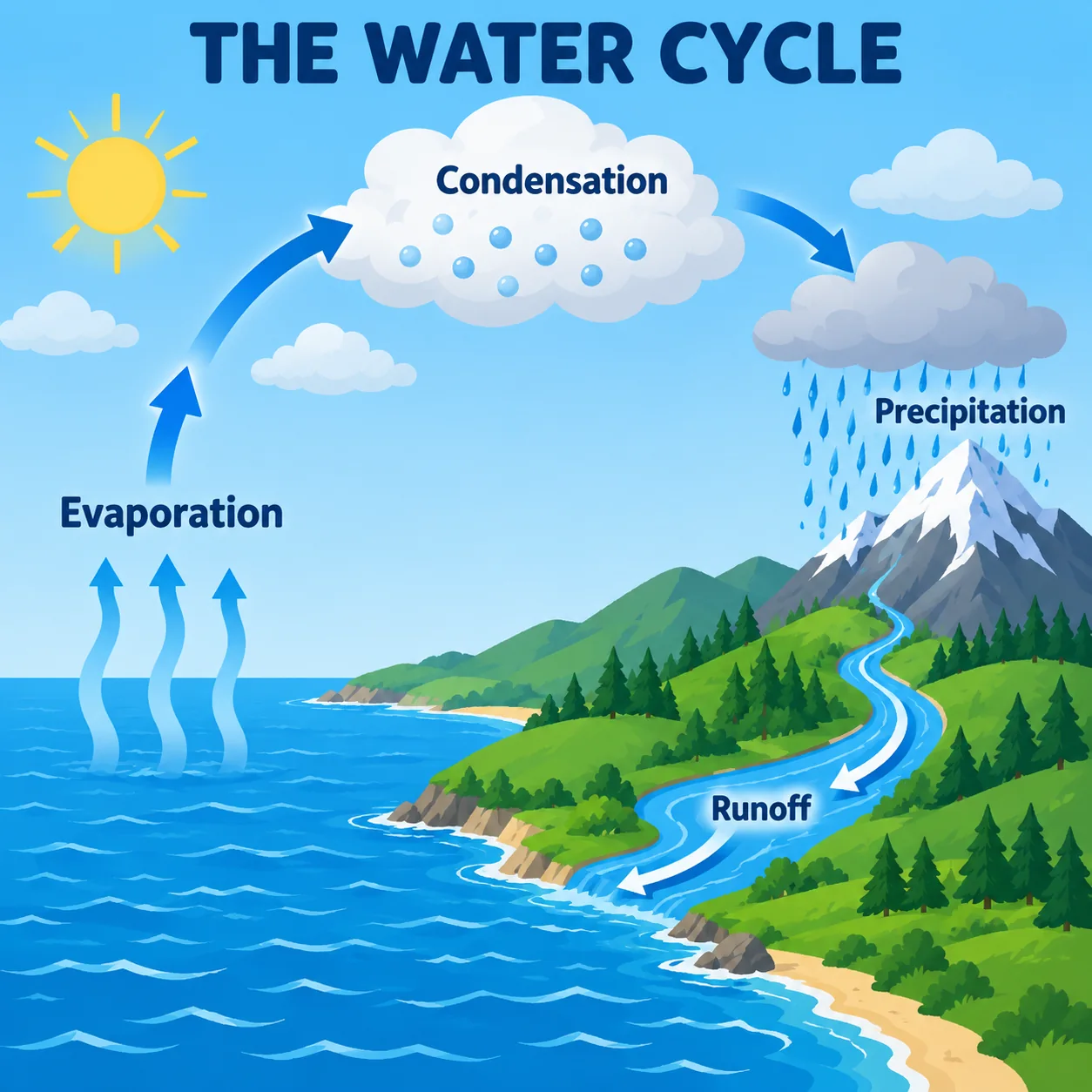 | 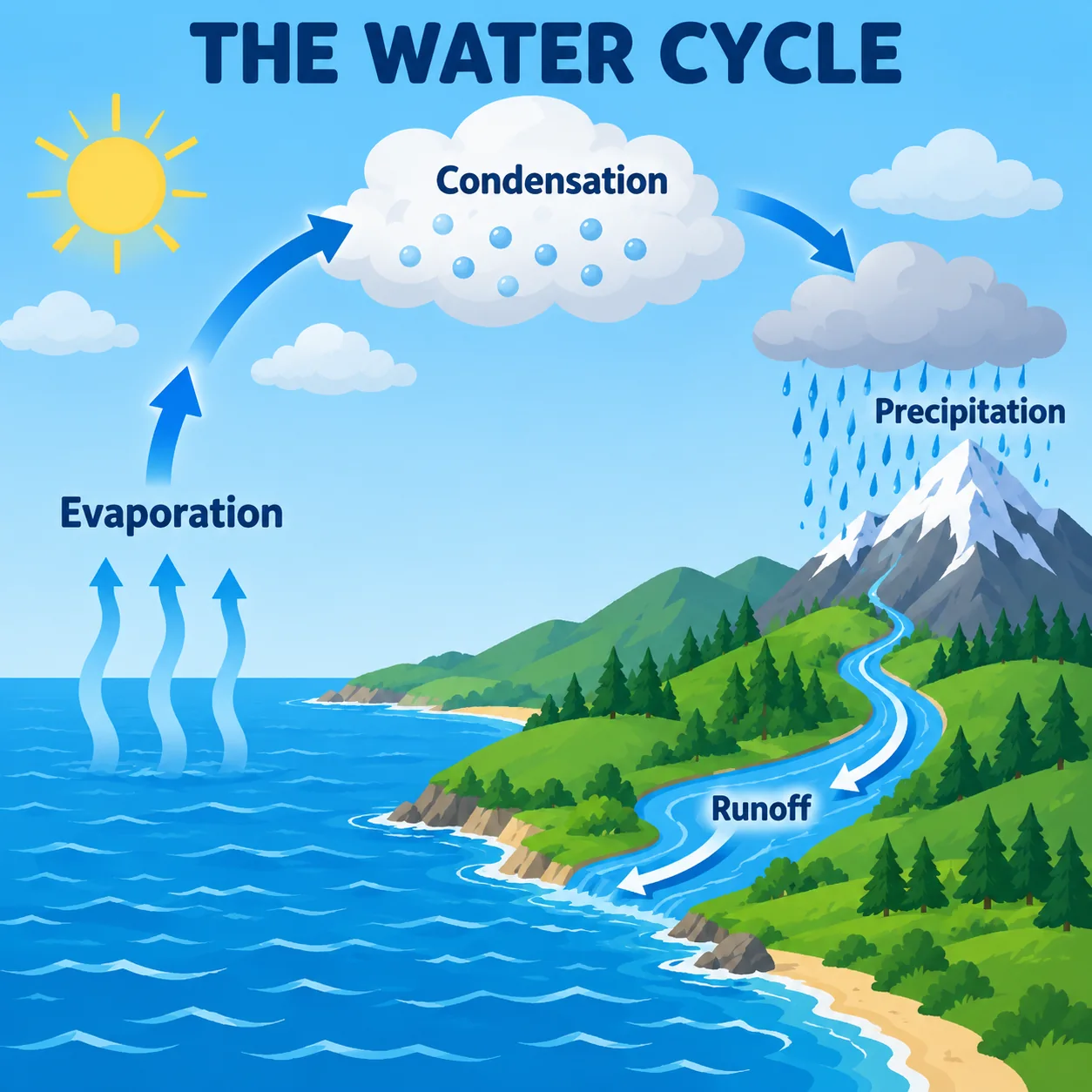 |
Observation. Both place the ocean on the left and mountain on the right, show evaporation rising, droplets in clouds, and rain falling onto the mountain. Each includes the four process names once. ChatGPT preserves their supplied capitalization and puts the runoff arrows directly on the river, pointing downhill into the ocean. Gemini switches the names to all capitals. Its runoff arrow points downhill on the grassy slope beside the river and stops short of the ocean. The overall scientific direction is still understandable, but the requested placement is less precise. ChatGPT's scenic shading and detailed landscape are more elaborate than the requested clean flat style. Gemini's download also has a small four-point mark near the lower-right corner despite the request for no watermark.
Verdict. ChatGPT follows the copy and arrow instructions more literally in this pair. Gemini has a simpler graphic treatment, but its runoff placement needs correction for this brief. Neither image should enter a lesson solely because the labels are spelled correctly; trace the arrows and check the explanation.
The science check uses a simplified cycle: evaporation takes water into the atmosphere, condensation forms cloud droplets, precipitation falls, and runoff returns water downhill. The brief does not attempt to depict every process in the global water cycle.
Test 4: An isometric game island with count and placement constraints
A game illustration tests stylized world building alongside count and placement constraints. A pleasing island still misses the brief if a tree appears on the wrong side, an extra tower is added, or the path fails to connect the door and bridge.
Prompt
Create a square isometric fantasy game illustration of one small floating island against a pale lavender sky, in a polished hand painted storybook style. Put exactly one round stone wizard tower with a blue conical roof at the island's center. Place exactly three orange crystal formations in a neat row to the viewer's left of the tower. Place exactly two pine trees to the viewer's right of the tower. A single curved cobblestone path must connect the tower door to one wooden footbridge at the front edge of the island. Put one small red fox on the path, clearly separate from the trees and crystals. Show all requested objects fully and keep their silhouettes distinct. No people, no extra buildings, no extra trees or crystals, no words, no watermark.
| GPT Image 2.5 | Nano Banana 2.1 |
|---|---|
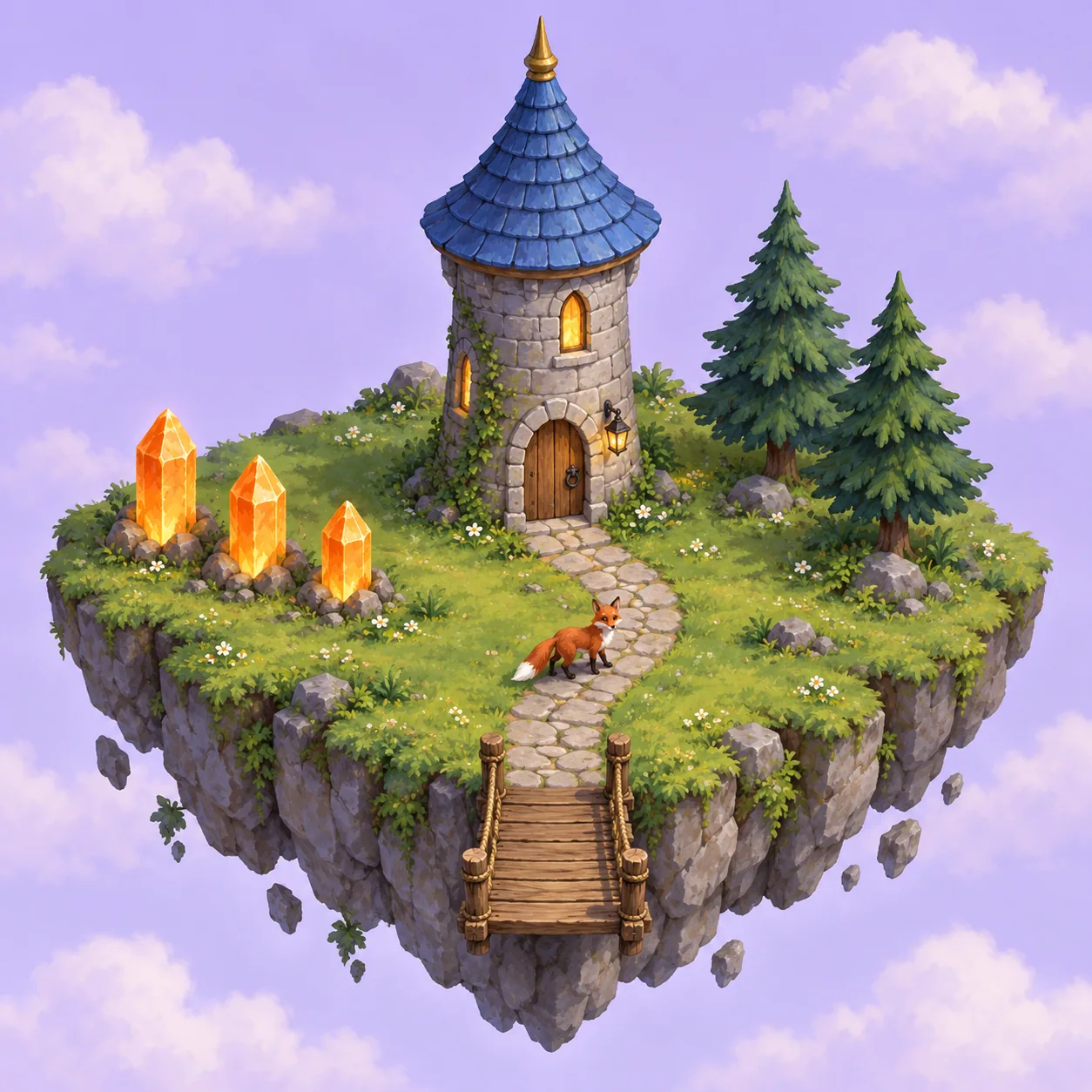 | 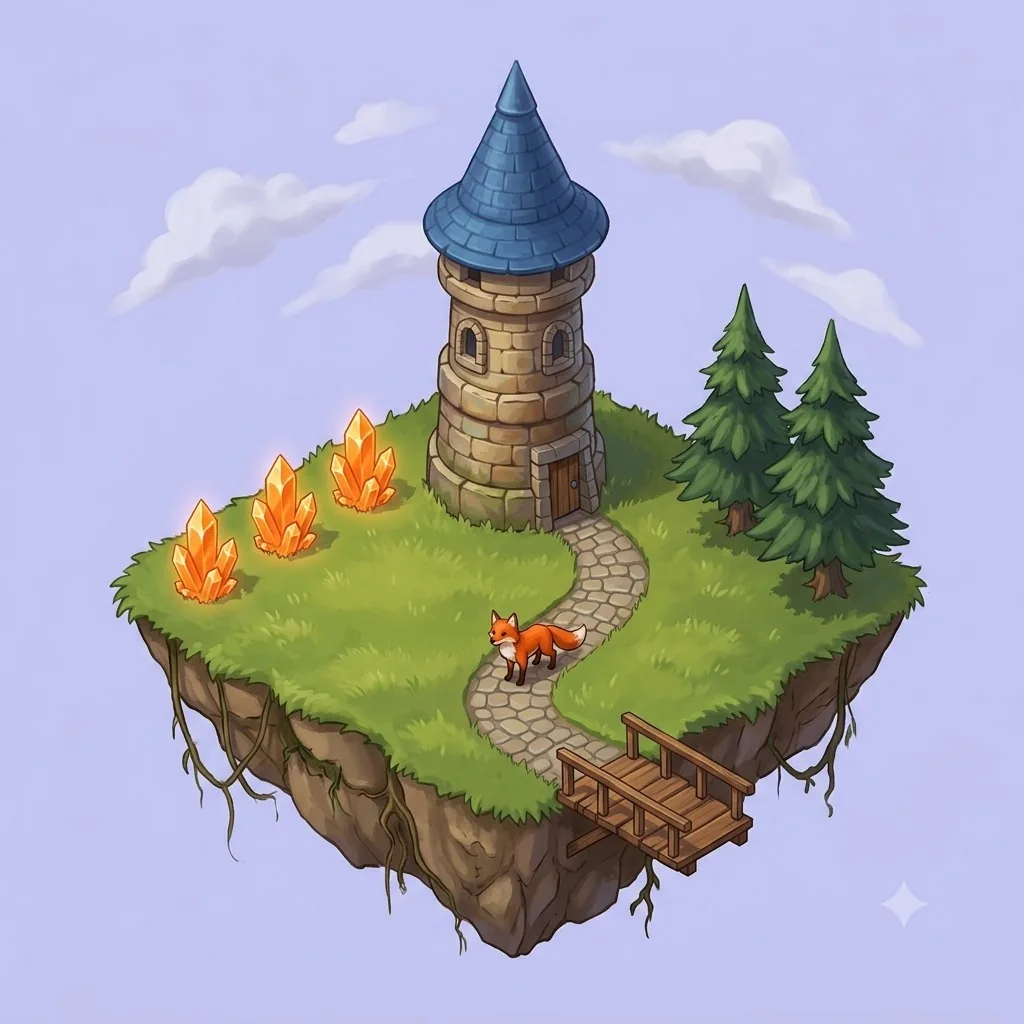 |
Observation. Both show one floating island with a central round stone tower and blue conical roof, three orange crystal formations to its left, and two pine trees to its right. Each has one curved cobblestone path joining the tower door to a front wooden bridge and one red fox on the path. Gemini's formations contain several crystal spikes per cluster; the prompt counts formations, so that is acceptable. ChatGPT adds richer stone, foliage, and surface detail. Gemini uses broader shapes and a simpler painted treatment. The two trees remain identifiable in both images despite some overlapping branches. A small four-point mark is visible in Gemini's lower-right corner.
Verdict. Tie on scene counts and spatial relationships. ChatGPT's extra detail and Gemini's simpler shapes serve different art directions. For an unmarked deliverable, the visible mark in the Gemini download is another item to account for. Neither result has been tested as a production game asset with consistent camera angles, layers, or animation.
Test 5: An interior edit that changes two materials and preserves the room
An interior edit is a different problem from generating a new scene. Both apps receive one approved room and must change two materials while keeping the furniture, architecture, artwork, and lighting visibly stable.
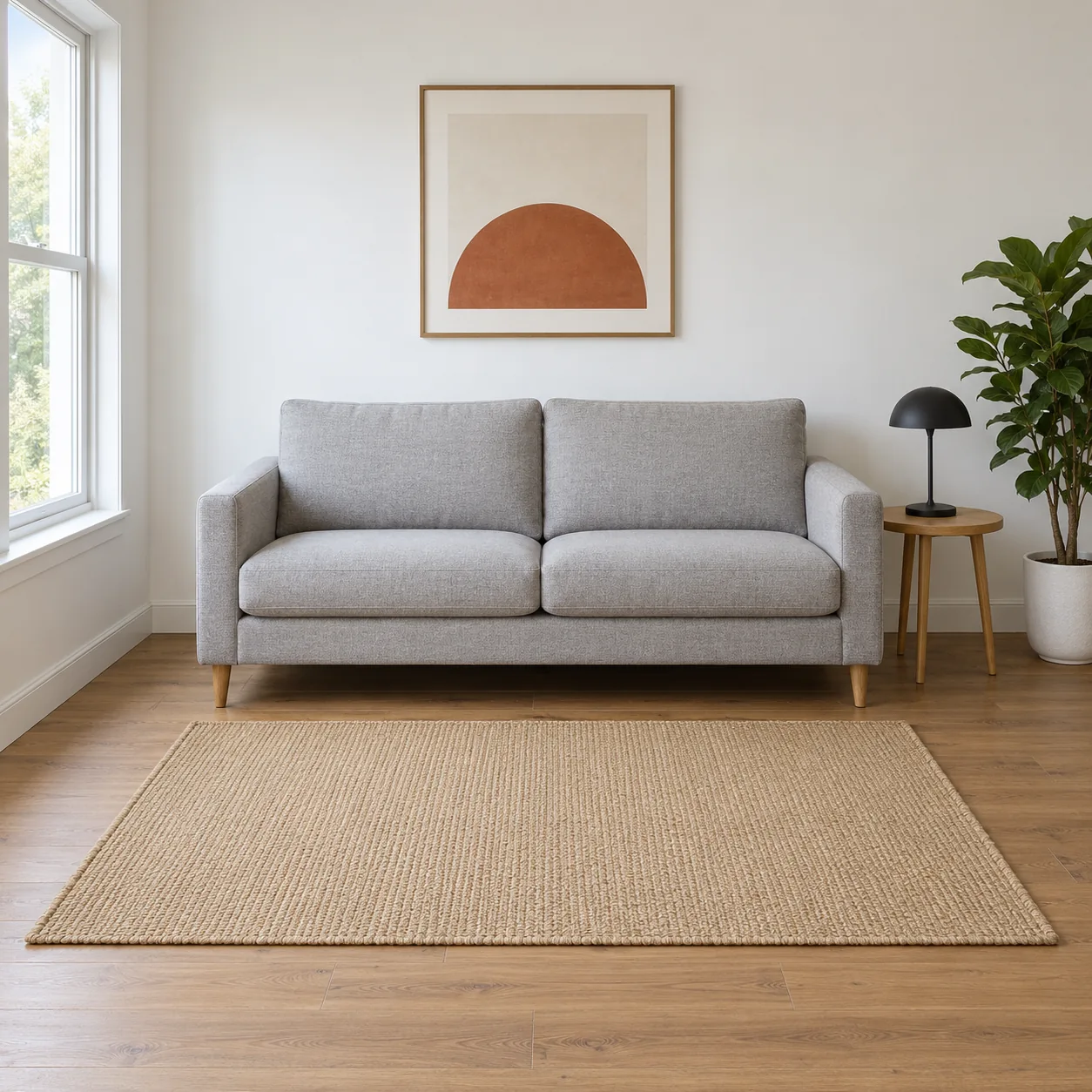
Shared editing input. Both apps received this exact room photograph. This generated reference is not a comparison output.
Prompt
Edit the supplied living room photograph. Change only the sofa upholstery from light gray to mustard yellow and the rectangular rug from beige to a deep navy blue woven rug. Preserve the sofa's exact shape, seams, cushions, position and scale. Preserve the rug's size, outline and position. Keep the white walls, window, wooden floor, framed artwork, side table, lamp, potted plant, camera angle, lighting and all shadows unchanged. Do not add or remove objects, rearrange furniture, change the artwork, or redesign the room. Return only the edited photograph.
| GPT Image 2.5 | Nano Banana 2.1 |
|---|---|
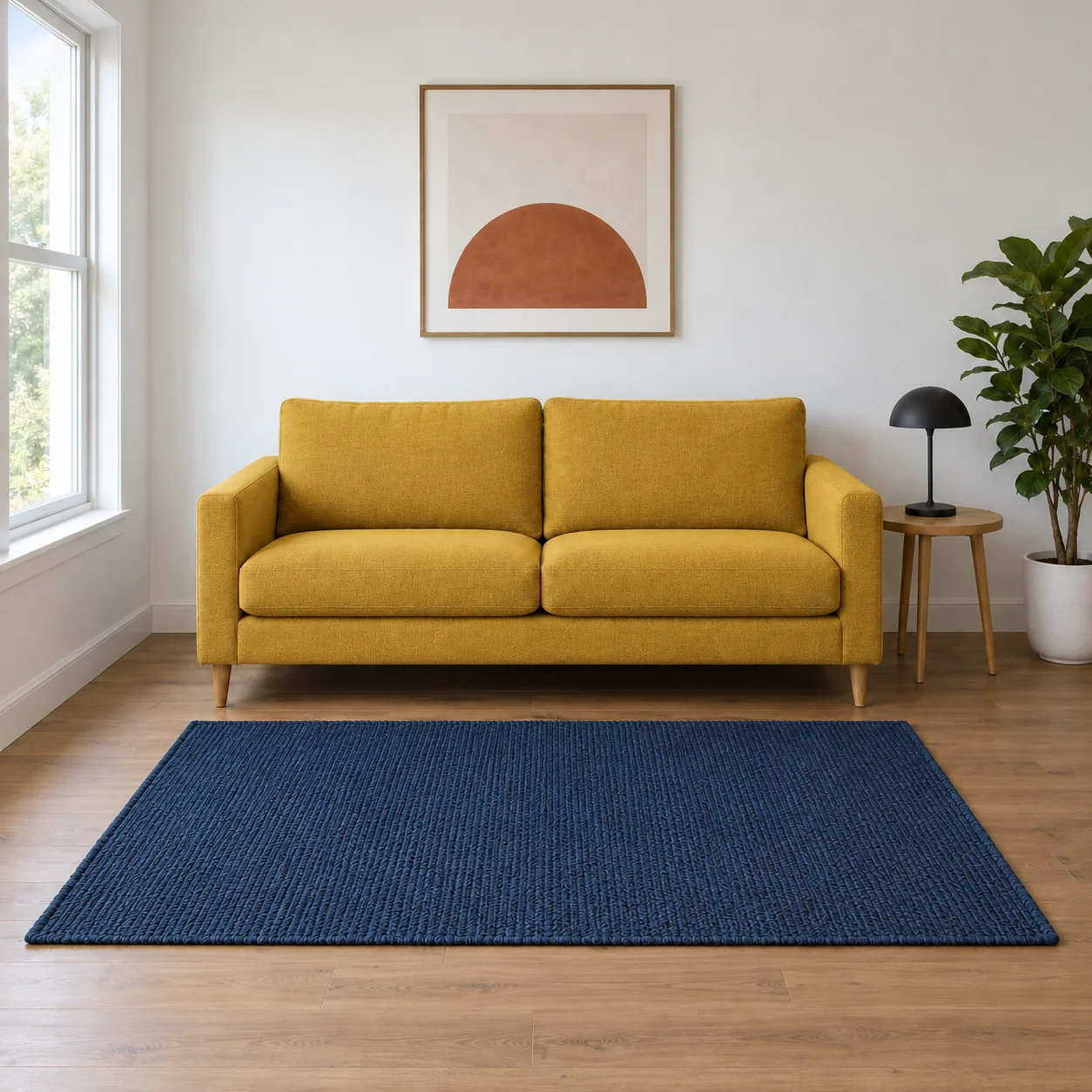 | 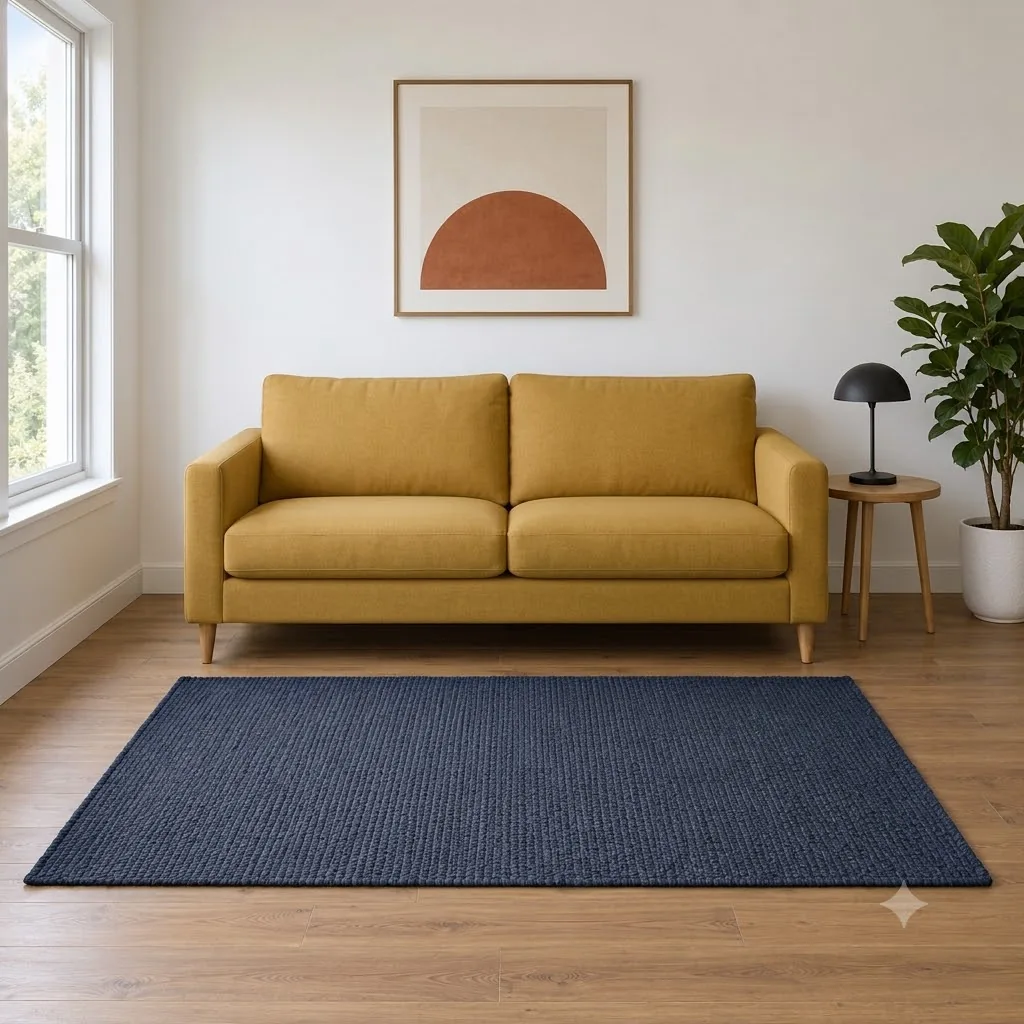 |
Observation. Both turn the gray sofa mustard yellow and the beige rug deep navy blue, with a woven surface. The sofa remains in the same location with two seat cushions, two back cushions, the same broad seam layout, squared arms, and wooden legs. The window, framed semicircle artwork, side table, black lamp, plant, floor, and camera framing remain visibly consistent. ChatGPT chooses a stronger yellow and introduces a more noticeable patterned upholstery surface. Gemini uses a softer mustard and a finer fabric appearance. Both retain the rug's broad rectangular footprint. Gemini again shows a small four-point mark near the lower right. These are visually preserved scenes, not pixel-identical copies outside the edited regions.
Verdict. Tie on the requested color changes and preservation of the room's visible structure. Texture treatment is the difference to review: ChatGPT's added upholstery pattern may need a more explicit instruction if you want the original weave retained. This single pair does not establish how either app behaves over repeated edits.
What the API pricing actually tells you
As checked on 9 October 2026, Sunburst and Flare both list standard image output at $30 per million tokens. Their image input is $8 per million tokens and text input is $5. Google also lists Nano Banana 2.1 image output at $30 per million tokens, with input at $1.50 and text or thinking output at $7.50.
Equal output-token prices do not give you equal prices per finished image. Token consumption, resolution, quality, references, and thinking all affect the bill. Google gives an explicit image-output schedule: $0.0336 at 1K, $0.0504 at 2K, and $0.113 at 4K, before input and thinking charges. That makes its output component easier to budget.
For GPT Image 2.5, use the actual token usage from the chosen variant and settings. OpenAI warns that the GPT Image 2 calculator does not estimate 2.5 consumption, so reusing an older per-image table would create false precision. These API rates are also separate from ChatGPT or Google AI subscription access. We did not measure per-image spending in the web apps.
Which one should you choose
Both GPT Image 2.5 and Nano Banana 2.1 performed well across our five tests, with neither emerging as a clear overall winner. Both handled sports photography, bilingual posters, fantasy illustrations, and room editing effectively. However, ChatGPT showed an edge in instructional diagrams, following label formatting and arrow placement more precisely.
The choice ultimately depends on your workflow. Nano Banana 2.1 offers flexible aspect ratios, 4K output, and reference grounding, while GPT Image 2.5 provides custom dimensions and dedicated Flare and Sunburst variants. For everyday creative work, both are capable options.
The better choice is the one that follows your specific instructions and requires fewer corrections.
Frequently Asked Questions
Is GPT Image 2.5 one API model?
No. Sunburst and Flare are separate API variants. Name the variant and quality setting when comparing API results; the browser exercises here used the ChatGPT app’s ordinary image experience.
Can both handle text in images?
Both apps rendered all six supplied English and Hindi concert poster strings correctly in this sample. That checks transcription and layout, not translation quality. For diagrams, also inspect arrow placement and the connections between processes.
Which one is cheaper?
Google publishes resolution-specific image-output charges, while GPT Image 2.5 is billed according to token usage. A fair cost comparison needs the same task, chosen settings, and actual usage. The browser tests do not establish a cost winner.
Did these tests prove one model is more reliable?
No. Five paired tests are useful examples, but they cannot establish a failure rate across prompts, repeated runs, accounts, or API variants.